 Originally published by The Stanford Daily
Two months ago, hundreds of world leaders and tens of thousands of activists gathered in Copenhagen to craft a new global treaty to replace the Kyoto Protocol in 2012. Green groups put on a spectacle – yes, Greenpeace even docked two of its famous boats nearby to “help in pushing the delegates” – and some observers declared it a make or break event in global climate history.
Today, there is strikingly little to show for the whole affair, momentum has slowed to a crawl and hardly anyone is discussing the aftermath. For good reason: the Copenhagen Accord is basically a voluntary agreement with obscure objectives, and its impact will be negligible. Michael Cutajar, the former chairman of the United Nations Framework Convention on Climate Change (UNFCCC) negotiation group, said that “Beyond the lack of clarity in its drafting, its main weakness is the lack of ambition and identifying responsibilities… Who should do what, and when, in order to limit warming to two degrees?”
What went wrong at Copenhagen? As I recently argued on BBC World View, the outcome was primarily the result of a flawed UNFCCC process and policy framework. The first and most obvious problem was imagining that 192 countries – some of which represent thousands of times more people than others – could produce a meaningful climate mitigation treaty. The UNFCCC process is kind of like the U.S. Senate (today one of the most dysfunctional national legislative bodies in the world) but at least four times as complicated.
There is growing consensus that global climate mitigation policy should be moved into a setting like the G-20 or Major Economies Forum on Energy & Climate (the members of which effectively constitute a super-majority of the world). David Victor, a former Stanford professor and leading international energy expert, recently put it this way: “With a deal this complicated and difficult, the fewer countries you need to reach an agreement, the better the chances are.”
The second overarching problem was the policy framework. For nearly two decades, the dominant national and global policy approach to climate change mitigation has depended on establishing strong, “legally binding” caps on carbon dioxide pollution, particularly through cap and trade and other measures aimed at making fossil fuels more expensive.
Today, the writing is on the wall: the Kyoto Protocol failed to achieve significant emissions reductions, even with a “legally-binding” agreement. As President Obama himself noted in his post-Copenhagen press conference, “Kyoto was legally binding and everybody still fell short anyway.” Copenhagen failed to produce a binding treaty, even with great pressure and expectations. If the world continues down this road -- an approach some experts have dubbed "magical climate thinking" -- negotiations will again fail to produce a meaningful outcome.
The time has come to remake the global climate policy framework to focus on global energy technology policy. Instead of debating emissions targets and timetables like accountants, we need the largest emitters to think like engineers and concentrate on identifying specific technical hurdles and mobilizing the resources to solve them. Most importantly, policymakers need to focus on the goal of “making clean energy cheap,” or as Google puts it, “renewable energy cheaper than coal.”
How much money will each major emitter put on the table to invest in development, deployment and infrastructure of low-carbon technology? What hurdles will those policies confront, and what is each country’s low-carbon technological roadmap? How will the policies be structured, and how can nations productively collaborate and compete on technological development? These are the kind of critical questions that should be negotiated.
Some advocates claim that if the U.S. Senate passes climate legislation similar to the American Clean Energy & Security Act (ACESA), the UNFCCC will achieve a breakthrough. But little evidence suggests that China, India and other countries will respond by implementing strong binding targets, or that signatories will even uphold their emissions targets. ACESA is weak technology policy at best, given that its clean energy investments represent only a small fraction of expert consensus, and not exactly the kind of example we want to set for the world.
The irony is that while the U.S. and Europe continue playing the accountants game of targets and timetables, Asian governments are the ones beginning to move forward with serious technology policies, investing massive amounts in clean-tech development and deployment – while the U.S. falls behind. This is motivated not by climate mitigation nor international law, of course, but economic competitiveness. We should leverage these efforts to motivate the policies we need in the U.S. and abroad, and to develop a new approach.
Ultimately, technology policy is the single most important lever the world has for overcoming this challenge. Our civilization possesses enormous capacities for invention and innovation – now we must develop a global climate policy framework that finally puts them to good use.

Tuesday, February 16, 2010
Remaking the Global Climate Framework


Tuesday, January 19, 2010
WEBINAR: After Copenhagen: What Was Achieved?
Live Webcast January 26, 1 PM EST / 10 AM PST
The UN Framework Convention on Climate Change, or Cop15, took place in Copenhagen December 2009 with the goal of establishing a new climate treaty to replace the Kyoto accords, due to expire in 2012. The expectations for the first climate convention since President Obama has taken office and the first since China attained its status as a global superpower put additional pressure on world leaders and policy-makers to create a lasting and workable road map to reduce emissions and promote sustainability.
While the devil is certainly in the details, and most certainly the Copenhagen congress should only be viewed as a starting point for global action, it is clear that the world had hope for real progress and actionable goals. Did they get it?
With this question in mind, The Energy Collective, with our enabling sponsor, Siemens, would like to invite you to join us as we break down what was achieved, and what got left undone in Copenhagen this year. In addition to your questions, we will examine the events of Cop15 from a number of angles, including:
Register here today.
Featuring:
Marc Gunther is a veteran journalist, speaker, writer and consultant whose focus is business and sustainability. Marc is a contributing editor at FORTUNE magazine, a senior writer at Greenbiz.com, and a lead blogger at The Energy Collective. He's also a husband and father, a lover of the outdoors and a marathon runner. Marc is the author or co-author of four books, including Faith and Fortune: How Compassionate Capitalism is Transforming American Business. He's a graduate of Yale who lives in Bethesda, MD.
Robert N. Stavins is the Albert Pratt Professor of Business and Government at the Harvard Kennedy School, and his roles include: Director of the Harvard Environmental Economics Program, Chairman of the Environment and Natural Resources Faculty Group, and Director of the Harvard Project on International Climate Agreements. Professor Stavins' research has focused on diverse areas of environmental economics and policy, including examinations of: market-based policy instruments; regulatory impact analysis; innovation and diffusion of pollution-control technologies; competitiveness effects of regulation; depletion of forested wetlands; political economy of policy instrument choice; and costs of carbon sequestration. Prior to Harvard, Stavins was a staff economist at the Environmental Defense Fund.
Aimée Christensen leads Christensen Global Strategies, advising corporate, philanthropic, governmental, multilateral, and non-profit clients seeking to address the global challenges of climate change, ecosystem degradation, and resource scarcity. Her clients have included the Clinton Global Initiative, The Elders, Swiss Re, the United Nations Development Program, Virgin United, and Wolfensohn + Co. Previously, Aimée worked with Google.org, the philanthropic arm of Google, as well as the Legal Department of the World Bank and the International Centre for Trade & Sustainable Development. Among other groups, she is a Term Member of the Council on Foreign Relations and a member of the Board of Directors of the American Council on Renewable Energy.
Dirk Forrister is Managing Director at Natsource LLC, responsible for new carbon fund development. Until recently, he worked in the company's London office, where he was responsible for building the company's carbon finance business in Europe. He managed the development and launch of the Greenhouse Gas Credit Aggregation Pool, which grew to over $800 million in corporate commitments. Prior to joining Natsource, Forrister served as Chairman of the White House Climate Change Task Force in the Clinton Administration, and prior to that was Assistant US Secretary of Energy for Congressional & Public Affairs. He has also held positions as Energy Program Manager at Environmental Defense Fund and as legislative counsel to Congressman Jim Cooper, the author of two early climate change laws. Read more!
Wednesday, January 13, 2010
Will Copenhagen Mark the End of "Magical" Climate Thinking?
 That's the question explored by the Breakthrough Institute's Michael Shellenberger and Ted Nordhaus in a new column in Foreign Policy that chronicles the climate odyssey of the past year - from President Obama's campaign and election through Congressional climate debates and the chaos in Copenhagen.
Take a gander at the in-depth column here.
Here's a few excerpts:
There was good reason to be hopeful in January 2009 that the election of Barack Obama would bring about America's long-awaited clean energy revolution. As president-elect, Obama had started to talk about energy policy in a way that no leader of either U.S. party had before. Promising to save the country from both severe recession and industrial decline, Obama described the transformation of the United States' energy economy as a defining challenge of his presidency -- an economic and national security imperative that Congress would fail to address at the country's peril.
But the reality fell far short of expectations. The Obama administration succumbed, like many others, to a sort of magical climate thinking that promised a painless and even prosperous transition to a low-carbon future with the tools already at hand. The only official within his administration to accurately grasp the technology challenges faced, Energy Secretary Steven Chu, was sidelined at crucial moments.
[...]
One year ago, in his first State of the Union address, Obama proposed a previously unprecedented $15 billion annual investment in clean energy research and development. Further, he appointed a technologist, the Nobel Prize-winning physicist Chu, as energy secretary to oversee that investment. The $800 billion stimulus, passed shortly thereafter, gave further credence to the notion that after 30 years of false starts, overblown rhetoric, and outright neglect, Congress and the president might finally get serious about remaking the United States' energy economy.
The stimulus included billions for energy R&D, infrastructure, and efficiency, and overturned the conventional wisdom that the United States would never again make big federal investments in technology as it had during the Cold War. But no sooner had the president's stimulus program demonstrated that a new way forward on climate change and energy might be possible, then the new administration relinquished its climate change and energy policy to the partisans of the past.
[...]
Putting Browner, a former Al Gore aide, in charge of climate-change policy was payback to environmental groups and the green donors who had supported Obama's campaign. But it also signaled that, inside the White House, the clean energy investment message that the president had used to such great effect in winning battleground states like Ohio and Colorado was seen as just that: a powerful message to use in the campaign, not a policy priority.
In this, Obama was following two decades of magical thinking among both greens and liberal Democrats about energy technology. In this view, energy efficiency pays for itself, solar and wind power are already nearly cost competitive with fossil fuels, and both can quickly and cheaply reduce emissions. This Pollyanna view of fossil fuel alternatives and efficiency, which makes going green seem cheap and easy -- little more than the cost of "a postage stamp a day" -- has provided the justification for green-policy advocacy that has overwhelmingly focused on pollution regulations and carbon pricing while ignoring serious investment in energy research and development.
The price of Obama's failure to break with green climate orthodoxy is only now becoming apparent. The collapse of international climate negotiations in Copenhagen last month was just the latest evidence that efforts to regulate global pollution output cannot succeed. The Kyoto framework, which imagined that carbon pollution limits could be the primary driver of the complete transformation of the global energy economy, has irretrievably failed.
The real technological obstacles to decarbonizing the global economy today represent an insurmountable obstacle to political efforts to limit carbon emissions. Until policymakers get serious about addressing the central technological challenge, all efforts to control carbon emissions are doomed.
[...]
Steven Chu came to Washington expecting to manage a massive expansion of energy R&D. Chu had cut his teeth as a research scientist at the justly famed U.S. government-funded Bell Labs, which he saw as a model because they were responsible for inventing or developing a range of devices now part of the fabric of American life, from fax machines to TV transmission, radio astronomy, solar panel cells, the transistor, calculators, cell phones, Wi-Fi, and hundreds of other technological miracles.Read more!
Chu had never bought the idea that, in Al Gore's words, "we have all the technology we need" to solve the climate problem. Instead, he told the New York Times that Nobel-caliber breakthroughs are required in chemistry, physics, and biology to make more efficient batteries, solar panels, and biofuels that can compete with fossil fuels in price, and that nuclear power is needed to displace coal.
Unfortunately, his view hasn't shaped the actions of the administration or Democrats in Congress. By early spring it was clear that Democratic leaders on the House and Senate budget committees were not inclined to honor the president's request for a dramatic scale-up of federal clean energy R&D and that the White House was not inclined to fight for it. And with greens and establishment Democrats fully lost in the magical idea that we can achieve massive emissions reductions through conservation, efficiency, and existing renewable technologies, there was scarcely any constituency inside the Beltway for the kind of big energy-technology program that Chu had hoped to launch.
[...]
The Waxman-Markey legislation passed the House of Representatives last summer by a scant few votes, even as it became glaringly obvious to everyone who dared look that it would not require emissions reductions below business-as-usual levels.
Green groups insisted that the bill would reduce emissions and pointed reporters and green donors to allegedly independent analyses by the World Resources Institute (WRI). But the WRI, a major party to the cap-and-trade agreement negotiated by the EDF and NRDC with energy companies, simply used a magic accounting trick that was visible in plain sight: counting carbon offsets as real reductions of U.S. emissions.
Offsets typically fund activities such as tree planting and methane capture from landfills, and have proven over the last decade to be extremely unreliable, when they have not been outright fraudulent. The extensive offsets in Waxman-Markey would have allowed U.S. emissions to rise at business-as-usual rates over the next decade rather than declining to 17 percent below 2005 levels, as proponents of the bill claimed. Nevertheless, the WRI created graphs showing U.S. emissions magically going down 17 percent by 2020 and nearly 80 percent by 2050; the New York Times duly reprinted them; and partisans on both sides of the debate tacitly agreed to pretend as if proponents' farcical claims about the bill's mandated emissions reductions were true.
[...]
Incumbent energy interests had, in short, hijacked magical climate thinking for their own uses. They took cap-and-trade legislation and turned it into an opportunity for them to raise energy prices on consumers, invest a fraction of the higher revenues in clean energy, remove existing regulatory obstacles to the construction of coal plants, and lock in their competitive advantage while crowding out energy newcomers, including clean energy firms, for decades to come.
The legislation's prominent defenders, like CAP's Joseph Romm, labeled green critics of the bill "global warming deniers" and told anyone who would listen that Waxman and Markey had pulled a fast one on the coal lobby. Duke Energy's James Rogers played along, offering to gladly repay the American public in emissions reductions after 2030 for billions in free allowance allocations today.
[...]
The collapse of the Copenhagen talks marks not just the end of the United Nations as the primary venue for global climate negotiations but also the abandonment of binding emissions-reduction targets and timetables as the primary vehicle for achieving emissions reductions. Targets will continue to be tossed around, either as aspirational goals or as loophole-riddled sops to appease greens. But the real international action on climate change and energy will involve bilateral and multilateral negotiations to develop and deploy clean energy technologies.
Those negotiations will sometimes look like trade negotiations, sometimes like IMF negotiations, and sometimes like global agriculture or public health efforts. What they won't look like is the impossible global pollution-output negotiations that have defined international efforts to address climate change since the Rio climate convention 18 years ago.
[...]
In the end, whether or not the Senate passes a cap-in-name-only climate bill, the long-term failure of Kyoto and all other efforts to establish binding emissions caps is virtually assured and is a function of a basic technological problem. We simply do not have low-carbon technologies today that can at large scale replace fossil fuels at a cost that any political economy in the world is willing to impose upon itself. There will be no political solution to climate change, no binding international agreement to substantially reduce emissions, and no effective domestic carbon cap until low-carbon technologies are much cheaper than they are today.
[...]
However, the technologies we need will not materialize in response to carbon prices or emissions caps. Nor will they arrive, as many conservatives would have it, by getting the government out of the way and simply allowing a new generation of Steve Jobs and Bill Gates to tinker away in their garages.
Rather, we need to create a new clean energy economy in the same way we created our information economy: by identifying a set of well-defined technical problems and mobilizing the human resources of our technologically advanced civilization -- our scientists, laboratories, universities, and engineers -- to solve them.
These technical questions are not difficult to grasp and in fact have already largely been laid out by Chu in his remarks to the New York Times. How do we convert sunlight into energy much more efficiently than solar panels do today? What combination of chemicals can store more energy in batteries that are smaller and lighter? How can we manufacture a next generation of self-contained nuclear reactors that are safer, smaller, and cheaper than the large ones of the 1950s and 1960s? And how can we engineer new biological organisms to serve as a cheap fuel alternative to oil?
Solving global warming's technology challenges will require not a single Apollo program or Manhattan Project, but many. We need to solve technical problems across a range of technologies and at a variety of stages along the road from technological development to demonstration to commercialization to mass deployment.
[...]
Transforming the global energy economy from fossil fuels to low-carbon alternatives over the next 50 to 100 years is such a monumental technological undertaking that it is quite understandable that many would either declare it impossible or retreat into magical thinking. We must resist these temptations.
Solving the technology challenge will not be easy, but in terms of our collective wealth and knowledge we are in a better position today than at any other point in our history. In the end, global efforts to address the climate challenge, if they are to succeed, must centrally focus upon the creation of a new and extraordinarily important global public good: the development of low-carbon energy technologies that are cheap, clean, and abundant. After two decades of domestic and international failure to take real action on climate change, it is time for the purveyors of magical thinking to take their exit so that the main act can begin.”
Monday, December 21, 2009
BBC World Service: Who is to Blame at Copenhagen?
 I just joined the BBC World Service for a live, hour-long program called "Copenhagen: Who is to Blame?" reflecting on the outcomes of the negotiations, including BBC's environmental analyst, a Chinese policy specialist, WWF's Campaign Director, India's Vandana Shiva, and other experts (the podcast is available here, and for a cliffnotes version, start at 39 minutes).
One of the central points I make is that we need to understand what happened at Copenhagen in order to move forward successfully. As I wrote on Saturday in an open letter to Bill McKibben, founder of 350, the failure to achieve "legally-binding" emissions targets is not the Obama administration's fault, but rather the result of a flawed UNFCCC framework. If anything, President Obama should be applauded for bringing together the major emerging economies and hitting the "reset button" on the mitigation negotiation framework.
Indeed, the writing is on the wall: the Kyoto Protocol failed, even with a "legally-binding" agreement among its signatories. As Obama noted in his press conference, "Kyoto was legally binding and everybody still fell short anyway." Copenhagen failed to produce a meaningful treaty, even with overwhelming pressure from the global climate movement and the G-77. If the world moves ahead under this framework yet again in Mexico next year, negotiations will again fail to produce a meaningful treaty.
As Newsweek's Sharon Begley concluded today: "The best chance of reining in emissions of greenhouse gases and avoiding dangerous climate change is to stamp a big green R.I.P. over the sprawling United Nations process that the Copenhagen talks were part of."
What's demanded now is a major departure from the mitigation framework of the past to a renewed focus on the biggest emitters and global investments in low-carbon technology development and deployment -- on the scale of $10.5 trillion the International Energy Agency has called for over the next twenty years -- without which we will fail to avoid the worst consequences of global warming.
David Victor, one of the world's leading energy experts, notes: "With a deal this complicated and difficult, the fewer countries you need to reach an agreement, the better the chances are... A well-managed disaster [at Copenhagen] could be as constructive as the collapse of the 1986 Reykjavik summit between Ronald Reagan and Mikhail Gorbachev, which broke down in the final hours yet helped pave the way for later arms control."
President Obama succeeded at managing the collapse of the Copenhagen negotiations and pressing the reset button. The task now is to strengthen the Senate energy bill to invest at least $15 billion per year in clean energy R&D and around $30 billion per year in clean-tech demonstration and deployment, which can form the basis for a new investment and technology-centered global framework and make the United States a leader in what Thomas Friedman has declared the "Earth Race." Let's hope the administration sees the writing on the wall and advances with a new way forward.
Newsweek: Copenhagen R.I.P
 Originally at the Breakthrough Institute
Newsweek's senior science writer Sharon Begley doesn't mince words in her post-mortem on Copenhagen. Declaring "Good Riddance to Copenhagen," Begley writes:
That sound you'll hear in 2010 is a can being kicked down the road. Again. In the wake of the failure of the international negotiations in Copenhagen to reach a legally binding treaty to reduce greenhouse gases, you'll hear a lot of talk about how the world has two good chances in the new year to achieve what it failed to do at Copenhagen. Don't believe it. ...Sounds like another cogent call for a new Climate Realpolitik actually capable of bending the course of global emissions downwards and putting the world on a clean development path.
The best chance of reining in emissions of greenhouse gases and avoiding dangerous climate change is to stamp a big green R.I.P. over the sprawling United Nations process that the Copenhagen talks were part of.
That's because developed countries are no more likely to work out their differences with developing countries before those 2010 meetings than they did before Copenhagen. Must China, India, and Brazil agree to legally binding, verifiable cuts in their carbon-dioxide emissions? How much will rich countries ante up to help poorer ones segue to noncarbon renewable-energy sources and adapt to rising seas, droughts, dwindling water supplies, and crop failures? Will countries have to accept international monitoring of their emissions, which drives China crazy? Rather than repeating the Copenhagen charade in 2010, then, it's time for creative destruction.
Accept that the 192 nations roped together by the U.N. will not agree on a meaningful climate treaty next year either. Drop the pretense that every country matters equally. Instead, set up bilateral talks and a "club" of the countries that do matter: a mere dozen account for almost all greenhouse emissions.
As the Breakthrough Institute's Michael Shellenberger and Ted Nordhaus write:
The death of the UNFCCC heralds the end of the delusion that nation-states will radically alter their energy, forestry, and agricultural paths through pollution regulations and a massive and extremely complicated global carbon market managed by Wall Street firms. It will mark the end of the belief that serious action on climate is better negotiated with representatives from 193 U.N. member nations in the room, rather than bilaterally or between a handful of large economies, which generate the bulk of emissions.After the chaos in Copenhagen, Begley concludes, such a change in tact could not come a moment too soon:
It should also land a death-blow to the dark fantasy that we'll solve global warming by restricting economic growth. ...
A more appropriate forum will allow major economies to more easily advance their collective self-interest through real actions, such as energy and agricultural technology development, rather than United Nations-certified acts of altruism, such as more development aid or purchasing fake emissions reductions in the form of offets. Climate realpolitik must function in a larger context of trade and technology innovation, both of which have historically created win-win opportunities between nations. ...
If we're lucky, the historians of the future will look back at Copenhagen as the beginning of the secularization of climate policy, a time when the religiosity, pomposity, and mania of efforts to reduce emissions were asked to take a back seat by serious nations who had left the simulacrum to do the hard and vital work of shaping a new, real world.
With the emerging science on sea-level rise, it is becoming clearer that it isn't just the good people of the Maldives who will have to look for a new home. Even more reason to say good riddance to Copenhagen, and replace it with something that actually has a prayer of reining in dangerous climate change.
Begley's full column can be read here.
See Breakthrough's collected Copenhagen coverage here. Read more!
Friday, December 18, 2009
Copenhagen: Obama Announces Climate Deal, UNFCCC Crumbles?
 By Jesse Jenkins, Devon Swezey and Yael Borofsky, originally at the Breakthrough Institute
In a late night press conference at the close of the international climate negotiations in Copenhagen, President Obama declared that a "meaningful deal" had been reached with major emitting nations moments before boarding Air Force One and returning to the United States. While the final structure of "the Copenhagen Accord" is still in question, the content and reverberations of President Obama's speech today leave little doubt that the UNFCCC process, for all intents and purposes, is dead. Whether it continues to shamble on like a zombie through sheer force of inertia is yet to be determined...
Breaking free from the auspices of the UN's 190+ nation negotiating framework, major emitters, including the U.S., China, India, Brazil, and South Africa, appear poised to move forward with or without the rest of the UNFCCC nations.
According to a flurry of tweets and reports from observers on the ground in Copenhagen, the leader of the "G77," a large group of developing nations, are crying bloody murder, declaring that the deal "locks countries into a cycle of poverty forever" and saying "Obama has eliminated any difference between him and Bush." The EU is grudgingly signing on to the accord "as better than no accord." And protestors, led by radical activist Bill McKibben, are gathering outside the Bella Center crying "shame on our leaders."
"The President has wrecked the UN (and the planet)," declared a press release from McKibben's 350.org.
Despite the backlash he left behind in Copenhagen, President Obama's remarks at a press conference earlier today appeared firmly rooted in the political and economic realities of climate policy and seemed to embrace many of the tenets of an emerging Climate Realpolitik that could finally spell a new way forward for effective international action on climate change.
In his remarks, Obama succinctly outlined the fundamental tension that has impeded progress on addressing climate change under the UNFCCC process for 17 years.
"Essentially you have a situation where the Kyoto Protocol and some of the subsequent accords called on the developed countries who were signatories to engage in some significant mitigation actions and also to help developing countries. And there were very few, if any, obligations on the part of the developing countries.
Now, in some cases, for countries that are extremely poor, still agrarian and so forth, they're just not significant contributors to greenhouse gases. But what's happened obviously since 1992 is that you've got emerging countries like China and India and Brazil that have seen enormous economic growth and industrialization. So we know that moving forward it's going to be necessary if we're going to meet those targets for some changes to take place among those countries. It's not enough just for the developed countries to make changes. Those countries are going to have to make some changes, as well -- not of the same pace, not in the same way, but they're going to have to do something to assure that whatever carbon we're taking out of the environment is not just simply dumped in by other parties.Under the new pending agreement, a timeline to achieve a "legally binding" international treaty has been dropped and the President said that reaching such an agreement "is going to be very hard and it's going to take some time."
On the other hand, from the perspective of the developing countries like China and India, they're saying to themselves, per capita our carbon footprint remains very small, and we have hundreds of millions of people who don't even have electricity yet, so for us to get bound by a set of legal obligations could potentially curtail our ability to develop, and that's not fair."
President Obama also reminded the world that a "legally binding" international climate agreement is not, in the end, legally binding anyway, while repudiating the notion that "Science" can dictate and bind national economic and political decision-making.
"And the second point that I'd make is that Kyoto was legally binding and everybody still fell short anyway...And so I think that it's important for us, instead of setting up a bunch of goals that end up just being words on a page and are not met, that we get moving--everybody is taking as aggressive a set of actions as they can....I think that as people step back, I guarantee you there are going to be a lot of people who immediately say, the science says you got to do X, Y, Z; in the absence of some sort of legal enforcement, it's not going to happen. Well, we don't have international government, and even treaties, as we saw in Kyoto, are only as strong as the countries' commitments to participate."The framework of the deal appears to essentially be an agreement amongst major emitters to move forward with verifiable domestic actions to reduce carbon emissions and spur clean development, rejecting the abstract emissions targets and timetables that were the hallmark of the Kyoto protocol.
Noting that the deal falls short of many expectations, Obama recognized that technology is our last best hope to bridge the gap between what actions nations are willing (or able) to take today and what climate scientists argue is necessary to avoid the worst consequences of climate change:
"Our hope is that by investing in clean energy, in research, in development, in innovation, that in the same way that the Clean Air Act ended up spurring all kinds of innovations that solved the acid rain problem at a much cheaper and much more rapid pace than we expected, that by beginning to make progress and getting the wheels of innovation moving, that we are in fact going to be in a position to solve this problem. But we're going to need technological breakthroughs to get to the goals that we're looking for."Hopefully, it was only President Obama's visible exhaustion that led him to confuse investments in research and innovation with regulations like the Clean Air Act, that, while successful for their limited purpose, offer no real insight or viable strategy for solving a technology innovation challenge as complex as climate change. If President Obama is serious about embracing technology innovation as a means of accelerating the creation of a clean energy economy and fueling sustainable global development, we hope the President and his advisers will take a fresh look at the kind of strategy necessary to jump-start a clean energy revolution and make clean energy cheap.
Ultimately, we will have to wait and see as the dust settles in Copenhagen whether the first sprouts of a new Climate Realpolitik, focused on the clean technology innovation capable of achieving real climate progress, have emerged. Mainstream green groups like the League of Conservation Voters are already spinning the deal as "a breakthrough" that "provides a path forward towards a binding global treaty in 2010," raising the specter that the UNFCCC may shamble onwards... Stay tuned.
Read more!
Wednesday, December 16, 2009
Financing a Real Deal in Copenhagen.

At the international climate talks going on right now in Copenhagen, Denmark, we have a once in a lifetime opportunity to launch a major assault on global warming. Besides deciding emission targets and the legal structure of an agreement, commitments for long-term financing for developing countries to help green their economies and cope with climate change impacts is one of the most important element of a real deal. The chasm between what's being offered by developed countries ($10 billion a year for 3 years) and what basically the entire developing world is asking for (a long-term commitment of $400-500 billion a year by 2020) must be bridged.
When you consider the enormous need for green economic development for the billions of people in these countries and the projections of the massive costs of climate change adaptation, these numbers are justified. The International Energy Agency's 2009 World Energy Outlook says that investments in low-carbon energy technologies and energy efficiency on the order of $500 billion a year for the next 20 years will be required to reach 450ppm of carbon in the atmosphere. But if we want to avoid "certain death for island nations and certain devastation for Africa" that Sudan's ambassador and the chair of the G77 and China block here says 450ppm would entail, then we'll need substantially more than that.
But this is the same U.S. government that mobilized $11 trillion in a little over a month to combat the global financial crisis, that has committed $3 trillion for war in Iraq. When the US decides to make something a priority, it finds ways to fund it. So when the U.S. delegation here says it can't come up with more money, the whole world hears that it just isn't that big a priority.
But in addition to the commitments developed countries can appropriate through annual budgets and the auctioning of emissions credits, shifting the subsidies that currently go to fossil fuels to clean energy and vulnerable communities is one particularly elegant solution: Stop harming, and start helping.
In 2004, Jonathan Pershing (now the chief US climate negotiator) wrote a paper for WRI estimating that Annex 1 countries spent $57 billion annually on fossil fuel subsidies. In the U.S. alone, $10 billion of taxpayer's dollars still go to support fossil fuels. At the G20 meeting in Pittsburgh, President Obama made an historic pledge to end fossil fuel subsidies. In Copenhagen, he can commit to a date for that phaseout and pledge to redirect those subsidies into climate finance. Developed country fossil fuel Is there a better source for climate finance than shifting corporate giveaways to big oil and coal?
There are at least three other large potential sources of funding available:
- Revenues from regulation on international aviation and shipping, the fastest-growing sector of global emissions, which the chair of the negotiations in Copenhagen says is possible to get done here. This could generate an estimated25-37 billion a year.
- "Special Drawing Rights", the same mechanism that was used to create new money internationally to save the banking system. George Soros has proposed that100 billion in pre-existing SDRs be used to provide about7 billion annually for climate finance, and the World Future Council has another proposal to create a1 trillion dollar fund using new SDRs with likely much higher annual figures.
- A Global Financial Transaction Tax, small taxes on all foreign exchange transactions of major currencies could generate an estimated at60-100 billion annually according to Project Catalyst and are gaining traction in the negotiations.
President Nicolas Sarkozy and Prime Minister Gordon Brown have committed to working together on these innovative mechanisms, particularly revenues from regulating international aviation and shipping and the global financial transactions taxes. But they will not be able to get it done alone.
Our elected representatives and their appointees have only days to get this right and agree to a well-designed, public funded effort to prevent catastrophe. If the US took leadership on this issues, it could be the game-changer that breaks the climate deadlock and unleashes a clean-energy future, not just for us, but for the whole world. Feel free to let the President know how you feel here.This entry is cross-posted at The Huffington Post.
Billy Parish is the Founder of the Energy Action Coalition, a national student clean energy coalition, and lives with his family in Flagstaff, AZ. Read more!
Friday, December 11, 2009
Thoughts on Ending Energy Poverty and Copenhagen's Zero-Sum Game
 Some food for thought here: Nathan Wyeth pens a very thoughtful column on the Copenhagen climate summit focused on the key challenges of fueling sustainable global development and expanded energy-access to the billions of energy poor worldwide, via the new WRI-affiliated blog, NextBillion.net:
Excerpts below with emphasis added:
Copenhagen Climate Summit: The Missing Billions
...
But although they are often discussed here as the first and worst victims of climate change, the base of the pyramid is, at first glance, invisible in the negotiations in the shape of solutions to climate change. Except in the context of avoiding tropical deforestation, carbon finance relevant to the base of the pyramid is at best a niche conversation. If intensive energy use and land development equal carbon emissions, the base of the pyramid would by definition not appear to be terribly relevant.
This means I have less to blog about except for maybe some side events, but plenty to say. I would argue that there's is a huge amount wrong with the orientation of these negotiations and the fact that the base of the pyramid is absent gets to the heart of the issue. In a vicious cycle, the weakening of the negotiations will lead to failure in their intended impact, simply hurting the poor even more.
The G77 bloc is angling to increase the $10 billion in annual aid that developed nations are promising to provide in funding for climate change adaptation and mitigation. But it seems likely that there will be plenty of double-counting of that aid money and it's not enough to begin with to address either mitigation (i.e. low-carbon development) or adaptation. And it's unclear what this will go towards, who will manage it, what it will truly be intended to do.
As they have in previous years, the negotiations pit the world's wealthiest 1 billion people against the 3-4 billion who have gained a some level of prosperity and are rising quickly. Who will cut back on carbon - those who already emit a lot, or those who are emitting some and want to emit more in the future? With the negotiations set up like this, it quickly becomes a zero-sum game. Since the UN process relies on the commitment of the nations that constitute it, as a zero-sum game it becomes useless as a force to raise the bar towards clean and sustainable development.
Left out of this picture are the 2-3 billion people who are essentially not using modern energy - at best a little bit of electricity from an unreliable grid, a little bit of kerosene for lighting, diesel to operate machinery or transport, and maybe charcoal or LPG for cooking. But likely using firewood or other biomass for cooking and as likely as not having no access to electricity at all.
These are the people this blog concerns itself with. It seems counterintuitive that those who use the least energy currently are critical to an international agreement on reshaping our energy industries and ending deforestation as quickly as possible. But I believe they actually lie at the heart of any global deal to address climate change.One might argue that global treaty negotiations should be explicitly focused on shared support for sustainable global development, rather than on emissions cuts.
Where does this third of humanity actually show up in the negotiations?
They are the anonymous presence assumed to be within the growth curves in projected energy demand in Asia and Africa. They imbue these growth curves with moral force because basic services, health care, education and more must reach these billions in the decades that are in question in the negotiations.
These growth curves of energy demand in Asia, and to a lesser extent Africa, are the mountains that the negotiators must climb to reach an agreement. It is assumed that this demand will be met with fossil energy unless otherwise subsidized, by the West or at the expense of the poor. And these curves are steep.
They would probably be insurmountable except for a few things.
The biggest thing that the developed nations could do to flip this zero-sum mentality and unstick climate negotiations would be to act like they truly cared about access to energy in the developing world - particularly for those whose lack of access is most severe.
Most of the growth in energy demand in Asia and Africa will come from industry but the moral imperative of that growth comes from the people who are in energy poverty and need to get out of it. Yet this is a relatively small amount of energy demand - it is not the first kilowatt of electricity demand by households at the base of the pyramid that is going to push us beyond the safe levels of carbon in the atmosphere.
The truth is that it is quite likely that even with no climate treaty at all limiting carbon-intensive development, very few of the 1.6 billion people who are off the grid right now would get on the grid any time soon. From India to South Africa, electricity grids are going into blackouts straining to provide power to industrial customers, let alone people without access to electricity. When oil prices rise, try as they might by cutting other services and going into debt, developing country governments will not be able to subsidize fuels indefinitely. There is no imminent or clear path, under current patterns of fossil fuel and power sector development, for those living in energy poverty to smoothly emerge from this.
If the Copenhagen summit prioritized access to electricity and efficient, low-carbon cooking and heating to the 2-3 billion people it is currently ignoring, it would be a very different summit. Both developed and developing countries would be united in confronting the dual moral imperatives of addressing climate and development, rather than appearing to pit one against the other.
And the reality is that providing modern energy to these 2-3 billion people could be done with clean energy about as quickly as could be done with dirty energy - over the next 20 years - for about the same price or perhaps a minor subsidy from developed countries. Solar lighting and similar renewables are now basically at price parity with kerosene and diesel generators, and the variety of price-competitive renewables, such as small wind turbines, will only increase in coming years. The businesses that Next Billion covers regularly are demonstrating that these technologies can be commercially deployed. With greater investment and prioritization by the global community, they could start replicating, franchising and scaling dramatically.
This would not only be a development success, but a climate success, because three billion people cooking and heating with fuelwood and biomass is a significant contributor to climate change. There could be a billion households that don't need to transition off of fossil fuels because their first electricity comes from solar.
Addressing the pockets - gaping holes really - of the deepest energy poverty would not only shave down the projected energy demand from fossil fuels. It would make negotiating between the wealthiest 1 billion and the 3-4 middle billion a more surmountable task. Not easy - but much more straightforward, dealing with a set of maybe fifteen major industrial economies that need to be brought into parity on carbon in the coming decades. In doing so they will create the utility-scale clean energy technology that can be deployed globally.
One of the key insights behind market-oriented development at the base of the pyramid is recognizing that there is a not a "First World" with one set of economic rules and a "Third World" with a different set. An extrapolation of this is seeing the world in terms of economic gradations rather than borders - there are "Third World" economic conditions in the poorest parts of the U.S. and "First World" conditions in Rio, Mumbai, and Shanghai. Seeing the gradation of needs that exist between the wealthy, the emerging middle classes, and the global poor in these climate negotiations would help move them beyond the impasse they have currently reached.
Global energy demand will rise fast in the coming decades as billions of global citizens climb out of energy poverty. That's a good thing, a force of improved lives, greater health, opportunity and security. The challenge for the global community then is two-fold: 1) extending access to affordable energy to as many of the world's energy poor as possible - including many of the nearly three billion more expected to be added to the global population by mid-century; and 2) ensuring that such access to affordable energy is provided by sustainable sources.
The International Energy Agency made all that quite clear in their World Energy Outlook last year.
Clean AND cheap energy sources are needed to power sustainable global development and open access to energy for billions of global citizens. Developing and deploying the technologies and tools needed to fuel sustainable development at a global scale is the task of the 21st century. It's time the international community focused squarely on that task, for without solutions to this key challenge, no effort to stabilize the climate will succeed. Read more!
Monday, December 07, 2009
$10.5 Trillion by 2030: the Number that Should be at the Heart of Copenhagen Climate Talks
 By Jesse Jenkins and Devon Swezey
Forget 80% by 2050 and 17% by 2020. Time to stop fixating on 450 ppm vs 350 ppm. As UN climate talks kick off today in Copenhagen, Denmark, if you want a number to focus the world's attention on, try this one: $10.5 trillion.
That's the scale of additional investment required between now and 2030 to put the world's energy system on a lower-carbon path, according to the world energy watchdog, the International Energy Agency.
Without measurable progress that dramatically increases global investments in clean energy, we can forget stabilizing global temperatures or atmospheric carbon dioxide at any level. And as the IEA makes clear, the world's governments must lead the way in making massive public investments to rapidly develop and deploy an array of clean energy technologies capable of sustainably and affordably powering the planet.
So for those following the progress in Copenhagen, keep that sense of scale -- $10.5 trillion -- and just one phrase on your mind: Show me the money!
Enough With the Targets and Timetables
In the days leading up to the UN climate summit beginning today in Copenhagen, the focus has been on pronouncements from world leaders establishing various national targets to reduce or curb the growth of the carbon dioxide emissions principally driving global warming.
In July of this year, the world's 17 largest economies declared support for "an aspirational global goal" to reduce emissions by 50% by 2050. Then, the world watched in recent weeks as first the United States, then China and most recently Brazil and India put their emissions pledges on the table. Each would cut their emissions some amount by some date, with the developed countries outlining targets for absolute cuts to CO2 emissions and most developing countries, including China and India, announcing reductions in the carbon intensity of their economies (aka CO2 per GDP).
The withering array of different baselines and methods for counting cuts has left plenty confused as to where the world now stands as we enter the global climate talks this week.
But where do all these targets and timetables get us?
Whether you think the world should aim for 450 ppm or 350 ppm, 80% by 2050 or 50% by 2050, upshot is pretty much the same: the world must drive net global greenhouse gas emissions as rapidly as possible towards zero. The real question then, is how to get there. And that is a question that tireless debate over emissions targets, timetables and ppm gets us no closer to answering.
The obsession with targets and timetables, both at the national and global level, obscures and diverts attention from the critical and fundamental reality underlying any successful global effort to reduce carbon dioxide emissions. A revolutionary transformation of the global energy system requiring trillions of dollars of shared investment in clean energy technology will be necessary to meet the global climate objectives being discussed in Copenhagen.
As Breakthrough Institute Senior Fellow Christopher Green and co-author Isabel Galiana recently wrote in Nature:
"The fixation on near-term targets for reducing greenhouse-gas emissions at the climate meeting in Copenhagen has resulted in insufficient attention towards the technological means of achieving them."
10.5 Trillion Dollars by 2030 - The Scale of Investment Required
In November, the International Energy Agency (IEA) released its 2009 World Energy Outlook in an effort to provide a boost to international climate negotiations by "detailing the practical steps needed for a sustainable energy future as part of a global climate deal."
The IEA predicts what the world energy mix will look like in 2030 under business-as-usual (what they call their "Reference Scenario"). Under the Reference Scenario, global energy demand increases by 40% from now until 2030. Absent significant global efforts to increase the utilization of clean energy technologies, fossil fuels will account for more than three quarters of the additional global demand. Significantly, the large majority of additional global energy demand--over 90 percent of the increase--will come from developing countries, with China and India alone accounting for half.
There is little doubt that such a scenario would be insufficient to keep the cumulative global carbon dioxide emissions under 450 parts per million. A business-as-usual energy future would also propagate a "persistently high level of spending on oil and gas imports"; the United States would still be dependent on imported oil, with the attendant negative implications for U.S. energy independence and national security.
The IEA also outlines a "450 Scenario", a future energy path that would limit the atmospheric concentration of greenhouse gas emissions to 450 parts per million. In the 450 Scenario, 60% of global electricity production comes from clean energy sources; 37% renewable, 18% nuclear, and 5% from plants fitted with carbon capture and storage.
Achieving anything close to this scenario will require a revolutionary transformation of the global energy system. Investment and innovation will be required across a wide range of technologies, almost all of which must be improved to become cheaper and more reliable in order to accelerate the pace of global clean tech adoption and emissions cuts.
This worldwide energy technology transformation, according to the IEA, will require additional investments in energy efficiency and low-carbon energy technologies on the order of $10.5 trillion from now until 2030, above and beyond investments in energy infrastructure already included in their business-as-usual scenario.
This scale of additional clean energy investment, at roughly $500 billion per year over the next two decades, is far more than the world spends today on clean technology. And until we have cheaper and better clean energy technologies, the costs of meeting our climate objectives will continue to be excessively high, creating real, ongoing political hurdles and slowing the pace of clean energy adoption.
Indeed, the costs of climate mitigation are one of the major barriers constraining efforts to successfully address climate change. That is why the Breakthrough Institute has consistently advocated for a proactive clean energy technology strategy to make clean energy sources cheap, thereby cutting the costs of their widespread adoption. As the IEA has made clear, clean and cheap energy is needed to power sustainable global development, particularly to meet the massive demand for new, affordable energy sources in the developing world, where the bulk of new energy infrastructure investments will be made in coming decades.
All of this exposes an ironic truth: we will never reduce global carbon emissions on the scale necessary if the world continues to obsess about targets for reducing carbon emissions To succeed, the world must instead focus a healthy obsession on the massive shared global investments in clean technology needed to get the world running on low-carbon energy.
How to Judge the Outcome of Copenhagen
The important question in international climate negotiations should not be which countries are promising to reduce their emissions by which level. As similar commitments under the Kyoto Protocol reveal, these emissions pledges can easily become empty promises, and creative accounting offers plenty of ways to "comply" with these targets while avoiding the real task of fundamentally transforming the way the world makes and uses energy.
The only truly important metric is the impact Copenhagen has on the shared sums the global community will invest to build a new clean energy economy, how and where the funds are allocated, and where the investment will come from.
Without real, concrete strategies to drive over half a trillion dollars in new global annual investment in clean technology over the coming decades, our critical climate objective will remain far out of reach. And we will no doubt see world leaders continue to make empty promises that may provide a brief moment of catharsis for many climate advocates, while doing little to solve climate change.
$10.5 trillion dollars by 2030. That's the scale we must grapple with. If Copenhagen doesn't get us closer to closing this massive clean energy technology investment gap, it will have failed the global community, plain and simple.
Post updated 12/9/09
NYTimes Gets "Lessons from Kyoto" Right
A new info-graphic from the New York Times, released today as UN climate talks begin in Copenhagen, looks at the "Lessons from Kyoto," the global treaty that's ongoing fate will be the focus of UN climate negotiations beginning today in Copenhagen, Denmark.
The graphic gets the lessons pretty much dead-on, including how little actual progress any nations have made towards meeting their Kyoto “obligations.” As the Times notes, "The legacy of the Kyoto Protocol is mixed." Of the 36 wealthy nations who agreed under the 1997 treaty to cut their emissions by an average of 5% below historic 1990 levels, just 18 are on track to meet their targets, almost all of them in Europe.
As the graphic illustrates, the bulk of these "successful" nations are former members of the Soviet bloc, and almost all saw deep economic declines after the fall of the Soviet Union, which conveniently occurred after the 1990 emissions baseline year used in the Kyoto treaty. Deindustrializing Eastern bloc nations, including East Germany, saw big cuts in their emissions and made compliance with the Kyoto protocol easy. Better yet, for these nations, exceeding their Kyoto "obligations" left them with excess credits under the treaty framework that they could sell to other nations struggling to cut their own emissions.
As the Times notes, 19 other nations subject to the Kyoto treaty are not on track to meet their emissions targets. Most have seen emissions grow with little hope of complying with Kyoto due to surges in economic growth and activity, including Canada (where emissions shot up through development of the Alberta tar sands for heavy oil extraction), Spain and Portugal (who's economies boomed over the last decade) and even green-minded Ireland and New Zealand (who's growing economies drove emissions up roughly 20% above 1990 levels).
The United States, meanwhile, never ratified the Kyoto Protocol, yet saw emissions grow at a slower rate than many Kyoto countries, including each of those mentioned above.
Emissions have soared in rapidly developing China and India. Major developing nations were not subject to any requirements to cut emissions or drive clean development under the Kyoto treaty framework.
Essentially, as the Times info-graphic clearly illustrates, the "Lessons from Kyoto" are clear: economic trajectories, and little else, determined emissions outcomes under the targets and timetables focused Kyoto Protocol.
Without a proactive and massive shared global effort to sever economic growth from emissions by accelerating clean technology innovation and deployment, the Copenhagen summit now underway shouldn't be expected to produce a dramatically different outcome than it's Kyoto predecessor, despite likely "participation" from the U.S. and big developing nations like China this time around.
Check out the full, interactive info-graphic at the New York Times here. All graphics in this post from NYTimes. Originally posted at the Breakthrough Institute
Read more!
Thursday, December 03, 2009
Climate Conundrum Continues in Run-up to Copenhagen
 Originally a the Breakthrough Institute
The United States may be stuck in the middle of a climate conundrum. A proposal to establish border tariffs to account for the carbon associated with the imported manufactured products, like steel, looks critical to securing the support of key swing Senators interested in protecting the competitive position of American manufacturing. ... Yet ... those same tariff provisions that could win passage of a U.S. climate bill are firmly opposed by China and other developing nations and could both damage Sino-American trade relations and fissure international climate negotiations.Breakthrough's Yael Borofsky wrote that back in October, and this climate conundrum continues to present perhaps the thorniest negotiating point as world leaders prepare to meet for international climate talks in Copenhagen next week. Indeed, on the eve of the global climate talks, the negotiating positions of the United States and major developing economies, including China and India, appear to remain at loggerheads.
In a letter to President Obama today, nine moderate Democratic Senators, all key swings for climate legislation or ratification of any international climate treaty, reiterated their demands that any international climate framework U.S. negotiators sign in Copenhagen must include comparable action from all major economies and allow tariffs to adjust prices on imports from any nation that does not agree to bindings agreements to reduce emissions "in specific trade- and energy-intensive economic sectors."
"Climate change is a serious and growing threat to the United States and the world," the Senators wrote. "Smart climate change policies would guard against these risks while also spurring clean energy investments that promote economic growth and create good domestic jobs."
"Importantly, however, poorly designed climate policies could also jeopardize U.S. national interest," the Senators warned, "by imposing burdens on U.S. consumers, companies and workers without solving the climate challenge."
To address these challenges, the U.S. should seek to negotiate a new international climate agreement under which, "All major economies should adopt ambitious, quantifiable, measurable, reportable and verifiable national actions" to reduce emissions of greenhouse gases.
Furthermore, U.S. climate policy, the Senators wrote, should include provisions to implement border adjustment tariffs if necessary to help shield domestic industries facing international competition from countries that have not implemented carbon reduction requirements for their industrial sectors.
Here's the key excerpt from the letter, signed by Arlen Specter of Pennsylvania, Sherrod Brown of Ohio, Carl Levin and Debbie Stabenow of Michigan, Tim Johnson of South Dakota, Kay Hagan of North Carolina, Claire McCaskill of Missouri, Amy Klobuchar of Minnesota and Mark Begich of Alaska:
"Climate and trade policies should be designed to encourage all major emitting nations to take climate action and to deter the migration of polluting activities from one nation to another. Internationally, the United States' preferred and primary strategy ... should be to negotiate effective bilateral or multilateral agreements on reducing emissions in specific trade- and energy-intensitve economic sectors. Collectively, these new agreements -- whether negotiated under the United Nations, World Trade Organization or elsewhere -- should not only ensure emissions goals are reached but they should also integrate climate objectives into the international trade system, such as through border adjustments on imports from nations that have not yet adopted sufficient emissions control measures. ... Indeed, to promote equitable and effective global action any new U.S. climate change laws should establish a national system of border adjustments, in concert with emissions allowances or rebates to trade- and energy-intesnsive sectors of the economy. Any border adjustment policies should take effect by a date certain if appropriate international agreements have not entered force.Simultaneously, two Indian newspapers reported over the weekend on a pre-Copenhagen summit in Beijing that included leaders of Brazil, South Africa, India and China, a group collectively dubbed the "BASIC" countries that includes the largest four emitters among the developing world.
The four BASIC nations reportedly agreed on a new draft of a negotiating position that sets all four nations up to collectively walk out on the Copenhagen negotiations if any of their "non-negotiable" planks are violated.
According to the Times of India, the four nations, along with Sudan as the head of the G77, a larger bloc of developing nations participating in the climate talks, agreed on a new draft negotiating position that argues that the Copenhagen framework should largely consist of an extension of the current Kyoto Protocol framework for a second commitment period running from 2012-2020. This seems to suggest that the carbon intensity targets recently announced by China and India would be voluntary goals, not binding commitments.
That runs counter to the U.S. negotiating position, which has remained adamant that the Kyoto Framework, which excluded commitments for developing nations including the big emitters amongst the BASIC countries, is not a workable framework. The United States rejected the Kyoto Protocol and has not participated in the international treaty's current commitment period set to end in 2012.
Furthermore, the BASIC nations' "non-negotiable" planks include a pledge to stand opposed to any global deal in Copenhagen that does not explicitly reject the use of carbon border tariffs or other measures to restrict trade in the context.
The Times of India reports (emphasis added):
Besides the elements of the Kyoto Protocol, there are "significant new features" in the draft proposal worked out by BASIC countries-Brazil, South Africa, India and China-at a meeting here on Saturday, Jairam Ramesh, minister of state for environment and forest said.I have to note that China, India and the other BASIC countries' position on the border adjustments and emissions related to their exports is entirely inconsistent. They have continued to simultaneously argue that they should not be responsible for the emissions associated with the products they produce for export to developed nations and that the developed nations who buy them should be responsible. That's a fair and arguable point. But at the same time, the BASIC countries vehemently object to any border adjustment tariffs which would be a clear way for importing developed nations to take responsibility for the emissions associated with their imports (e.g. by internalizing the price of pollution associated with them).
These countries have decided not to allow rich nations to make climate change an excuse to set up trade barriers or resort to trade protectionism. Rich countries should be ready to contribute funds for stopping the process of forest degradation including the one in Amazon valley in Brazil and also invest in the process of creating new forests.
The developing nations will also not accept any pressure from developed countries to establish legally binding emission targets at Copenhagen. Developing countries want to be allowed to reduce emissions voluntarily and take what they consider to be "nationally appropriate actions" he said.
Ramesh said India will under no circumstances accept the concept of a peaking year under which each country will have to indicate on what date they will reach the highest level of pollution before beginning to come down.
India will also not accept any unsupported mitigation actions without any effort by developed countries to provide funds and technology support to improve environment in developing nations.
New Delhi has also set its face against any international measurement, reporting and verification of the work done in India for environment protection.
The Indian minister said that China, Brazil and South Africa were also in agreement on these issues.
The key, of course, is that China, India, Brazil and South Africa each put their economic development first and foremost, and border tariffs equal less exports. That's simply unacceptable to them (for easy to understand reasons).
I'm not exactly sure how this issue resolves, and it seems nearly impossible to imagine a U.S. Senate ratification of a treaty, let alone passage of a climate bill, that does not address the tariffs issue. At the same time, I can scarcely imagine China, India and the BASIC countries backing down on this issue given the central role exports play in each nation's economy.
Stay tuned. I don't envy the negotiators now embarking for Copenhagen... Read more!
Thursday, October 15, 2009
Global Civil Society starts to take up the climate challenge
Environmentalists have been looking forward to the Copenhagen climate talks this December with a mixture of dread and expectation, as it may be the last opportunity to craft a global climate treaty as we barrel towards dangerous tipping points pointed out by leading scientists. Yet, as environmental organizations started to prepare to mobilize their members, send out their lobbyists, and make their arguments for climate action, there is new momentum from both ordinary citizens and unusual partners. Global civil society organizations, representing hundreds of millions of people, the leaders of religions, humanitarian organizations, business groups, and many more, have embraced the reality that climate change is not an environmental problem, it is a human problem.
This year, a group of leaders from humanitarian, anti-poverty, and environmental circles came together to try something new to build the political will for a global climate treaty this year. Many pundits had already written off the Copenhagen climate treaty, saying that governments had given up on climate change after the financial crisis. To get world leaders to support a global climate treaty, people all over the world need to show that they are ready for an unprecedented level of leadership. Citizens needed to call on their Presidents and Prime ministers to show that they were willing to think ahead to the future, not just the next financial quarter.
The truth is that polar bears and melting icebergs are not sufficient to more leaders to regulate the sprawling and powerful fossil fuel, agriculture, and timber industries. The language of environmentalism and political pressure from the membership of organizations that have led on responding to climate change would not have been sufficient. So a few campaigners, organizations, and leaders decided that climate change was too big for just the environmentalists to take on. Even before the Copenhagen climate conference, 2009 is shaping up as the year where the rest of civil society took up climate change.
This year has been the year where athletes, doctors, musicians, and bloggers from organizations big and small have added their voice and their efforts to secure a global climate treaty. Over just the past few weeks, from my perspective as a blogger for the TckTckTck campaign, I have watched as groups that I never expected, suddenly joining in to take action on climate change.
Freerunners, the acrobatic athletes jumping across rooflines, held the largest simultaneous freerunning event on September 26th, in over 75 cities around the world. The International Red Cross/Red Crescent joined the TckTckTck campaign, moved to act by the health and humanitarian impacts of climate change. Leading bicyclists are serving as ambassadors for 350.org and inspiring bikers all over the world. Dozens of international musicians recorded a remake of the classic “Beds are Burning” song to inspire their fans to act. When the pictures from the organizers of the Global Wake Up Call on September 21st, streamed in last month, photos of Nepalese monks blowing horns and holding signs were next to crowds setting off their cell phone alarms in London, of people beating pots and pans in Dehli. Over 7,000 bloggers have signed up, to write about climate change on October 15th, no matter what they normally write about on a day-to-day basis. Something is happening here.
I think what is happened is that the world is waking up to climate change and not just the environmentalists concerned about coral reefs and the rainforest, although we need to protect the coral reefs and rainforests, but also the people living on islands and relying on forests for their livelihoods and even their survival.
The big messy world of humanity has realized that climate change is such a huge issue; it will impact whatever they hold dearest. However, people are just focused on the threats and dangers that climate change can hold to their community. Ordinary people, from all walks of life are getting really excited about the opportunities to make their community healthier, more secure, and a better place to live.
The beautiful thing, to see people from different cultures, different walks of life, and very different reasons to care joining an effort to take action on climate change is the example that is being made to world leaders. When diplomats and lobbyists and nonprofit groups descend on Copenhagen this fall, perhaps the cliché that the whole world is watching will, this time, be nothing but the truth. If so, this could be the start of something new, the rise of a global climate movement that actually starts to represent the cultures and societies of the world.
Richard Graves is the blogger/online campaigner for the TckTckTck campaign and the director of Fired Up Media.
Read more!Friday, October 09, 2009
Climate Envoy: U.S. Unlikely to Commit to Emissions Target This Year
 Originally posted at the Breakthrough Institute
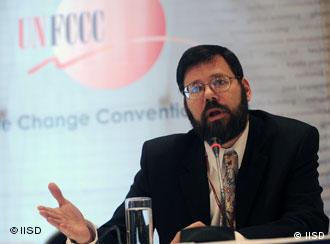
A week of preliminary UN climate talks in Bangkok come to a close today with little concrete progress to show for it. With just two months left until much-anticipated negotiations in Copenhagen, it will be "extraordinarily difficult" for the U.S. to agree to specific emissions reduction targets in an international climate treaty, warns the United States' deputy climate envoy Jonathan Pershing (pictured right).
E&E News's ClimateWire reports (sub. required):
[T]he chief U.S. negotiator acknowledged that the United States may not agree to cut greenhouse gas emissions in a treaty this year until Congress passes its climate legislation.While efforts to drive towards global agreement on binding emissions targets stall and both the United States and key developing nations, including China and India, balk at such proposals, a series of recent recommendations are establishing a growing consensus for an alternative to the targets and timetables approach that has repeatedly failed to make either political or substantive progress.
"It will be extraordinarily difficult for the U.S. to commit to a specific number in the absence of action from Congress," State Department deputy climate envoy Jonathan Pershing said. "The question is open as to how much we can do. It's not really possible to answer."
Some progress was made in Bangkok, said Kim Carstensen, leader of the global climate initiative at WWF. But "on issues that require political breakthroughs, they've not made any real progress," she said. "That means targets, finance, institutions and the legal form of the outcome in Copenhagen."
This emerging climate consensus would scrap the Kyoto Protocol's focus largely-symbolic emissions targets and timetables in favor of specific, actionable national commitments to the two things that actually drive down global emissions: accelerating the deployment of clean energy and the improvement of energy intensity in key sectors of the economy.
Alongside real commitments from the world's rich nations to help provide financial and technical support to speed the diffusion of clean technologies to the world's poorer nations, this more direct framework can build off of policies already underway in key nations, including the U.S., China and India, and result in far more concrete climate action than the empty commitments to symbolic emissions targets.
For more on the Breakthrough Institute's coverage of the Road to Copenhagen, explore our archives here or see these selected posts:
- "Only Technology Policy, Not More Targets and Timetables, Can Save Copenhagen"
- "How to Get Climate Policy Back on Course: New Report Proposes Post-Kyoto Framework for Copenhagen"
- "IEA Sends Message to Copenhagen Delegates: $10 tn Needed to Combat Climate Change"
- "New "National Schedules" Proposal Could Change International Strategy in Time for Copenhagen"
Thursday, September 24, 2009
DailyShow: World's nations speak out boldly at the UN about their future tenuous plans to hit possible abstract climate goals
In their usual spot-on style, the Daily Show with John Stewart captures the essence of the United Nation's forum on climate change this week, where the heads of state of the world's nation's gave speeches on the topic in New York. Stewart notes the contrast between the doomsday rhetoric and the overall lack of concrete progress towards real action to slash emissions and get the world running on clean energy.
Never fear, Stewart says, "The world's largest industrial nations have spoken out boldly about their future tenuous plans to hit possible abstract goals." We're saved.
I appreciate my doomsday world outlook with a solid helping of satire, so enjoy...
| The Daily Show With Jon Stewart | Mon - Thurs 11p / 10c | |||
| Cloudy With a Chance of Heat Balls | ||||
| ||||
Tuesday, September 22, 2009
Ten Weeks to Copenhagen - Jenkins on KPFA Radio
 With just ten weeks until the world's nations meet in Copenhagen this December to try to hammer out a global consensus on efforts to reduce greenhouse gas emissions and build a global clean energy economy, WattHead.org's Jesse Jenkins returned to KPFA radio Monday to discuss the coming climate and energy policy debates in the U.S. Senate and on the international stage. Jenkins joined host Mitch Jeserich and Dan Jacobson of Environment California on this week's segment of "Letters to Washington," which aired Monday on KPFA radio in the Bay Area and was syndicated throughout the country this week.
You can listen to the segment below, which begins at 1:25:25...