Energy Collective blog power policy climate - the conversation happens here
Showing posts with label renewables and economic development. Show all posts

Monday, May 24, 2010

Entrepreneurs Wanted: Must be willing to think big to transform energy for the poor

A guest post by Hugh Whalan

When Apple transformed the music industry with the iPod and iTunes, and when Google revolutionized internet search capabilities, it was a win for everyone – consumers got better products and the companies providing them became rich.

There are billions of energy-poor consumers in desperate need of exactly this kind of industry transformation. The sheer size and growth potential of the market has the potential to create the next generation of huge energy companies – as large as BP, Shell and Exxon – which are focused on providing small scale energy solutions to the billions for whom this is the best solution.

The opportunity for the entrepreneurs who will build the next generation of energy mega-companies can be summed up with three simple points:

  1. Those at the Bottom of the Pyramid (BOP), people earning $1-$6 dollars a day, already spend a lot on energy. More than $US433 billion each year according to the World Resources Institute (WRI). WRI estimates energy is the second largest market in the BOP markets –bigger than the transport, health, ICT and water sectors combined.

  2. Studies show that the average BOP consumer would use more energy if they could afford to. This means that as the poor come out of poverty and as the price of each unit of energy drops, the market will continue to grow.

  3. The energy resources currently meeting BOP consumer demand are overwhelmingly archaic and inefficient (e.g. kerosene, dung, firewood, and charcoal).
In summary, the BOP energy market is huge, will continue to grow quickly and has underserved customers. It’s the kind of market that screams for innovation, and the stuff of dreams for entrepreneurs. Some entrepreneurs are already well on their way to addressing this market failure by providing cheaper, greener, and safer options for BOP consumers. Some examples include Barefoot Power’s efforts with solar, Husk Power’s mini power-plants, and E+CO’s investments in green energy technology companies.

I hope they all become billionaires because the more entrepreneurs who see the pot of gold at the end of this rainbow, the better. More entrepreneurial attention will result in more innovation and competition, which leads to better service and products for paying consumers. For the billions relying on kerosene, firewood, and charcoal, I guarantee you, this cannot come too quickly.

Hugh Whalan is the CEO and co-founder of Energy in Common, a non-profit allowing individuals to make micro-loans to fund green energy entrepreneurs in developing countries.

Read more!

Tuesday, August 11, 2009

Is the Silicon Valley of Clean Energy Growing in China?

How Baoding, China became the world's first "carbon positive" city.

(by Tyler Burton, crossposted from The Breakthrough Blog)

100 miles southwest of Beijing, a green revolution is underway; and it began, as Peter Ford of the Christian Science Monitor reports, with a "bad case of smelly fish".

Yu Qun (pictured) had only recently been elected mayor of Baoding, China when fish in the region's largest lake began to die by the thousands. In his mind, this could only be the direct result of pollution from the several hundred factories which lined the river's banks. So Mr. Yu took a drastic but, in the long run, incredibly fortuitous step: he closed the factories.

This move cost his city large points at first with the Central Government. His annual economic growth was down almost two percentage points; but Mr. Yu had a plan:

"Polluting first and cleaning up later is very expensive," says the boyish-looking mayor, a former college math teacher. "So we chose renewable energy to replace traditional industry."

In three years, Yu has transformed Baoding from an automobile and textile town into the fastest-growing hub of solar, wind, and biomass energy-equipmentmakers in China. Baoding now has the highest growth rate of any city in Hebei Province. Its "Electricity Valley" industrial cluster - consciously modeled on Silicon Valley - has quadrupled its business.

Of course, Mr. Yu met large resistance at first. Many officials in the provincial and central governments thought he was "impractical", that "renewable energy was 30 or 40 years away..." (Sound familiar?) But Yu persisted, and his persistence paid off.
Such has been the success of his perseverance, and of the advantages that Baoding offered new "green-tech" investors, that the city now houses nearly 200 renewable energy companies. One of them makes blades for wind farms in Texas. Another is providing the solar panels for the largest solar power station in the world, in Portugal.

"New energy has become a pillar industry in our city," the mayor says. Within two years, he forecasts, it will have overtaken the auto and textile sectors as the most important mainstay of the local economy.

And what's good for Baoding may be good for the world. By one reckoning, the city is the world's first to go "carbon positive": The carbon saved annually worldwide through the use of equipment made here outweighs the city's own emissions.
As America struggles to retool its aging manufacturing sector, perhaps one city's success at sloughing off its own burden of pollution can offer inspiration. A word to city planners far and wide: we might do well to look towards our own pragmatic Mr. Yu's. If we dare to make bold choices with a slant towards the future, what can we accomplish in 3 years?

Read more!

Tuesday, July 14, 2009

A Snowy Mountain Scheme for the 21st Century

The time has come for an aspirational new nation-building project to spur a prosperous, clean energy economy in Australia

By Leigh Ewbank. Originally published by On Line Opinion - Australia's e-Journal of social and political debate.

Last week marked the 60th anniversary of the momentous Snowy Mountains Hydro-electric Power Act - the first step in a 25-year journey to modernise our nation. Unrivaled in its ambition, the Snowy Mountains Scheme would meet the dual objectives of providing reliable electricity for our cities and towns, and water supplies to sustain food production along the Murray River.

Australia's largest-ever engineering project would spur social and economic development and benefit the cities and rural communities of Australia's southeast for generations. Without fanfare or media attention, Australia forgot to acknowledge a significant moment in our nation's history.

Today Australia faces new challenges: our climate is changing. And we must quickly transition to a clean energy economy to avoid the worst-case scenarios predicted by climate scientists. Alongside this comes the continued global economic change that is putting increased pressure on established industries. Our parliament must act to encourage the expansion of new industries and secure jobs for the future.

A new nation-building project on the scale of the Snowy Mountains Scheme is needed.

The backbone of a scheme for the 21st century will rewire the nation, laying the foundations for a clean energy revolution. Australia needs new transmission lines to connect population centres to our abundant renewable energy resources. Currently, our windy southern coast; our vast deserts; and our rich geothermal resources, are untapped. A renewable electricity grid can open up new regions to development, unleash private investment in renewable energy production, and allow for these new energy markets to flourish. It's needless to say that this comes with new jobs, prosperity, and the important benefit of mitigating climate change.

Importantly, such a scheme will overcome the deficiencies of the Rudd Government's so-called Carbon Pollution Reduction Scheme. Emissions trading will not build new electricity grids, particularly to remote places rich with renewable resources. High capital costs and the lack of short-term profitability of building this type of infrastructure is beyond the capacity of the private sector. Furthermore, building new grid infrastructure does not directly reduce emissions and will therefore not benefit from emissions offset markets. Our government must step in to provide the public investment and long-term vision required to carry out such a scheme.

While carbon reductions targets and "market-based" policies might captivate bureaucrats and policy wonks, they have failed to win the hearts and minds of Australian citizens. These policy tools say nothing about Australia's collective aspirations and abilities, and miss the opportunity to generate the public support necessary to build a clean energy economy. Because emissions trading are not directly linked to specific projects it is unable to capture the public's imagination the way that monumental, government-backed projects have in the past. The best examples of which include the Sydney Harbour Bridge and Snowy Mountains Scheme.

I'm not the first Australian to call for a massive nation-building project. In 2006, Professor Tim Flannery attempted to capture public imagination by evoking the spirit of the Snowy Scheme. He proposed the construction of a sustainable city in the heart of Australia called "Geothermia". The city would harness geothermal and solar energy to process mineral resources. New rail lines would connect key mines to the mineral-processing hub, and then to the port of Darwin for export. This was a big vision.

So why didn't Flannery's initiative gain traction? And would a similar proposal work now? Well, apart from Flannery's poor choice of name, I think there are two good reasons that explain the lack of interest, and the context has changed enough for a visionary project to succeed. First, the neo-liberal consensus was still strong in 2006. John Howard was the PM and the prevailing economic orthodoxy prohibited large-scale public investment. The financial crisis of 2008-9 has since undermined the neo-liberal consensus and governments around the world are now implementing massive public investment programs.

Second, climate change and environmental advocates did not support the plan. For too long climate change advocates have focused on technocratic and uninspiring policy proposals - a 20 per cent carbon reduction target by 2020 and the implementation of carbon trading. With several environmental groups now opposing the Rudd Government's CPRS and proposing a "Plan B", there is now a window of opportunity for these advocates to adopt a new campaign that focuses on building the enabling infrastructure of a clean energy economy.

I suspect environmental advocates are reluctant to employ a powerful myth because of the Snowy Scheme's environmental impacts. It's true that the scheme harmed the Snowy River, but this should not disqualify the use of Australia's myths and nation-building projects for responses to climate change. Environmental advocates must also overcome the false perception that "strong" reduction targets guarantee emissions reductions. On the contrary, because an effective response to climate change requires building the infrastructure for a clean energy economy, the Snowy Scheme is a better model than one that emphasises targets and trading.

Is Australia ready for a massive nation-building project to deal with the twin challenges of climate and global economic change? Yes it is. As the Parliament demonstrated 60 years ago, our political leaders must act in Australia's long-term interest to ensure that such a project becomes a reality.


Leigh Ewbank is a graduate of RMIT University's Bachelor of Social Science Environment degree with honours. He is a summer fellow at the Breakthrough Institute, an energy policy think-tank based in Oakland, California.

Read more!

Thursday, May 07, 2009

Economists: Clean Energy beats Dirty Coal in the South

Guest post by JW Randolph, originally posted at Appalachian Voices' "Front Porch" blog...

Great news for the struggling economy of Appalachia and the South…

Washington, DC: The experts behind a group of new reports summarized their findings today showing that new coal plants present serious financial risks to southern utilities and ratepayers, especially in light on looming federal regulations on carbon dioxide emissions.

“Our analyses have shown that uncertainty about future coal plant construction costs and the costs of complying with impending federal regulation of plant carbon dioxide emissions represent significant risks for utilities and their customers,” said David Schlissel, a Senior Consultant for Synapse Energy Economics. “In particular, the federal government is likely to mandate significant reductions in carbon dioxide emissions. The costs of complying with this expected federal action are likely to increase the cost of generating power at new coal-fired plants by tens to hundreds of millions of dollars each year, making coal an even more expensive option than energy efficiency and renewable resources.”

Citing a growing body of evidence, which includes financial reports from Virginia, South Carolina, Kentucky and Louisiana, the experts highlighted the clear economic benefits of renewable energies and energy efficiency in the South, and across the Nation.

Michael Fisher, Vice President and Principal Associate of Abt Associates, which authored the Virginia report found that, “Investments in energy efficiency are considerably less expensive and more beneficial to the Virginia economy than building a new coal-fired power plant to meet Virginia’s energy needs.”…

“The relative economic gains to Virginia from energy efficiency investments are substantial, with Gross State Product increasing by upwards of a billion dollars annually and employment increasing by over 5,000 new jobs,” continued Fisher.

In all of the reports, the findings clearly indicated that new coal-fired power plants were not needed.

“In our analysis of East Kentucky Power Cooperative we found the proposed Smith coal plant was not originally approved on the basis of the demand for electricity, but rather for business needs. Since then energy demand has slowed considerably and the need for the plant is even less. Now, with changes in federal policies, the plant serves no purpose at all. In baseball, three strikes means you’re out. The Smith coal plant would be a highly polluting, expensive, and unnecessary burden on Kentucky ratepayers,” said Tom Sanzillo, a Senior Associate with TR Rose Associates.

“These reports make it clear that the South is not an exception,” said Mark Kresowik, Corporate Accountability Representative for the Sierra Club. “Coal plants are simply a poor investment, no matter where in the country you are building them. We need to be investing wisely, especially in these economic times, and that means looking at energy efficiency and renewable energy projects that can create jobs and help fight global warming, without the drawbacks of coal.”

###
Related Reports and Resources:

Old Dominion Electric Cooperative’s Hampton Roads Power Plant, Virginia
http://wiseenergyforvirginia.org/resources/

Santee Cooper’s Pee Dee Power Plant, South Carolina
http://coastalconservationleague.org/Page.aspx?pid=842

East Kentucky Power Cooperative’s Smith Power Plant, Kentucky
http://kentucky.sierraclub.org/Resources/Environmental_Research/RightDecision/FullReport.pdf

Dominion Resources’ Wise County Power Plant, Virginia
http://www.wiseenergyforvirginia.org/downloads/WisePowerReport0309.pdf

Entergy’s Little Gypsy Power Plant, Louisiana http://www.all4energy.org/sites/default/files/The_Mysterious_Little_Gypsy.pdf

Read more!

Thursday, April 23, 2009

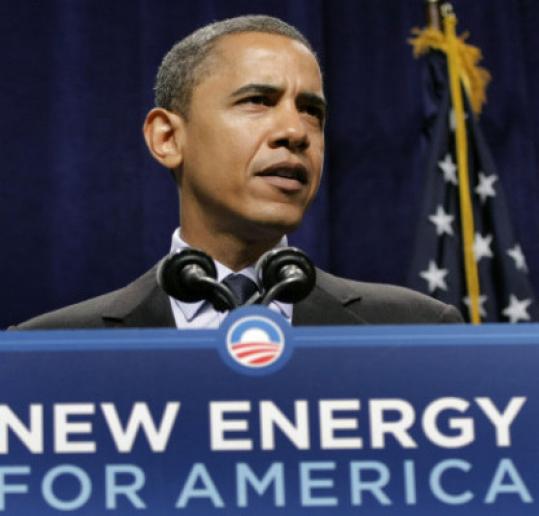
From Washers to Wind: Obama in Iowa

This is a guest post by Billy Parish, founder and former director of the Energy Action Coalition and current Ashoka Fellow, originally posted at Grist.org

Yesterday, was the 39th anniversary of Earth Day and to mark the occasion, President Obama was in Newton, Iowa to speak about clean energy. Newton is one of those towns where most of the residents are employed by one major employer, and until October 2007, that employer was Maytag. So when Whirlpool bought Maytag and shut down the Newton plant, over 12% of Newton's 16,000 residents lost their jobs. If you didn't lose a job, your husband, sister, or neighbor surely did.

Obama Speaks in Newton, IA

But now Newton's a shining example of what's possible. Instead of dishwashers and washing machines, the people of Newton are making wind turbines. That's why President Obama chose Newton and Trinity Structural Towers to argue that "the choice we face is not between saving our environment and saving our economy. The choice we face is between prosperity and decline."

But towns like Newton aren't just losing jobs, they are losing talent too. Young people have been hit hard by this recession. According to the Education and Labor Committee, of the 1.2 million jobs lost last year, 60 percent were held by workers under the age of 25. Mobile and in search of opportunity they are moving to bigger cities and mega regions that promise greater opportunity. Iowa, in particular, has been hurt by this "brain drain," losing more college graduates than any other state in the country.

So while we replace dishwashers with wind turbines, and re-open empty auto manufacturing plants with solar manufacturing facilities, let's also work to build truly whole communities. The communities that define themselves by one industry or one employer will be increasingly at risk. A healthy, 21st century economy demands that we become increasingly self-sufficient in the resources we use---the food we grow, the water and energy we consume, and the products we build. Revitalizing local living economies can create jobs, conserve energy, and keep young talent in the community.

Read more!

Tuesday, February 03, 2009

Blasting Set to Begin Beside World's Largest Toxic Coal Sludge Dam

Activists Blockade Efforts to Begin Mountaintop Removal and Blasting Beside World's Largest Toxic Coal Sludge Dam

Originally posted at ItsGettingHotInHere.org and Front Porch blog


Please help save Coal River Mountain! Call Governor Manchin at 1-888-438-2731 and / or use our simple web form to email the governor.

Blasting Operation Endangers Community, Destroys Wind Energy Potential

Citizens of the Coal River Valley, accompanied by supporters from throughout Appalachia and supported by national allies incuding James Hansen, are blocking access to prepare Coal River Mountain for blasting. The blasting would be dangerously near to a nine-billion-gallon toxic coal sludge dam. Massey has begun work on a mountaintop removal operation on Coal River Mountain, with plans to blast over underground mines beside the sludge dam. Residents are advocating for a wind farm on the site as a safe alternative for cleaner energy and long-term jobs.

"The governor and county legislators have failed to act, so we're acting for them," Rory McIlmoil said. "Someone has to take a stand for common sense. They can't allow the wind potential on Coal River Mountain to be destroyed, and the nearby communities endangered, for only 17 years of coal. There is a better way to develop the mountain and strengthen the local economy that will create lasting jobs and tax revenues for this county, and that's with wind power."

"I fear for my friends and all the people living below this coal sludge dam," said Gary Anderson, who lives near the site. "Blasting beside the dam, over underground mines, could decimate the valley for miles. The 'experts' said that the Buffalo Creek sludge dam was safe, but it failed. They said that the TVA sludge dam was safe, but it failed. Massey is setting up an even greater catastrophe here."

In 1972, a sludge dam operated by Pittston Coal Company failed and killed 125 people in Buffalo Creek, W.Va. In 2000, a sludge dam operated by Massey Energy in Martin County, Ky., released approximately 300 million gallons of coal waste that broke through into underground mines. The EPA called that the worst environmental disaster in the Southeast. Then, in December 2008, a coal ash sludge impoundment operated by the Tennessee Valley Authority (TVA) failed near Harriman, Tenn. That disaster released over one billion gallons of toxic sludge that destroyed three homes, damaged twelve more and covered 300 acres.

Residents have lost faith in their state government and taken their plea nationally. Climate expert James Hansen, the head of NASA's Goddard Institute for Space Studies, said, "President Obama, please look at Coal River Mountain. Your strongest supporters are counting on you to stop this madness."

"We can't sit by while Massey jeopardizes the lives and homes of thousands of people," said Vernon Haltom of Naoma. "Governor Manchin and the West Virginia Dept. of Environmental Protection have proven that they are unwilling to protect the citizens. What do they expect us to do? Will they wait until we're in body bags to take this threat seriously?" A 2008 report by the federal Office of Surface Mining revealed serious deficiencies in the WVDEP's regulation of coal waste dams (www.wvgazette.com/News/200901110512?page=1&build=cache). In November, WVDEP approved a permit revision allowing Massey to begin the mountaintop removal operation. Despite citizens' objections, DEP denied public participation in its decision process.

Anderson added, "We need to stop the madness and stop Massey from blowing up our beautiful mountain. We need to go with the better energy option, and that's a wind farm, which is perfect for Coal River Mountain. We could have a green energy future for the country, starting right here."

For updates, photos and video footage, go to http://climategroundzero.org

See related stories and posts:

  • "Coal River Mountain can't wait", by Jim Biggers at Grist
  • "Anti-coal activists chain themselves to equipment at Massey operation," from WV Gazette
  • Archives of Tennessee Coal Sludge Disaster (Kingston TVA Spill)

  • Read more!

    Friday, January 30, 2009

    Update from Coal River Mountain

    Here's an update from the Coal River Mountain Wind Team:

    We wanted to write and give you an update on what's happening with the mountain. There has been a lot going on, not much of it in our favor, so we could still use your help in spreading awareness of the campaign and the urgency of the situation. Please continue to share our website and the story of Coal River Mountain with your friends and colleagues, and even write letters to your local newspapers and legislators urging their support for the residents of the Coal River Valley.

    First of all, Massey has begun pre-mining activities below the ridge where the first phase of mining is set to begin. It is hard to determine exactly when they will be set to blast, and for now they have yet to construct a road up to the ridge, but they have shown their intent by clearing the forest and constructing a road and sediment ditches approximately 150 [ft?] below the ridge, so we expect that they will be ready to clear the ridge in the coming weeks, but we'll keep you updated on that.

    We'd like to once again bring attention to the economic report conducted by Downstream Strategies out of Morgantown, WV that we released last December. The report analyzed the economic costs and benefits of going with wind versus mountaintop removal for Coal River Mountain, and concluded that the development of a 328 Megawatt wind farm (enough to power about 70,000 homes) stands as the best economic land use option for the mountain, the communities and the county government. This was the evidence we'd been waiting for, and we truly though for a while that the report couldn't be ignored by state and local leaders.


    This hope was shattered on January 6th when we took the result of the study to the Raleigh County Commission. Instead of embracing the study's conclusions and the opportunity to diversify the local economy and bring in new industries that would help soften the blow of the boom-and-bust cycles of coal, the Commission chose to ignore the merits of the study altogether and instead chose not to "pit one industry against another." Unfortunately, the Commission and the state government are holding tight to that false logic, and so we are now hoping to catch the attention of national leaders who might help us in the fight for the future of the mountain.

    We got a big boost in that effort yesterday when Salon.com published a wonderful and comprehensive article about the campaign written by Appalachian author Jeff Biggers ("The United States of Appalachia"), whose own family home in Indiana has been destroyed by strip-mining for coal. The article gives a great accounting of the campaign since its beginnings, as well as a more comprehensive update on where the campaign now stands [editors note: the Salon article is a must read!]. Salon.com gets nearly 6 million readers a month and so we appreciate Jeff's article and his persistence in spreading awareness for the wind campaign. You can read the article by clicking here.

    We also continue to fight the proposed mining on legal grounds, and on February 10th we will be going before the Surface Mine Board to challenge the permit revision that was approved for the Bee Tree surface mine back in November. The hearing will be held at the Department of Environmental Protection headquarters in Kanawha City (Charleston) at 601 57th St. The hearing will begin at 8:30am, so if you're free please come out and show your support for Coal River Mountain. Here is a link for directions to the hearing.

    That's about it for now, we will keep you updated as things happen and we hope you continue to support us in this effort.


    With warm regards,

    The Coal River Mountain Wind Team


    Read more!

    Thursday, January 29, 2009

    The Jobs are “Blowin’ in the Wind”

    This is a guest post by A. Siegel, originally posted at GetEnergySmartNow.com and DailyKos

    Jerome a Paris’ Wind power set to decline under Obama? highlighted how the on-again, off-again federal renewable energy policies have created a boom-and-bust cycle, with 2009 looking to be perhaps a minor bust after 2008’s record-setting boom period. And, that this might occur despite the Administration and Congressional focus on renewable energy. And, despite our desperate need to get off polluting energy sources via energy efficiency and clean energy production as quickly as possible.

    Yesterday, however, also say another important item: the wind industry now employes more American’s than the coal industry! Wind: 85,000 workers. Coal: 81,000 workers.

    And, looking to the future, wind produces more jobs per kWh than coal while producing far (FAR) less environmental havoc.

    Green vs Dirty Jobs

    With each passing day, wind energy offers the opportunity for more jobs. As per Jerome a Paris, every megawatt of wind creates about 15 jobs in the year of construction and another 0.4 permanent jobs (or, over a 25-year life cycle, about 10 job-years).

    Despite the growing demand for coal (both for our own electrons and for export), the coal industry (via mountaintop removal and otherwise) has worked hard not to just get the miner out of the mine, but the miner out of mining. Coal industry employment has dropped 50 percdent since 1986.

    Growing spectrum of jobs …

    In 2008, wind accounted for 42 percent of new power capacity added to the grid. (Interesting, 2008 was a year where total electricity demand fell. Increased wind and nuclear power production, with the reduced demand, led to an actual fall in the amount of coal-fired electricity produced in 2008 compared to 2007.)

    With the increasing US wind construction, foreign firms are moving ever more of their manufacturing into the United States to meet US demand. And, the actual construction, management, and maintenance jobs are ones that cannot be exported.

    The stimulus package contains a three-year extension of the Production Tax Credit (PTC), a per kilowatt hour subsidy to wind power production, which the stimulus package also allows to be an investment tax credit (far fewer multi-millionaires looking for tax write-offs in face of the struggling (failing?) economy). Now, there is a real question to ask as to whether PTC/ITC on a per kWh basis is really the right path to go. Just imagine what the subsidy would end up being if half America’s electricity came from wind? (See this excellent discussion of this issue.)

    We often hear of the impossibility of taking action on moving off coal due to the JOBS! JOBS! JOBS! issue. Well, the jobs issue is clear: clean energy is the way to go not just due to some esoteric global warming issue, but to spark more and better jobs. And, jobs not just for today, but into the future.

    The front-lines: Coal River Mountain

    Coal River Mountain, West Virginia, truly represents the front-lines of the coal vs wind battle for our collective future. Rory McImoil Rory McImoil is a key player in laying out a stark alternative: blow the mountains away for the temporary gain of extracted coal (which will run out within a decade) and the long-term pain of a devastated environment and community or invest in wind power that will provide employment and community tax revenue for decades to come.
    Coal River Wind is the sort of win-win-win-lose battle that will define our future.

    • Win in terms of job creation and long term economics
    • Win for environmental justice and strengthening the local community
    • Win for the environment through not destroying the mountains, reduced mercury and other pollution, reduced fly ash, and reduced CO2 emissions
    • Lose for the fossil-fool industry and those seeking to live off extractive industries, living lavishly today at the expense of tomorrow.

    By year 27, the wind-power option would create more local job-years than all the planned strip mines combined. And, year 28 … 29 … 30 … and on are continued prosperity. In addition, this is only the direct jobs, without counting the how the electricity generation revenue would go into the local government as tax revenue (teachers, nurses, police …).

    And, these jobs would create fewer health implications (has any wind industry employee come down with Black Lung disease?) for the workers and others in the community.

    And, this process would leave the topography intact (albeit with wind turbine towers), basically eliminate the waste stream (after construction), and be clean, non-GHG emitted power generation for decades to come.

    But, Massey Energy would lose and they spend quite a bit of money to ‘buy’ the West Virginia political system and to distort the debate.

    The Energy Smart choice is an uphill battle against such established interests.

    In any event

    Wind-power supplies about two percent of America’s electricity. Coal about 50 percent. Wind provides more jobs. Hmmm …

    In addition to any discussions about global warming or mountain-top removal or fly ash, the next time you have a discussion with anyone about renewable power versus fossil fuel remember this: When it comes to JOBS!!! JOBS!!! JOBS!!!, clean energy beats dirty energy, hands down.

    Some related discussions:

    Faithful at Article XI, the new Commonwealth of Virginia energy/environmental blog. “Virginia mining employment is plunging due to the fact that there is less coal and we are replacing miners with machines to get whats left. This leaves our SW region fraught with some of the worst poverty in the United States.” Yet, Governor Tim Kaine has supported the Dominion Virginia Power and the unWise coal-fired electricity power plant on the the basis of, guess what, jobs. Virginia is one of very few states with zero installed utility-scale wind power. If jobs matter, perhaps that should change.

    DanaWV at It’s Getting Hot in Here: Take This Jobs (Argument) and Shove It!.

    My Blowin’ in the Mountains from fall 2007 on Coal River Wind.

    We can all
    help make
    America
    Energy Smart.

    Ask yourself:

    Are you doing
    your part to
    ENERGIZE AMERICA?

    Read more!

    Monday, January 26, 2009

    Obama: "No single issue is as fundamental to our future as energy"

    Today, Barack Obama announced several measures to increase America's energy independence and reduce the threat of global climate change. In a speech delivered at the White House, President Obama said, "These are extraordinary times," adding, "At a time of such great challenge for America, no single issue is as fundamental to our future as energy."

    After briefly discussing the nation's economic challenges, Obama went on to link today's challenges to our dependence on oil and fossil fuels:

    "America's dependence on oil is one of the most serious threats that our nation has faced. It bankrolls dictators, pays for nuclear proliferation and funds both sides of our struggle against terrorism. It puts the American people at the mercy of shifting gas prices, stifles innovation, and sets back our ability to compete.

    These urgent dangers to our national and economic security are compounded by the long-term threat of climate change, which, if left unchecked, could result in violent conflict, terrible storms, shrinking coastlines, and irreversible catastrophe."
    President Obama noted that every US president from Richard Nixon on has promised efforts to secure America's energy independence, saying:
    "Year after year, decade after decade, we've chosen delay over decisive action. Rigid ideology has overruled sound science. Special interests have overshadowed common sense. Rhetoric has not led to the hard work needed to achieve results and our leaders raise their voices each time there's a spike on gas prices, only to grow quiet when the price falls at the pump."
    Mr. Obama said that today, "America has arrived at a crossroads," adding that it is now the nation's time to "choose whether to risk the peril that comes with our current course or to seize the promise of energy independence. And for the sake of our security, our economy and our planet, we must have the courage and commitment to change."

    President Obama then promised, "It will be the policy of my administration to reverse our dependence on foreign oil while building a new energy economy that will create millions of jobs."

    He recognized that the challenge will not be easy. "I cannot promise a quick fix," he said. "No single technology or set of regulations will get the job done."

    Obama then promised to "commit ourselves to steady, focused, pragmatic pursuit of an America that is freed from our energy dependence and empowered by a new energy economy that puts millions of our citizens to work. "

    The president then went on to announce what he called "the first steps on our journey toward energy independence," including new investments in Obama's economic stimulus package to harness clean energy, a directive to move forward with new regulations to increase the efficiency of American cars and trucks passed by Congress in December 2007, and a new directive to the Environmental Protection Agency to allow California and 13 other states to set stricter standards for greenhouse gas emissions from the tailpipes of personal vehicles. "Each step," President Obama said, "begins to move us in a new direction, while giving us the tools that we need to change."

    Here is the remainder of his speech:
    "First we must take bold action to create a new American energy economy that creates millions of jobs for our people. The American Recovery and Reinvestment Plan before Congress places a downpayment on this economy.

    It will put 460,000 Americans to work with clean energy investments and double the capacity to generate alternative energy over the next three years. It will lay down 3,000 miles of transmission lines to deliver this energy to every corner of our country. It will save taxpayers $2 billion a year by making 75 percent of federal buildings more efficient. And it'll save working families hundreds of dollars on their energy bills by weatherizing 2 million homes.

    This is the boost that our economy needs and the new beginning that our future demands.

    By passing the bill, Congress can act where Washington has failed to act over and over again for 30 years. We need more than the same old empty promises. We need to show that this time it will be different. This is the time that Americans must come together on behalf of our common prosperity and security.

    Second, we must ensure that the fuel-efficient cars of tomorrow are built right here in the United States of America.

    Increasing fuel efficiency in our cars and trucks is one of the most important steps that we can take to break our cycle of dependence on foreign oil. It will also help spark the innovation needed to ensure that our auto industry keeps pace with competitors around the world.

    We will start by implementing new standards for model year 2011, so that we use less oil and families have access to cleaner, more efficient cars and trucks.

    This rule will be a downpayment on a broader and sustained effort to reduce our dependence on foreign oil.

    Congress has passed legislation to increase standards to at least 35 miles per gallon by 2020. That 40 percent increase in fuel efficiency for our cars and trucks could save over 2 million barrels of oil every day: nearly the amount of oil that we import from the Persian Gulf.

    Going forward, my administration will work on a bipartisan basis in Washington and with industry partners across the country to forge a comprehensive approach that makes our economy stronger and our nation more secure.

    Third, the federal government must work with, not against, states to reduce greenhouse gas emissions.

    California has shown bold and bipartisan leadership through its effort to forge 21st-century standards, and over a dozen states have followed its lead.

    But instead of serving as a partner, Washington stood in their way. This refusal to lead risks the creation of a confusing and patchwork set of standards that hurts the environment and the auto industry.

    The days of Washington dragging its heels are over. My administration will not deny facts; we will be guided by them. We cannot afford to pass the buck or push the burden onto the states.

    And that's why I'm directing the Environmental Protection Agency to immediately review the denial of the California waiver request and determine the best way forward. This will help us create incentives to develop new energy that will make us less dependent on the oil that endangers our security, our economy and our planet.

    As we move forward, we will fully take into account the unique challenges facing the American auto industry and the taxpayer dollars that now support it. And let me be clear: Our goal is not to further burden an already struggling industry; it is to help America's automakers prepare for the future.

    This commitment must extend beyond the short-term assistance for businesses and workers. We must help them thrive by building the cars of tomorrow and galvanizing a dynamic and viable industry for decades to come.

    Finally, we will make it clear to the world that America is ready to lead. To protect our climate and our collective security, we must call together a truly global coalition. I've made it clear that we will act, but so too must the world. That's how we will deny leverage to dictators and dollars to terrorists, and that's how we will ensure that nations like China and India are doing their part, just as we are now willing to do ours.

    It is time for America to lead because this moment of peril must be turned into one of progress.

    If we take action, we can create new industries and revive old ones, we can open new factories and power new farms, we can lower costs and revive our economy. We can do that and we must do that.

    There's much work to be done; there is much further for us to go. But I want to be clear from the beginning of this administration that we have made our choice: America will not be held hostage to dwindling resources, hostile regimes and a warming planet.

    We will not be put off from action because action is hard.

    Now is the time to make the tough choices. Now is the time to meet the challenge at this crossroad of history by choosing a future that is safer for our country, prosperous for our planet, and sustainable.

    Those are my priorities, and they're reflected in the executive orders that I'm about to sign.

    Thank you so much for being here."

    Read more!

    Wednesday, November 12, 2008

    Wind Power Rejuvenates Rural Oregon County

    Here's a profile piece from the Oregonian newspaper on Sherman County, Oregon. Once a rural county in decline with a median income less than 2/3rds the state's average, Sherman County is now home to a bustling wind power boom, giving new revenue to the county's coffers, putting cash in the pockets of struggling wheat farmers, and giving people a reason stick around in the local community.

    For more on wind power and it's economic development benefits for the Pacific Northwest, see this fact sheet and white paper I published while working at the Renewable Northwest Project.


    "Sherman County farmers reap stability from wind"
    By Gail Kinsey Hill


    Hilderbrand Lane slices through acres of wheat fields as it heads east out of Wasco, a tiny town burrowed into Oregon's poorest county.

    Stubble from summer's harvest bristles in every direction. Nothing interrupts the tawny expanse until the road rises to expose hundreds of wind turbines. Tall and shimmery in the midday haze, they overpower the landscape, striking, unsettling.

    "I like em," says John Hilderbrand, 81, a straight-talking but jocular wheat farmer who lives along his namesake road in the two-story house his grandfather built in 1900. "They're grinding out dollars."

    Hilderbrand, the first in Sherman County to allow turbines on his land, reaps about $30,000 a year in lease payments. And the checks come without fail, he says, unlike the income from his wheat operation, which is squirrelly as the weather.

    "Fact is, I don't see any disadvantages," says Hilderbrand, who likes talking about the wind almost as much as spinning yarns of rogue bears, stuffed rats and clueless urban slickers who insist on calling the county's rich glacial silt "dirt" not "soil."

    In 2000, Sherman County had no turbines. Now it's home to one of the highest concentrations in the Columbia River Gorge, where a wind-energy boom is under way. The projects in the ground so far represent an investment of close to $1 billion, and they've begun to pump millions of dollars into this county of 1,700 residents, with jobs and tax and lease payments.

    The fees alone -- paid in lieu of property taxes -- will double the county's tax base this year and may, in part, be used to write $500 to $800 checks to every resident.

    Most directly, the turbines have affected the lives of farmers such as Hilderbrand, who had the good luck to own land in the wind's fierce path and the good sense to turn an industry juggernaut to personal advantage.

    Wind energy brings its own set of concerns: higher electricity costs for consumers, environmental impacts, scenic intrusions and an inconsistency that can confound power planners.


    Payoffs from wind
    But a look at Sherman County through Hilderbrand's eyes hints at the benefits. Farmers are weaving a new industry into the deep traditions of the fields, stabilizing their livelihoods and connecting their farms to their children and communities in ways they never imagined.

    "I used to cuss the wind all the time," says Hilderbrand, who begins to grin in anticipation of his own punch line. "These days, that's sacrilege."

    John and Wanda Hilderbrand's home, built from brick hauled by horse and ferry from Goldendale, Wash., stands behind a line of cedar and pine trees on the north side of Hilderbrand Lane. Decades ago, John planted the wind break to block the westerlies that blast across the fields. Recently, he suggested chopping them down to open up the views of Mount Adams and Mount Hood. "But the wife said, 'No; they're staying.'"

    On this clear October day, Wanda is upstairs packing for a trip to Mexico. The harvest's in; the days are growing cold. "I can't wait" for the warmth of Puerto Vallarta, says Wanda, a slight woman who moves quickly around the house, which has seen several additions over the years and is full of comfortable furniture and generations of family pictures.

    Outside, John leaves his Dodge pickup in the driveway and eases into a Mercedes, a dusty gray sedan with 180,000 miles on the odometer, for the short drive to his fields. He's partial to Mercedes, he says -- he has another, bought on eBay, in the garage -- not because they're prestigious, but because they're good solid machines.

    "I drive 70 miles round-trip just to buy groceries," he says. The store in Wasco has improved in recent years, but The Dalles remains a regular destination for staples.

    Nearby Wasco has little of note, he chuckles, except "the best and the worst restaurant in town": the Lean To Cafe and Goose Pit Saloon.

    Mention of the Goose Pit gets him started on the stuffed rat, which holds a spot of distinction in the restaurant bar. But he drops the story's thread as he turns on a gravel road and drives amid the towering turbines. He points out the 11 200-foot towers on his property and 14 more on brother Gordon's land. Scores more stretch in rows and cluster on ridges.

    The Hilderbrands' turbines are part of the Klondike wind power projects, owned and operated by Iberdrola Renewables, a Spanish company and one of the largest wind energy developers in the United States. Klondike has been going up in phases -- the first in 2001 -- and now involves 242 turbines and generating capacity of 400 megawatts. Accounting for the wind's variability, that's enough power to consistently light up more than 115,000 homes.

    To the north, Portland General Electric has completed the first phase of its 217-turbine, 450-megawatt Biglow Canyon project.

    All told, the companies lease land from 55 landowners, most of them wheat farmers in a county that has no industry and a larger percentage of its 831 square miles under cultivation than any other Oregon county.

    Sherman County's per-capita income, at $19,550, is the lowest of any county in the state, according to 2006 data, and well below the $33,299 county average for the state.

    More wind projects are in the works, including a 400-megwatt project (which could double to 800 megawatts ) by BP Alternative Energy, a subsidiary of BP, and two more projects by Iberdrola totaling 700 megawatts.

    "The wife says we should have them on every acre," Hilderbrand says as he guides the Mercedes back onto Hilderbrand Lane and west into Wasco.


    Life at the Goose Pit

    The Goose Pit, a nondescript building at the south end of town, is in a midafternoon lull. A few regulars drink beer at a roomy bar in the back. John points out the stuffed rat, fur askew and grayish, squatting in a box on the counter. "Shot on the premises," says John, a claim the owner immediately disputes, although she can't remember precisely how the rat got there.

    Stuffed animals hang from ceiling and wall: a turkey in full flight; an elk head; half a black bear, its front legs outstretched; a full cougar lounging on a shelf.

    A neighbor shot the bear when it broke into his house, John relates. "Had a .30-06. Laid him right out."

    The Goose Pit serves as the town's public square. Tall tales, intrigues, schemes, they all find their way into the restaurant near the end of Wasco's short main street. Despite the wind energy boom, the street holds more boarded-up storefronts and peeling paint than viable businesses. But for the locals, the changes are profound.

    Kathy Neihart and Mike Gutfleisch have owned the restaurant for 25 years. Only in the past several has the investment begun to pay off.

    "It's been a slow uphill climb ever since we started," says Neihart, who moved to Wasco from Portland to escape the big city clamor. About 10 years ago, major renovations put them in debt, and Wasco's dropping population darkened the outlook. "We were getting behind, and there was no way we could have caught up. Those wind towers saved us."

    Between 2000 and 2006, Sherman County's population fell by 12 percent. "They were leaving, and no one was coming back to run the farm," Neihart says.

    Business has doubled in recent years, she says, and each Saturday night she and Gutfleisch cook as many as three prime rib roasts for a steady stream of customers.

    Much of the work associated with the wind farms is in construction -- temporary employment -- economists note. But a lineup of projects in Sherman and surrounding counties, new mobile home parks to house workers and a 14-lot subdivision on the outskirts of town signal some stability for a population that has fallen to 320 from the 2000 level of 380.


    Reason to come home

    John and Wanda Hilderbrand tried to retire in the 1980s after their two sons and a daughter left town for lives of their own. The couple moved to Black Butte Ranch near Sisters, then to Bend. But they soon returned.

    "We met a lot of nice people," Wanda says. "But I said to John, 'It's just not my life.'" She missed her connections to the land, to the plantings and the harvests and to the deer that showed up in her yard almost every morning to eat her roses and peer in the living room window. She even missed the wind.

    Now, with the money the turbines provide, the Hilderbrands say they're more relaxed about their finances and more optimistic about their legacy to their children. They can more easily absorb the rising costs of farming and can travel more.

    They've been on a cruise through the Panama Canal, vacationed in Costa Rica and purchased a better timeshare in Mexico. And, says John, "I buy a lot of things on eBay -- the wife says too much," including that Mercedes and a backhoe.

    Hilderbrand won't say how much he receives from Iberdrola. Generally, landowners are paid $3,000 to $5,000 annually per turbine, the amount rising with turbine capacity. That means a farmer with 10 turbines earns $30,000 to $50,000 a year.

    The turbines' concrete pads eat up some land, but farmers work around them. Hilderbrand estimates that his 11 turbines take three acres of his 1,200 acres out of production.

    Farming of soft white wheat, most of which is shipped to Japan, remains the mainstay, he says, but "I make a really nice amount" from the turbines.

    Most important, the Hilderbrands say, the wind turbines have given their children a reason to come home.

    Ormand and Jeff left Wasco after college. Ormand, with a graduate degree in international business, traveled the world selling irrigation equipment. Jeff settled into a commercial banking job in Beaverton.

    "You either stayed to farm or you left," says Ormand, who lives in Walla Walla. There was a lot more money to be made in what I was doing than in going back and farming." The Hilderbrands' daughter, Jill Burilson, lives in Brush Prairie, Wash.

    This year, the wind lured the brothers into a small-scale project of their own. They've hooked up with a San Francisco investment company that will bankroll a six-turbine, 10-megawatt project and take advantage of the ample state and federal tax credits tied to wind energy development. They hope to complete the project on a section of the family property by mid-2009.

    "I wanted a chance to come back home," says Ormand, who plans to buy a place near town. "I saw what my dad was doing, but I never thought I'd have the opportunity myself."


    Read more!

    Monday, November 10, 2008

    Quote of the Day, November 10th, 2008

    "The green we’re interested in is cash."
    -Norman W. Johnston, founder of a Toledo, Ohio solar cell factory, Solar Fields, quoted in the New York Times piece, "A Splash of Green for the Rust Belt."

    As the piece points out, economic concerns, not ecological concerns, provide the most powerful imperative for Americans across the nation's ailing manufacturing centers to support a new energy economy.

    Read more!

    Friday, November 07, 2008

    Post-election Poll Confirms Bipartisan Support for Barack Obama's Clean Energy Plans

    Cross-posted from the Breakthrough Institute

    This week, we've been writing about President-elect Barack Obama's powerful mandate to build a new, clean energy economy and revitalize our nation's ailing economy. A new post-election poll from Zogby Interactive confirms that Americans overwhelmingly view new investments in clean energy as critical to revitalizing America's ailing economy.

    The poll found that more than three out of four voters - 78% - support clean energy investments to revitalize the economy, with 50% saying they strongly agree that clean energy investment is vital to the nation's economic future.

    Clean energy investments enjoy broad, bipartisan support as well, the poll found. According to Zogby:

    "While the vast majority of Democrats (96%) and independent voters (77%) view clean energy investment as a key means to boost the U.S. economy, more than half of Republican voters (58%) also said the same."


    Support for clean energy investments is strongest among young voters, African Americans and latinos, three demographics that were critical to Obama's landslide electoral success. Zogby found that:

    "Support for clean energy investment is particularly strong among younger voters - 87% of those age 18-24 and 80% of those age 18-29 believe this type of investment is necessary to help improve the U.S. economy. African American voters (94%) and Hispanic voters (84%) also showed overwhelming support for clean energy investment."


    "While the economy was the top issue in the 2008 election, clean energy clearly emerged as part of voter expectations for getting the economy back on track," said John Zogby, President and CEO of Zogby International. "Support for action on global warming, already strong in the 2006 election, was even stronger in 2008, particularly among young voters that are the future electorate."

    The Zogby Interactive survey of 3,357 voters nationwide was conducted Nov. 5-6, 2008, and carries a margin of error of +/- 1.7 percentage points. The survey was commissioned by the National Wildlife Federation.

    Read more!

    President-elect Barack Obama's New Energy Mandate, Part 2

    Part 2: Dos and Don'ts

    Cross-posted from the Breakthrough Institute

    This is the second post in a continuing series delving into Barack Obama's opportunity to capture this political moment and provide a direction for energy policy and economic growth in the 21st century. Part 1 is here.

    As Barack Obama assumes the mantle of President-elect of the United States of America, we are witnessing an historic realignment of the American political landscape. With the election of our nation's first African-American president, record voter turnout, and a dramatically redrawn electoral map, it seems that anything is possible now.

    However, while Obama clearly has a new mandate to lead our nation, electoral mandates are fickle and even this one could fade in time. President-elect Obama has just 76 days to prepare for his inauguration. Then the real work of governing will begin, and what Obama decides to do in his first 100 days will either cement or erase the wave of popular support the President-elect rides today.

    His job won't be easy. On January 20th, President-elect Obama will inherit the White House along with a plethora of pressing challenges all competing for his attention. There will be no time for baby steps, and President Obama must show bold and effective leadership right out of the gate. Furthermore, while the economic crisis will remain his top concern in the short-run, Obama cannot afford to ignore longer-term challenges and must develop synergistic solutions that can tackle multiple problems at once.

    Thankfully, Barack Obama has stated that building a new energy economy will be his top priority upon assuming office. If he fully integrates this effort with his shorter-term economic stimulus plans, Obama could effectively tackle several priorities - economy recovery, energy security, and global warming - simultaneously. And getting this job done right could cement Obama's electoral mandate and pave the way for a truly transcendent presidency.


    With the all the frantic focus on economic stimulus these days, it's easy to forget that Obama really faces two economic challenges. Yes, we need quick, effective, short term stimulus to pull our nation out of recession. But we also face a longer run economic revitalization challenge that is critical to ensuring our nation's prolonged prosperity.

    For too long, we have neglected to invest in our nation. We've let or infrastructure crumble, our schools and universities want for funding, and we've neglected the once-solid pipelines of technological innovation that made us the envy of the world. Blinded by an era of cheap credit and unrestrained consumer spending and bound by a dominant and dogmatic market fundamentalist philosophy of governance, we've seen the light go out of our once vibrant economy. Rekindling the flame of American prosperity will no doubt be the defining task of the Obama administration.

    Obama has already made it clear that he believes a new energy economy will be America's next engine of growth. That's smart. There are few (if any) other major growth sectors waiting to be spurred, and building a new energy economy knits together his central economic challenges with other national priorities. And if Obama makes the right decisions in the coming months, his short-term stimulus agenda can be an effective bridge to the longer-term investments necessary to build a new energy economy and secure prolonged American prosperity.

    To get it right there a few things President-elect Obama should avoid doing:

    • DON'T be afraid of deficit spending. Obama should ignore the counsel he will no doubt receive from deficit hawks and Clinton-era small-government Democrats to avoid deficit spending and stick to pay-go. And he should not listen if Greens council him to use a full-on cap and trade program to fund all of the spending for his new energy economy agenda. As the spender and lender of last resort during times of economic crisis, reining in government spending would be just as bad for the economy as raising taxes.

      The fact is, deficit spending is necessary for effective stimulus and it's smart for longer-term investments that will net returns for the U.S. Treasury. And with so much demand for U.S. Treasury Bonds, yields on two-year bonds are just 1.3%. After factoring in inflation, that means the government can borrow money essentially for free. All this means that President Obama shouldn't be afraid to borrow and invest if it helps get our nation out of today's recession and lay the groundwork for a new energy economy.

    • DON'T focus on short-term stimulus only. That being said, Obama also cannot afford a myopic focus on stimulus alone or rely solely (or even at all) on cash rebate checks.

      While quick-acting, cash rebate checks are not a particularly effective form of stimulus. In fact, initial studies find considerable evidence that most of the 2008 stimulus checks were put into savings or used to pay down debt. Furthermore, when they do work, rebate checks significantly under-perform investments in infrastructure and direct aid to state governments.

      Perhaps most importantly, if Obama relies on rebate checks to stimulate the economy, he will miss the golden opportunity to make his stimulus investments a bridge to longer-term priorities, like sparking a new energy economy. Given the many challenges he faces as president, Obama cannot afford to miss that opportunity.

    • DON'T propose policies that raise energy bills. While a carbon price would be an important accelerator of clean energy investment and innovation, offering policies that raise energy prices at a time of economic insecurity is a risky political venture (to say the least). Instead, Obama should make the development of clean, affordable energy sources the explicit focus of his policies. To the degree that carbon pricing plays a role in his new energy agenda, President Obama must be clear that the revenue raised will be directly invested in programs that reduce the cost of clean energy alternatives and in energy efficiency programs that will slash the energy bills of households and businesses.

    • DON'T promise short-term fixes to high gas prices. There simply aren't any, and Obama would be smart to use his new bully pulpit and impressive communication skills to make that fact clear to the American public.

      The false promise of "Drill Baby, Drill!" is a disingenuous myth that President Obama should put to rest for good. Oil prices are set in a global commodity market, and the United States simply lacks sizable enough domestic production capacity to have a significant moderating effect on oil prices. If we want to moderate oil prices, we can't do it with a focus on the supply side of the equation, a fact Obama has correctly emphasized by repeatedly saying, "We can't drill our way out of our energy crisis."

      If we want to expand domestic oil production, it shouldn't be motivated by false promises of lower gas prices. To the extent that we do expand drilling operations, it should be to raise revenues for public investment in a new energy economy, or to (modestly) enhance our trade deficit.

      Obama also should make good on his promise to speak openly and honestly to the American people about the challenges we face: the American public needs to hear their President say that while gas and oil prices are low today, they will not remain so for long. According to the International Energy Agency, oil prices will rebound to well above $100 per barrel as soon as the global economy recovers, adding dead-weight just as our economy struggles to stand again. That means that today's temporary relief from $4.00/gallon gas is exactly the time to invest in new, affordable alternatives and efforts to sever our dependence on oil. If he's clear and honest about the challenge of oil dependency, Obama will have further reason to invest in a new energy economy and launch the critical, long-term effort to electrify transportation and create the clean, cheap energy sources we need. If implemented, this strategy will finally free our nation from the volatility of oil prices and the havoc gas price spikes wreck on our economy.

    • DON'T: separate out his clean energy and economic agendas. For too long, clean energy policy was the domain of a relatively isolated environmentalist agenda. Despite it's widespread impacts on issues of national security, economic prosperity and public health, clean energy failed to take it's rightful place as a core progressive issue.

      Now, Obama has successfully transformed clean energy into a bread and butter economic issue. During the closing weeks of the campaign, Obama's clean energy agenda became fully intertwined with his economic recovery plans, and that's exactly where it should stay. A clean energy program will be most effective when fully integrated with the President-elect's economic recovery plans and it should remain a core component of his vision for renewed, long-term prosperity. Clean energy is an economic not environmental issue now, and that's exactly right.
    In Part 3 of this ongoing series, we will outline several principles for smart investments in our nation's recovery and the birth of a new energy economy.

    Read more!

    Thursday, November 06, 2008

    President-elect Barack Obama's New Energy Mandate, Part 1

    Building a New Energy Economy
    Cross-posted from the Breakthrough Blog

    Energy policy has never featured more prominently in a presidential election. Both candidates leaned strongly on their energy agendas during the campaign, frequently highlighting their plans to increase America's energy security, reduce energy prices and create jobs.

    But while both candidates agreed that energy was a high priority and rhetorically supported an "all of the above" approach to new energy sources, the two candidates proposals actually differed sharply.

    Furthermore, Barack Obama enjoyed the most success when his energy proposals were linked to his plans for economic recovery and couched in the rhetoric of job creation. That makes Obama's historic victory a clear endorsement of the President-elect's plans to invest in a new energy economy and argues for further integration of his energy plans into his economic recovery agenda.

    While he claimed to support an "all of the above" energy plan, John McCain's energy platform revolved around increasing domestic production of oil and nuclear power.

    McCain repeatedly touted nuclear power as his favorite (if not only) answer to our nation's energy challenge, and "Drill Baby, Drill!" practically became the all-encompassing mantra of the Republican party and it's presidential nominee.

    McCain's repeated absence from key clean energy votes in the Senate and the selection of Sarah Palin as his running mate and supposed energy czar was the final proof that a McCain-Palin administration would focus centrally on expanding the old energy sources of the 19th and 20th century - oil and nuclear power - rather than the new energy sources of the future.

    In contrast, while Barack Obama eventually embraced expanded drilling, he truthfully told the American people that "we can't drill our way out of our energy crisis." Similarly, he voiced conditional support for nuclear power, but made it clear that unresolved issues with nuclear waste and security needed to be addressed before nukes could play a central role in America's energy future.

    Instead, Obama called for the creation of a comprehensive new energy economy, with a central focus on increasing vehicle fuel efficiency, electrifying transportation, expanding renewable energy production and retrofitting millions of homes and businesses to be more energy efficient. He considers this effort a new "national project" and promised to fund it to the tune of at least $150 billion over ten years.

    Interestingly, Obama didn't really find his voice on energy policy until the economic crisis hit, unseating energy as the top campaign issue.

    Back in September, when energy prices were the top election issue and Americans were shouting for quick fixes, Obama fumbled for an adequate response. In many ways, this was understandable, since there really are no quick fixes for high gas prices (that is, unless you consider the Bush energy plan - crashing the global economy! - to be a viable solution).

    So while Obama had long-ago outlined a detailed and comprehensive energy plan that would spur the creation of clean and affordable new sources of energy in the long-term, he must have felt that telling the American people there was no short-term answer was a dangerous move. It certainly wasn't what Americans wanted to hear, but by remaining largely silent, Obama quickly found himself in the darkest days of the campaign.

    Republicans had no qualms about proposing disingenuous solutions to spiking prices at the pump and quickly rallied around "Drill, Baby Drill!" It worked. McCain surged, taking the lead in the polls, and for the first half of September, it looked like Obama was headed towards defeat.

    Then the economic crisis hit in all it's fury, and everything changed. The threat of global recession caused oil prices to fall almost as quickly as the Dow, and fears of another Great Depression displaced nearly every other concern.

    That's when Obama realized that he was holding an ace up his sleeve: his energy plan.

    In the closing weeks of the campaign, Obama hit his stride and brought his energy plan front and center. He touted opportunities to strengthen the American auto industry, bring manufacturing jobs back to American towns and save energy and money while creating new jobs in the energy efficiency sector. And in speech after speech, whenever he mentioned economic recovery and job creation, he talked about investments in clean energy and energy efficiency.

    As he outlined his economic recovery plan on October 13th, Obama reiterated his pledge to "create 5 million new, high-wage jobs by investing in ... renewable sources of energy." He included funding for "energy efficient school and infrastructure repairs" in his Jobs and Growth Fund proposal and called on Congress to fast track "$50 billion in loan guarantees to help the auto industry retool, develop new battery technologies and produce the next generation of fuel efficient cars here in America."

    In an October 22nd interview with Time magazine's Joe Klien, Obama clearly stated, "[Building a new energy economy] is going to be my No. 1 priority when I get into office," saying, "there is no better potential driver that pervades all aspects of our economy than a new energy economy."

    A week later, Obama aired his thirty-minute October 29th TV special, "American Voices, American Stories." In it, he highlighted Seattle-based energy efficiency specialists, McKinstry Company as "a model for the nation," and again pledged to "invest $15 billion a year in energy efficiency and renewable sources of energy, like wind, solar, and biofuels, creating five million clean energy jobs over the next decade -- jobs that pay well and can never be outsourced."

    In versions of his "closing argument" speech delivered across swing states in the final week of the election, Obama called for the creation of "an economy that rewards work and creates prosperity from the bottom up," exhorting America to "invest in... renewable energy for our future."

    Finally, in his victory speech last night, he reiterated this theme, saying, "There is new energy to harness and new jobs to be created!"

    History will record energy and the economy as the top issues of the 2008 presidential campaign. In the face of the mounting financial crisis, Barack Obama's calm assurance was the leadership the electorate was looking for. And as he successfuly united his clean energy and economic recovery proposals, Obama provided the vision of renewed prosperity Americans were hungry for.

    Obama's landslide victory carries with it a clear mandate to build the new energy economy he so frequently spoke of. But he should be clear-eyed that this mandate derives from the economic crisis and continue to pursue his energy agenda hand-in-hand with his economic recovery plans.

    With so many pressing concerns facing our nation, there will be little time for Obama to tackle issues one at a time. Instead, our nation's 44th President must find innovative and synergistic solutions that can address several priorities at once. We will see his abilities quickly tested. Even before Inauguration Day, Obama will be counted on to offer an economic stimulus agenda, and he'll be expected to act upon his self-selected No. 1 priority, - building a new energy economy - immediately upon assuming office. In fact, the fate of the Obama presidency may very well hang on his performance on this critical first test.

    In Part 2 of this series, we will focus on how President-elect Barack Obama can get the job done right and advance an integrated clean energy and economic recovery agenda in his first 100 Days in office.

    Read more!

    Wednesday, November 05, 2008

    Obama Landslide Means Mandate for Historic Clean Energy Investments

    By Jesse Jenkins and Adam Zemel, cross-posted from the Breakthrough Institute

    The election of Barack Obama, an African American liberal with a Muslim middle name, will be remembered for generations as a historic moment in American history. Made possible by the financial crisis and economic recession, President-elect Obama will enter the White House in January of next year with a mandate to take bold action to revive the global economy and put American on the path to economic greatness.

    It's hard to believe today, but back in early September, it looked like Barack Obama would lose. Senator John McCain was pulling away in national tracking polls as the chant, "Drill, Baby, Drill!" echoed across the nation. Record high gas prices were the top issue of the campaign, and as Republicans' united around a clear, powerful (yet disingenuous) call for expanded oil drilling, Democrats, including Obama, fumbled for a response.

    But with the collapse of Lehman Brothers and the subsequent financial meltdown, everything changed. As the economic crisis spread panic and Americans looked beyond the current inhabitants of the White House for reassurance and leadership, Barack Obama emerged as the clear choice for the presidency. His calm and assured response to the unfolding crisis strongly contrasted with the McCain campaign's frenetic attempts to capture the political moment, and Americans finally put aside concerns about whether or not Senator Obama was ready for the White House.

    Over the next weeks, as Americans watched hundreds of billions of taxpayer dollars put on the line to bail out Wall Street banks that weren't lending , they prepared for the inevitable worsening of conditions on Main Street. And they listened intently as Barack Obama found his closing argument: in speech after speech and ad after ad in the final week of the election, Senator Obama told Americans it was time to create "an economy that rewards work, creates jobs, and fuels prosperity from the bottom up." In short, he made the case that the time has come to invest in the long-term prosperity of Main Street America.

    At the same time, he clearly articulated that his top priority was to create a new energy economy. From Time:

    "[Obama] wants to launch an "Apollo project" to build a new
    alternative-energy economy. His rationale for doing so includes some hard
    truths about the current economic mess: "The engine of economic growth for
    the past 20 years is not going to be there for the next 20. That was
    consumer spending. Basically, we turbocharged this economy based on cheap
    credit." .... A new economic turbocharger is going to have to be found, and "there is no better potential driver that pervades all aspects of our economy than a new energy economy..."


    Obama sees great potential in an Apollo-type energy project. Invest in a new energy system that will provide economic growth, increase national and economic security by reducing the amount we spend annually on foreign oil and take steps to mitigate climate change. These types of strategic investments could be the hallmark of Obama's domestic policy.

    The economic crisis means that Obama's policy priorities must be changed to fit the current situation When the exit polls have been totaled, we will see that the economy was the number one issue for voters this year, and that is where Obama has a clear mandate and latitude to approach challenges in bold new ways. And that means it's time for the myopic definition of stimulus that has ruled in the past be left by the wayside.

    Obama should start from scratch, and look for smart, strategic investments that can solve our short-term woes while creating an economy that's built to last. Given the suite of challenges facing our nation, it's time for investments not giveaways. There is incredible potential for Obama to create a new framework for progressive economic policy.

    This is not the time to replay Clinton-era fiscal conservatism. Shrinking the deficit and cutting off spending will only worsen the coming recession. Nor can we simply recycle the nearly century-old programs of the New Deal. We face new 21st Century challenges that require new thinking and new solutions, and it's time to let go of old dogmas and philosophies and start from scratch.

    It's time to leave behind the dogged commitment to PAYGO. Taxing one sector of the economy and spending it elsewhere does not stimulate the economy, and unlike 1993, when Clinton committed to buying down the deficit, the economy is entering a period of stagnation. If progressives want to be the party that creates broad based prosperity, they must embrace deficit spending, not new taxes on the middle class, until America is out of recession.

    This hands-on economic approach should also be applied to other policy areas. It is high time to leave behind the dogma that the only role for government is to cut rebate checks and set carbon prices.

    Paradoxically, the economic crisis that Obama will inherit when he is sworn in on January 20th will carry many opportunities. Strategic investments and expansive problem solving in Obama's first one hundred days could establish a positive character and broad role for progressives in governance well into the twenty-first century.

    Read more!

    Thursday, October 30, 2008

    Forget Joe the (Unlisenced) Plumber: Here's Troy the Wind Turbine Builder

    Here's the voice of just one of millions of new, clean energy jobs we can create if we spark a new energy economy. Barack Obama has said it's his top priority if elected, so we should expect more people like Troy the wind turbine builder to find well-paying, dignified work that helps put America back on track.


    Hat tip to Clean Tech and Green Businesses for Obama.

    Read more!

    Tuesday, October 28, 2008

    Mr President-Elect: What's Your Plan to Invest In Us?

    We're Ready for Green Jobs Now!

    A message to the next president from the Green For All team and over 50,000 Americans:


    Both candidates have talked about the need for new investments in clean energy. Although I obviously find one candidate more credible than the other, either way, on November 5th, we'll be ready for action, not words. We're ready for a plan that invests in Main Street, not Wall Street, a plan that sparks a new clean energy economy powerful enough to pull our nation out of recession and pull millions of Americans out of poverty.

    So, what's the plan?


    Read more!

    Monday, October 27, 2008

    Obama's Top Priority: Spark a New Energy Economy

    Barack Obama's top priority if elected president is to launch an Apollo-style national project to build a new, clean energy economy. That's what he told Time magazine reporter Joe Klein last week.

    With America's economy rocked by a one-two-punch of spiking energy prices this summer and the credit crisis this fall, our nation needs a president with a clear sense of how to free our nation from dependency on oil and a plan to get America back to work. And with climate change continuing unchecked, we need a president that will take the lead in building a post-carbon energy system. A national project to build a new, clean energy economy is the right answer to these interlinking challenges, and Obama knows it.

    From Time:

    [Obama] has a clearer handle on the big picture, on how various policy components fit together, and a strong sense of what his top priority would be. He wants to launch an "Apollo project" to build a new alternative-energy economy. His rationale for doing so includes some hard truths about the current economic mess: "The engine of economic growth for the past 20 years is not going to be there for the next 20. That was consumer spending. Basically, we turbocharged this economy based on cheap credit." But the days of easy credit are over, Obama said, "because there is too much deleveraging taking place, too much debt." A new economic turbocharger is going to have to be found, and "there is no better potential driver that pervades all aspects of our economy than a new energy economy ... That's going to be my No. 1 priority when I get into office."
    As Klein points out, this is a big step for Obama, who has been reluctant to state his top priorities in the past. And Obama couldn't have made a smarter pick.

    Alongside efforts to heal our sick, train and educate a new generation of highly-skilled workers, and create whole new technologies and industries that can put America back to work, we need to develop the clean, affordable and abundant new energy sources that will power our nation's economy for the century ahead.

    It is time to launch a series of strategic investments that support our nation's innovators and entrepreneurs as they create and deploy new clean energy technologies; build a smarter and more efficient new electrical grid; help retool Detroit to produce the most advanced, efficient cars on the road; and spark new industries that put Americans to work installing solar panels and wind turbines, building new high speed rail lines and efficient public transit systems, and retrofitting our homes and businesses to save both energy and money.

    In so doing, we will free our nation from the volatility of oil shocks and our dependency on depleting and dangerous fossil fuels. We will transform our nation from the leading global polluter to the leader in solutions to our global climate crisis. And we will spark an engine of economic growth powerful enough to launch America into prosperous times and create new pathways into the middle class for millions more Americans.

    On November 5th, it will be time for Barack Obama take up the task he has set for himself and inspire our nation to launch a new national project to build the clean energy economy we need. I for one cannot wait for that day.

    Read more!