By JW Randolph. Cross-Posted from Appalachian Voices' Front Porch Blog
Some members of Congress have started a war on the Clean Water Act by attempting to revoke a vital resource that allows the EPA do its job to better protect our nation's waterways.
Congressman McKinley (R-WV01) recently introduced legislation (HR 457) for consideration United States House of Representatives that would remove EPA's ability to veto Clean Water Act permits under Section 404(c) if the permit has already been approved by the Army Corps of Engineers. Senator Joe Manchin (D-WV) has promised to introduced similar legislation in the US Senate. These bills might have the unintended affect of encouraging the Army Corps to approve permits quickly. Congressman Don Young (R-AK)'s bill, H.R. 517 cuts even deeper by entirely removing EPA's veto authority.
In the entire existence of the Clean Water Act (1972), the EPA has only exercised this prerogative 13 times.
The EPA recently used this long-standing though seldom-used tool to veto the Spruce Mine No. 1 permit, which would have been the largest single permitted mine in West Virginia history, because of the massive negative impacts to water quality. Mountaintop removal mines have already buried over 2000 miles of Appalachian headwater streams in a witch’s brew of heavy metals and chemicals such as arsenic, lead, chromium, mercury, and selenium.
The coal industry is attempting to nationalize this recent veto, claiming the EPA’s recent decision creates regulatory uncertainty across all industries. The truth is that Arch Coal, the company who had applied for the permit, refused to work with the EPA on modifications that would have made the mine more than likely immune to a veto. 
Furthemore, Big Coal doesn’t seem to be too concerned about “regulatory certainty” when it comes to industries that depend on a strong Clean Water Act, like fisheries, outdoor recreation and tourism. Studies have shown that the annual financial benefits of the 1972 Clean Water Act are somewhere in the realm of $11 billion.
However HR 457 and 517, however, truly do have national implications for communities' basic right to clean water. The EPA would lose their ability to intervene in projects that would have serious impacts to water quality, environmental and human health across the entire nation.
Appalachian Voices stands with national, regional, community, human health organizations and fisherman prepared to fight this perilous political theatre from Representatives McKinley, Young and Senator Manchin.
The Clean Water Act was put into place in the 70s, at a time when corporate pollution was virtually unregulated and a national consciousness grew that without clean water, our nation could not prosper and grow. Attempts at weakening the Clean Water should be taken seriously, because there are parts of American history that do not bear repeating.
Our children don’t need to find themselves back to a time where major rivers catch on fire. Remember the Cuyahoga!

Wednesday, February 02, 2011
America Says: Keep Your Dirty Hands Off my Clean Water


Friday, January 14, 2011
EPA Vetoes Massive Mountaintop Removal Coal Mine
By JW Randolph, originally posted at Appalachian Voices EPA announced Thursday that they will be vetoing the largest mountaintop removal permit in WV history.
Appalachian Voices is thrilled to hear that EPA will be vetoing this permit in order to protect human health and aquatic ecosystems in central Appalachia. EPA's own science has shown that mountaintop removal has permanent negative impacts on Appalachia, and we hope they will continue to stand strong in stopping mine permits that will have a negative impact on the well-being of the central Appalachian land and people.
EPA's Peter Silva hit the nail on the head:
The proposed Spruce No. 1 Mine would use destructive and unsustainable mining practices that jeopardize the health of Appalachian communities and clean water on which they depend. Coal and coal mining are part of our nation’s energy future, and EPA has worked with companies to design mining operations that adequately protect our nation’s water. We have responsibility under the law to protect water quality and safeguard the people who rely on clean water.The bottom line is that we don't need to poison our streams and our communities in order to mine coal in the central Appalachian region. Three cheers to EPA for doing what is right, even though they faced tremendous political pressure to let this harmful and toxic mine just slide by.
Congress can make these protections permanent, while adding stability and clarity to the process by passing popular bipartisan legislation such as the Clean Water Protection Act (House) and Appalachia Restoration Act (Senate). Recently, 50 members of Congress sent a letter to EPA thanking them for doing the right thing by taking steps to end mountaintop removal. Congressman Rahall (D-WV) also said that legislation to end the practice had more than 400 votes in the House, but that he was the only person blocking the bill. Its time that Representatives like Congressman Rahall and Senator Manchin start protecting their constituents and stop wasting their time and political capital defending a destructive, toxic, and unnecessary practice like mountaintop removal. Its time that our elected officials start thinking less about appeasing the coal lobby and more about protecting Appalachian citizens who live in communities where coal is mined.
In one of his last public statements, Senator Robert C. Byrd said:
It is also a reality that the practice of mountaintop removal mining has a diminishing constituency in Washington. It is not a widespread method of mining, with its use confined to only three states. Most members of Congress, like most Americans, oppose the practice, and we may not yet fully understand the effects of mountaintop removal mining on the health of our citizens.Ken Ward has more at Coal Tattoo and Jeff Biggers has a beautiful piece at HuffPo called EPA Vetoes Largest Mountaintop Removal Permit: New Era of Civility in the Coalfields? .
Congratulations to every single person who helped make this possible. Read more!
Wednesday, November 03, 2010
Election Brings Change, Opportunity for Those Working to End Mountaintop Removal Coal Mining
 By JW Randolph, originally published at Appalachian Voices
Last night saw the United States Congress go through its 3rd straight "change" election, this time in favor of the Republicans. As bad as last night was for many incumbent Democrats, most pundits and pollsters had seen it coming for a long time. Almost all of the folks who lost their races were predicted to lose, with Republicans perhaps very marginally over-preforming expectations. Many folks have asked what this means for Congressional efforts to stop the destructive practice of mountaintop removal, so I thought I'd put up a quick summary.
The Clean Water Protection Act will end the 112th Congress with at least 173 bipartisan cosponsors. In such a dramatic "change" election, we were bound to lose some of these members, we just weren't sure how many. The good news is that most of our politically-savvy mountain loving friends in Congress were spared the worst of the disaster.
--House of Representatives--
Democrats took a beating in the House, as Republicans flipped more than 60 seats for a majority of what will likely be just over 240 seats. This is, in many ways, a correction for the past 2 cycles, when Democrats picked up hordes of Republican-leaning seats for fun. With 17 CWPA cosponsors already leaving for higher office or to retire, we stood to lose significant ground on election day, but held fairly steady. In all, we lost far fewer CWPA cosponsors than I had expected to lose.
Takeaways:
1. Our allies weren't the ones who lost.
Just about every potentially "pro-MTR" Democrat lost, including Rick Boucher (VA), Mike Oliverio (WV), Lincoln Davis (TN), Zack Space (OH), and Charlie Wilson (OH). There are literally no democrats left in central or northern Appalachia except for Nick Rahall and two young Democrats in western PA where they don't do valleyfills. Rahall is now completely isolated among his party. Other Dems who lost read like a "whos who" list of our top targets that never signed onto the bill (Oberstar, Ortiz, Teague, Titus, Larsen?, Taylor, Schauer, Bocierri, Mitchell, Boyd, Nye, Kratovil, and on and on and on...). 15 CWPA cosponsors, most notably Tom Perriello, lost their re-election battles. However, most of our regional supporters pulled out victories, including Chandler, Shuler, Yarmuth, Cooper, and Connolly. Regardless, I had thought we'd have a total turnover of 40+ members, but even with the 17 retirements it only ended up being 31 total. It looks like we'll go into the next Congress with around 142 returning cosponsors, exactly the same number as we began the 111th Congress with. 2. On average, Dems in Congress will be more progressive. Both Dems and GOP members will have more flexibility to do the right thing.
Of the roughly 54 conservative blue dogs from the 111th Congress, a whopping 29 of them will not be returning. The CWPA has fairly strong blue dog support, and 8 of our 13 blue dog cosponsors held on, but the point is that the Democratic caucus will tend to be more progressive as a whole. More importantly is the fact that The "pro-MTR" democrats were decimated. Nick Rahall is going to have a lot harder time putting together a coalition of anti-CWPA Democrats if there are absolutely no other Democrats from anywhere near mountaintop removal. Not to mention that since Rahall will no longer preside as Chairman of a committee, he will have less influence over what his fellow Democrats do. Dems who had been on the fence will have more freedom to do what they want to do (which according to Nick Rahall, is vote for the CWPA.) Its hard to sustain a majority this large (just ask the Democrats), and many Republicans will also be looking for popular bipartisan bills such as the CWPA as they gear up for extremely tough reelection fights in just two years.
3. The Transportation and Infrastructure Committee (T&I) will look radically different
Firstly, Republicans will now control the gavel and will have a majority of members on the committee. The partisan breakdown of the Committee will be roughly 42R-33D, reflecting the GOPs final majority in the full chamber. Committee assignments will be given in January.
Secondly, Chairman Oberstar (D) has lost, meaning another Democrat will now be the "ranking member" on the T&I Committee. The next two in line are Nick Rahall (WV) and Peter Defazio (OR). The most "senior" Republican on the Committee is John Mica (FL-07), and he is favored to be the next Committee chairman.
4. There is still strong, bipartisan, coast-to-coast support for ending mountaintop removal.
We re-picked-up a former Republican cosponsor - Mike Fitzpatrick (R-PA-08) - who was a cosponsor in the 109th Congress. Five of our Republican cosponsors ran for re-election and won, so we're heading in with 6 returning Republican cosponsors. We also return with 8 blue dog cosponsors and 8 bipartisan cosponsors from MTR states (Gordon retired, Perriello lost).
The bottom line is, we return to the 112th Congress with weakened opposition and in fine position to pass legislation like the Clean Water Protection Act.
--Senate--
I haven't had time yet to look into the Senate quite as far, and smaller batches of data its a little bit harder to draw trends. It could have gone a lot better for the pro-mountain crowd, but strategically I think the Senate is basically a wash for our purposes. Democrats took a few hard knocks though, and Republicans will gain about 6 seats once all the races are counted. NONE of the cosponsors of the Appalachia Restoration Act lost, which is always a positive.
Notably, a Republican CWPA cosponsor (Mark Kirk) was promoted to the Senate in IL in the place of Roland Burris (D). Conversely, a very pro-mountaintop removal Democrat (Joe Manchin) won easily in WV. Manchin, Kirk, and Chris Coons (D-DE), will be sworn in before the upcoming lame duck session because of the nature of their elections. Barbara Boxer, the Chairwoman of the Environment and Public Works Committee won her re-election easily, which means that we will have an EPW chairwoman who cares about our issue for at least 2 more years.
What are your thoughts on the election? Any races you were especially surprised by?
Friday, October 15, 2010
Daily Dose of Sanity: Turning Headwaters into Toxic Sludge Dumps is Bad for Water and Wildlife -- EPA Administrator
 Here's your daily dose of sanity, courtesy of EPA regional administrator Shawn Garvin, who has recommended that the agency veto a Clean Water Act permit for the massive Spruce No. 1 mountaintop removal coal mine in Logan County, W.Va.
Mr. Garvin's commonsensical rationale? Apparently burying several miles of pristine Appalachian headwaters and replacing them with landfill and a toxic sludge dump will adversely impact downstream waters and wildlife.
No sh&#!
The West Virgina Gazette's intrepid Ken Ward Jr. has the story:EPA has posted a copy of Garvin’s recommendation here, and there are some companion documents online here. The recommendation concludes:
This isn't the end of the line for the controversial mountaintop removal project. EPA took pains to be clear that the agency "has not reached a final decision on this project," and promised to next "reach out to the mining company, the U.S. Army Corps of Engineers, and West Virginia State officials to engage in discussions about potential actions that can be taken to reduce impacts on the environment and to the waters that Appalachian communities depend on for drinking, swimming and fishing."… Region III has determined that discharges of dredged and/or fill material to Pigeonroost Branch and Oldhouse Branch for the purpose of constructing the Spruce No. 1 Surface Mine as currently authorized … would likely have unacceptable adverse effects on wildlife … [the permit] authorizes construction of valley fills and sedimentation ponds and other discharges into Pigeonroost Branch and Oldhouse Branch that will bury approximately 6.6 miles of high quality headwater streams.
The regional EPA administrator also concluded:
… Burial of Pigeonroost Branch and Oldhouse Branch would likely result in effects to downstream waters and downstream wildlife caused by the removal of functions performed by the buried resources and by transformation of the buried areas into sources that contribute contaminants to downstream waters. In addition, currently authorized discharges to Pigeonroost Branch and Oldhouse Branch would be likely to contribute to conditions that would support blooms of algae that release toxins that kill fish and other aquatic life …… Because construction of the Spruce No. 1 Mine and 11 additional mining operations would increase the percent of the sub-basin that is impacted by mining activity, it can be expected that these water quality effects will likely be exacerbated by these additional mines. EPA believes that the Spruce No. 1 Mine project, in conjunction with the other mining operations either under construction or proposed for the Coal River sub-basin, will be likely to contribute to the significant cumulative loss of aquatic resources and degradation of water quality.
Here's an idea: don't blow the tops off of mountains and dump their dessicated remains onto your headwaters valleys! We'll see if sanity prevails...
Update: more sanity from 50 members of Congress who wrote the EPA to support a stronger stance on protecting clean waters from the impacts of mountaintop removal mining operations, and to recommend the EPA's veto of the Spruce No. 1 mine. More here.
Thursday, September 30, 2010
Community Solar Pioneers
David Brosch had a problem many Americans can relate to. He wanted solar power, but wasn't able to put it on his house. His roof had the wrong orientation, a tree partially blocked the sun, and it was more than he could afford. Many of his neighbors were in the same situation -- some were renters, others were too busy to handle the process of an installation on their house.
They got together and formed a company, University Park Community Solar, and approached a local church with a large roof and good solar orientation. In exchange for placing solar panels on it’s roof, the church would be guaranteed a long-term low price of electricity. David told us: “We wanted a project that could stand on it’s own. Not one funded by donations, but something that was financially viable that folks would be willing to invest in. A solar project done right can turn a profit, so we thought, let’s pool our money and do it together.” Sounds simple enough, right?
As far as we can tell, no one had ever pulled off a project quite like that before. UPCS needed to come up with the right legal entity, faced Securities regulations that restrict non-accredited investors (i.e. non-wealthy people) from investing in the project, and had to figure out how to utilize federal credits that required "passive income" to apply it to. It took nearly three years but this Maryland group finally installed the 21.9 kW system this past May. It is believed to be one of the first community-initiated and owned solar electric systems in the U.S.
The project is expected to generate a 7-8% return on investment over the life of the project for the 30-plus area members. By providing clean electricity for the Church of the Brethren, UPCS will be reducing the region’s reliance on coal-based power. PEPCO, the major electric utility for Washington D.C. and the Maryland suburbs, purchases more than half of its power from coal-burning generating plants, which get their coal from destructive Mountaintop Removal mining operations in Appalachia. [Check http://www.ilovemountains.org to see if your electricity comes at the expense of mountains too.]
You'd think the Federal Government would do anything it could to support the replication of the University Park model. It's a market-based solution to the unemployment problem, while also helping achieve clean energy and climate objectives. But it's actually the Federal Government that's in the way.
One of the biggest roadblocks is the 1933 Securities Act that was designed to protect “widows and orphans” from crooked securities dealers during the era’s financial depression. Today it prevents people who make less than $200k a year or who hold liquid assets of less than $1m from investing in a whole host of unregistered securities, including most clean energy projects. There should to be a way for average people to invest without the need for deal-killing securities registration requirements.
Another roadblock is that most of the incentives for clean energy development are structured as tax-credits, so most potential community organizations (including non-profits like churches and schools, Native American tribes, etc.) can’t take advantage of them. Because UPCS completed their project prior to the end of 2010, it can trade the tax credits for a 30% grant through the US Treasury as a result of the Federal Stimulus Bill. However, solar projects completed after 2010 will not be able to receive the grant, reducing their financial viability.
The University Park Community Solar ran into every bureaucratic red-taped government wall and jumped over, dug under, and blew it up and changed the model. They are one of many groups across the country working to not only clean up, but also democratize energy in America, with community solar power. They're already planning a second project. We hope others follow their lead.
(written with Daniel Rosen and cross-posted from Grist.org)
Tuesday, June 29, 2010
EPA’s First Decision Under New Mountaintop Mining Guidelines goes to King Coal
 Much-Lauded Strict Mountaintop Mining Guidelines Not So Strict
A guest post by Amanda of the Rainforest Action Network
The U.S. Environmental Protection Agency has given a green light for the Pine Creek mine permit, a mountaintop removal mining site in Logan County, W.Va. This is the first permit decision the EPA has issued under the new mountaintop mining guidelines, which came out last April and were anticipated to provide tougher oversight of mountaintop removal coal mining.
I hoped that the mountaintop removal (or "MTR") guidelines would provide protection for headwater streams by curbing the practice of dumping waste in neighboring valleys to create what is known as valley fills. The Pine Creek permit is the first test of these guidelines, and green lights three new valley fills (each over 40 acres large).
It was anticipated that these guidelines, by requiring mining operators to control levels of toxins in nearby streams, would significantly reduce the dumping of mining waste in valleys, which the EPA said was scientifically proven to contaminate drinking water and wreck ecosystems.
This is a devastating first decision under guidelines that had offered so much hope for Appalachian residents who thought the EPA was standing up for their health and water quality in the face of a horrific mining practice. The grand words being spoken by Administrator Jackson in DC are simply not being reflected in the EPA’s actions on-the-ground. This continues the inconsistent and contradictory decisions that have plagued the EPA’s process on mountaintop removal coal mining all along.
In announcing the new guidelines in April, Administrator Jackson told reporters: “We expect this guidance to change behaviors, to change actions, because if we keep doing what we have been doing, we’re going to see continued degradation of water quality… Minimizing the number of valley fills is a very, very key factor. You’re talking about no or very few valley fills that are going to be able to meet standards like this.”
The Pine Creek Surface Mine permit will allow Coal-Mac, a subsidiary of coal giant Arch coal, to mine through more than 2 miles of streams that are already suffering dangerous levels of pollution from surface mining. Extensive mountaintop removal mining and the subsequent environmental and water quality damage have already ravaged Logan County W.Va., which is the location of the infamous Spruce mine.
Moving forward, it is clear that the EPA cannot end mountaintop removal coal mining pollution without abolishing mountaintop removal all together.
The Pine Creek permit is currently awaiting approval from the Army Corps of Engineers.
Thursday, June 17, 2010
Victory for the Mountains
Remember those other fossil fuels, besides oil?
Yeah, we're still fighting them too. If you're like me and want a little bit of good news amongst all the bad news from the Gulf, today is your lucky day. Today, the Army Corps of Engineers announced that they are going to stop rubber-stamping valley fill permits in Appalachia.

As of today, the Corps will stop issuing Nationwide Permit (NWP) 21, which is has been used to "authorize discharges of dredged or fill material into waters of the United States for surface coal mining activities." Valley fills are a crucial aspect to mountaintop removal mining, because once the mountaintops are blasted off, all that material needs to go somewhere. In Appalachia, that somewhere has been streams and headwaters. Without the ability to shove all that rubble, i.e. former mountain, into valleys, mountaintop removal mining becomes far less...well, feasible.
The suspension in Appalachia will remain in effect until the Corps takes further action on NWP 21 or until NWP 21 expires on March 18, 2012. While the suspension is in effect, individuals who propose surface coal mining projects that involve discharges of dredged or fill material into waters of the United States will have to obtain Department of the Army authorization under the Clean Water Act, through the Individual Permit process. The individual permit evaluation procedure provides increased public involvement in the permit evaluation process, including an opportunity for public comment on individual projects.
NWP 21 was intended for dredge and fill projects that would results in minimal aquatic impacts. By any estimation, destroying headwaters, creating new topography and polluting downstream habitats is not minimal. While this move by the Corps does not entirely eliminate the potential for additional valley fill permits in Appalachia, it does mean that there will be opportunities for public notification, comment and involvement. Nor does it stop existing mountaintop removal mines from creating valley fills. However, in this regulatory climate, it is not likely that many, if any, new individual permits will be approved.
This decision involved more than just the Army Corp of Engineers. At hearings last fall, the coal industry packed public hearings with their supporters, attempting to intimidate and drown out supporters of the Corps proposal. According to the Corps, approximately 23,000 comments were submitted, and the substantive comments were nearly evenly divided between support and opposition for the proposal. Thanks to the many brave residents of the coalfields who stood up to the coal industry and made their support known and heard. Submitting public comment is rarely a sexy for of action, but it is critical to influencing policy in the federal agencies.
Today is a good day for the mountains. Now, to stop valley fills and mountaintop removal altogether. Urge your member of Congress to cosponsor and pass H.R. 1310, the Clean Water Protection Act, and permanently ban valley fills.
Crossposted from It's Getting Hot In Here.
Read more!
Wednesday, April 28, 2010
They're Still Blowing Up Our Mountains
A guest post by Matthew Wasson, Ph.D., Director of Programs for Appalachian Voices
A month ago, before the nation's attention was drawn to the tragedies at the Upper Big Branch Mine in West Virginia and the oil rig off the Louisiana coast, the EPA issued a blockbuster announcement about a strict new guidance for the permitting of mountaintop removal mines in Appalachia. The announcement left many people - reporters, politicians and the general public alike - confused whether or not the EPA had just put an end to mountaintop removal. The announcement generated headlines ranging from a fairly modest "E.P.A. to Limit Water Pollution From Mining" in the New York Times to "New regulations will put an end to mountaintop mining?" in the Guardian.
Certainly at the press conference EPA Administrator Lisa Jackson used some strong language:
"Coal communities should not have to sacrifice their environment or their health or their economic future to mountaintop mining. They deserve the full protection of our clean water laws."
 On a recent trip through eastern Kentucky, set up by our good friends at Kentuckians For The Commonwealth, the answer to whether mountaintop removal in Appalachia has come to an end was abundantly obvious.
The photo of a new active mountaintop removal mine looming above Route 23 in Pike County, Kentucky, at right, tells the story.
(All photos in this post were taken on April 18th in Kentucky: Here's a link a to flickr photo set from that trip)
To the extent that some in the media overstated the impact of the EPA's new guidance, they can be forgiven. During the press conference, Jackson herself said, "You're talking about no or very few valley fills that are going to meet standards like this."
Valley fills are the typical disposal sites for the waste that is generated when coal companies blow the tops off mountains to access thin seams of coal. As community activist Judy Bonds of the organization Coal River Mountain Watch describes it, "A valley fill is an upside down mountain turned inside out." Most - but not all - mountaintop removal mines require valley fills.
But Jackson was also very clear that this was not a blanket ban on mountaintop removal permitting and that the guidance would not apply to permits that had already been granted. The standards Jackson said would lead to "no or very few valley fills" establish limits on the permissible level of stream water conductivity. Conductivity is a measure of salt - and an indicator of metals including toxic and heavy metals - in water. Remember the experiment where you put salt in a glass of water to make it conduct electricity and light a bulb?
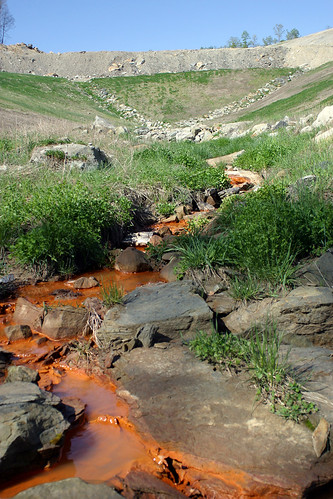 A plethora of recent scientific research has shown that conductivity higher than about five times the normal level downstream from valley fills is associated with severe impairment of the ecological communities in Appalachian headwater streams. The photo to the right that I took below a valley fill in Magoffin County, Kentucky, illustrates the trouble these standards create for coal companies. According to a huge compilation of scientific studies that the EPA simultaneously released with their guidance, conductivity levels below Appalachian valley fills average around 10 times normal levels. The bright orange water coming out of this valley fill indicates enormously high levels of iron, which in turn suggests both high conductivity levels and high levels of toxic and heavy metals regulated under the Clean Water Act.
To be sure, the EPA's move is a big first step that provides immediate protection to Appalachian families threatened with new mountaintop removal permits above their homes. It's a tourniquet that will stop the hemorrhaging, but here are five reasons why this guidance doesn't immediately or permanently put an end to mountaintop removal:
- The EPA's action will not affect permits that have already been issued. Moreover, an excellent piece of reporting by Charleston Gazette reporter Ken Ward revealed that those existing permits will allow some companies to continue mountaintop removal operations without a hitch for the next couple of years.
- Not all mountaintop removal mines require valley fills and coal companies are already using loopholes by which they can obliterate miles of streams without the need to obtain a valley fill permit. The million or so acres of wholesale destruction that coal companies drove through a narrow loophole in the Surface Mine Control and Reclamation Act since 1977 is testament to their skill and creativity at exploiting loopholes.
- Some valley fills will still be allowed under this guidance and the EPA even provided a set of "best practices" by which companies can do mountaintop removal in a manner consistent with it. Moreover, there are a number of recent cases where coal companies went ahead and constructed valley fills without even bothering to obtain a permit.
- While the guidance takes effect immediately, it is a preliminary document released in response to calls from coal state legislators and coal companies for greater clarity on how the EPA was basing its decision whether to grant a valley fill permit for an Appalachian surface mine. The EPA plans to initiate an extended public comment period before the guidelines will be finalized.
- An agency guidance document is different from a formal rule and can be easily overturned by a new administration. Even if this guidance proves to be effective in curtailing mountaintop removal, environmental and community advocates still need to ask what happens when a hypothetical President Palin enters the White House in January of 2013 or 2017.
There are any number of laws and regulations that affect surface mining, and so there is no single mechanism to ensure mountaintop removal is stopped permanently. But the first and most important step is for Congress to pass a strong law that prohibits the dumping of mine waste into streams.
In 2002, Representative Frank Pallone of New Jersey introduced just such a bill called the Clean Water Protection Act (H.R. 1310). Pallone, together with Republican Cristopher Shays, introduced this bipartisan bill in response to the Bush Administration's catastrophic "fill rule," which made it easier to permit mountaintop removal mining and for coal companies anywhere to dump waste into streams. Since then, people and organizations across Appalachia have supported Pallone's bill by carrying a simple message to universities, church groups and Rotary Clubs across America: they're blowing up our mountains and there oughtta be a law!
Over the past eight years, the nationwide organizing efforts led by groups in Appalachia have generated a remarkable 170 co-sponsors of the Clean Water Protection Act - more than almost any other bill before Congress. Unfortunately, the bill continues to be held up in the House Transportation and Infrastructure Committee, with West Virginia Congressman Nick Rahall recently claiming credit in a West Virginia newspaper for bottling it up.
If Rahall's contention is true, it's a powerful testament to the level of influence he has accumulated, given that the bill has more cosponsors than any other of the 323 bills currently before the Transportation and Infrastructure Committee. More importantly, Rahall does not actually have the power to prevent the bill from being heard except through his influence over Chairman James Oberstar of Minnesota, who is the only one with the actual power to decide whether the bill is brought up in his committee.
It's particularly unfortunate that House Democratic leaders and committee chairs like Oberstar would give Rahall so much power over national policy, given how poorly his own constituents have fared under his leadership. After 33 years in office, Rahall's district ranked 434th out of all 435 Congressional districts in Gallup's recently-released 2009 well-being index rankings (see map below).

The only district that ranked lower was Hal Roger's neighboring district in eastern Kentucky. Notably, Rogers' is the only district that has suffered more destruction from mountaintop removal mining than Rahall's.
A big question in the wake of the tragedy at Massey Energy's Upper Big Branch mine is whether the obescience of coal state legislators toward the coal industry will change after the disaster. Traditionally, the pandering of Congressman Rahall and Senator Rockefeller toward Big Coal has been almost embarrassing to watch - kind of like witnessing an overly-exuberant public display of affection on a park bench. But when it comes to the safety of the guys in the hardhats, these gentlemen strike a very different tune.
Given that the same company, Massey Energy, is by far the largest operator of mountaintop removal mines, was assessed the largest penalty in the history of the Clean Water Act, and has a record of environmental violations to which their horrible safety record pales in comparison, these legislators have a unique opportunity to lead their constituents in a new direction. And Senator Byrd of West Virginia has paved the way.
One of the most under-reported elements of the EPA's announcement was that Administrator Jackson specifically mentioned the EPA had worked with Senator Byrd to develop their new guidelines. She would not have said that without explicit approval from Senator Byrd. While Byrd has not explicitly called for an end to mountaintop removal or co-sponsored legislation to do that, his leadership in promoting a more thoughtful and reasonable view on climate and the future of coal in his state represents a sea change from the public statements of statewide elected officials over the past few decades. Rahall and Rockefeller would serve their constituents and their country far better if they followed Byrd's lead.
Is Passing a Law in this Polarized Congress Realistic?
More important than the enormous number of cosponsors that legislation to stop mountaintop removal enjoys is the fact that the support is bipartisan. Immediately following the EPA's announcement, Senator Lamar Alexander, Republican of Tennessee, said in a press release:
"The new EPA guidelines are useful in stopping some inappropriate coal mining in Appalachia but Congress still needs to pass the Cardin-Alexander legislation that would effectively end mountaintop removal mining."
Alexander, together with Senator Ben Cardin of Maryland, introduced the Appalachia Restoration Act (S. 696) last year, a Senate companion to the Clean Water Protection Act designed to eliminate mountaintop removal (or at least permanently curtail it - we'll see what the final language says after mark-up). That bill got a boost the same week of the EPA announcement when coal-state Senator Sherrod Brown of Ohio announced he would become the 11th co-sponsor of the bill.
Whether the Senate bill can survive the committee mark-up process in a form that Appalachian citizens groups can support remains to be seen, however. The Nashville Tennessean recently published an editorial that gave voice to the concerns many coalfield citizens have about forms of mining that may not be covered by the Senate bill, particularly cross-ridge mining. Cross-ridge is a type of mountaintop removal mining that requires little or no valley fill and is based on the assumption that a mountain can be put back more or less how it was after it's been blown up - kind of like putting Humpty Dumpty back together again.
 The photo to the right illustrates one of many problems with the theory that mountains can be put back together without causing major ecological degradation. While the type of mining shown in the photo would not be classified by state agencies as mountaintop removal (only part of the ridgeline has been removed and there is no valley fill at the headwaters of this stream), the impact of this mining on water quality is indistinguishable from the impact shown in the previous photo below a valley fill.
Some insiders have also expressed concern that the EPA's strict new guidance will take the wind out the sails of the campaign to pass a law, but from the perspective of Appalachian groups that have been working to ban mountaintop removal for decades, that concern is misplaced. The citizens of Appalachia have led this fight from the beginning, and have a much more vested interest in making these protections permanent than any group in Washington, D.C.
It may be that some big environmental groups that have only recently made mountaintop removal a priority will move on to other priorities once the Administrative decisions are played out - and make no mistake that the contributions of those groups over the past few years in pressuring the Obama Administration to take action were exceedingly welcome and timely. But it was not the Big Greens that made mountaintop removal a national issue or whose organizing in communities across America has generated such broad bipartisan support of the Clean Water Protection Act and Appalachia Restoration Act.
The people of Appalachia aren't sitting around waiting for beltway insiders to tell them whether or how to pass a law, they're just doing it. The legislative effort is led by the Alliance for Appalachia, an alliance of thirteen local and regional organizations that formed several years ago with the mission of ending mountaintop removal and bringing a prosperous new economy to the Appalachian coalfields that is based on sustainable industries.
The Alliance for Appalachia represents by far the greatest number of people impacted by mountaintop removal mining, and the alliance is composed of some organizations that have been fighting Appalachian strip mining for decades. The battle to end mountaintop removal will not be over until the Alliance for Appalachia says it is, and I'm confident that won't happen until, at a minimum, President Obama signs a law banning the practice.
So What's Next?
There is a window of opportunity right now to pass a strong law that will rein in mountaintop removal permanently. Also, with coal demand down dramatically due to the recession, now is the time to begin replacing mountaintop removal coal with aggressive energy efficiency and renewable energy policies in states like North Carolina, Georgia and Virginia that are most dependent on this source of coal.
From a local perspective, more delays, half-measures and uncertainty about the future of mountaintop removal will only lead to a myopic approach to rebuilding the Appalachian economy and bringing new jobs and new industries to the region.
And from a global perspective, at a time when America is finally getting serious about addressing climate change and moving toward a 21st century energy future built around renewable energy, isn't it absurd that we're still fighting to stop the wholesale destruction of the most biologically diverse forests and streams on the continent in order to mine climate-destroying coal? Can we really address climate change if we can't even stop mountaintop removal?
For people around the country that want to see mountaintop removal end - and that should be anyone concerned about climate change, human rights, clean water or endangered species - a great place to start is by telling your Senators and Representatives that the time to pass legislation to end mountaintop removal is now. There are plenty of tools on the web to make it easy.
Let's keep up the momentum, pass a strong law, and relegate mountaintop removal to its rightful place as just another tragic episode in American history books.
Cross-posted with iLoveMountains.org and HuffingtonPost.com
Friday, April 09, 2010
Senator Byrd Responds to WV Mining Tragedy, Questions Massey Coal's Safety Record
Cross-posted from Appalachian Voices' Front Porch blog
Washington, DC – U.S. Senator Robert C. Byrd, D-W.Va. issued the following statements in response to media inquiries on a number of topics relating to the mining disaster in West Virginia:
 “While the situation on the ground this morning is not as encouraging as we had hoped, my prayers continue for those who have lost their loved ones, and for the safe return of the four missing miners and those mine rescue team members who are also risking their lives to save their fellow West Virginians.”
“It is infuriating that in this day and age, and in this country, that such a disaster could still happen. I am sick. I am saddened and I am angry. We have the laws. We have the resources. These tragedies, on this scale, should no longer be happening.”
“Once we learn the cause of this disaster and investigations are completed whether it is wrongdoing by Massey, lack of enforcement by MSHA, or inadequacies with the mine health and safety laws, including the MINER Act of 2006, action will need to be taken.”
LEGISLATIVE CHANGES
“It is premature to say what changes in laws or regulations may be needed until the investigation is underway. But I have called for a reexamination of the health and safety laws that have been put into place and what more may need to be done to avoid future loss of life.”
“I have received a commitment from Senator Tom Harkin, who is a true friend of the coal miner, and who Chairs both the Senate Committee on Health, Education, Labor, and Pensions (HELP), and the Senate Appropriations Subcommittee on Labor, Health and Human Services and Education (LHHS), that a Senate hearing will occur on this overwhelming mining disaster. This will be in addition to the hearings in the House of Representatives that were requested by my West Virginia colleague, Congressman Nick J. Rahall. The House hearings will occur in the House Education and Labor Committee.”
MASSEY RESPONSE
“This has been one of Massey CEO Don Blankenship’s comments following this tragic mining disaster: ‘Violations are unfortunately a normal part of the mining process. There are violations at every coal mine in America, and (the Upper Big Branch Mine) was a mine that had violations.’” (Source: http://www.usatoday.com/news/opinion/editorials/2010-04-08-editorial08_ST1_N.htm.)
“Well for this Senator, the more I learn about the extent of these violations by Massey at the Upper Big Branch Mine alone, the angrier I get. 57 citations in the month of March alone! Closed over 60 times during the past two years to correct problems!”
“To me, one thing is clear – for a company that has had this number of violations at just one coal mine - one must seriously begin to question the practices and procedures of this particular coal company and it needs the most serious scrutiny from the Congress and the federal regulators.”
MINE SAFETY AND HEALTH ADMINISTRATION FUNDING
“Through my efforts as the senior member of the Senate Appropriations Committee, I have been able to increase funding for coal enforcement from $117 million in Fiscal Year 2006, to $159 million in Fiscal Year 2010 – a 36 percent increase. In June 2006, the Senate Appropriations Committee directed MSHA to hire 170 new coal inspectors. Since then, with the funding I have secured, MSHA has hired 444 coal enforcement personnel, including 119 in West Virginia – increasing the number of inspectors and specialists from 568 in January 2006, to 748 in March 2010. I will continue to examine the funding needs of MSHA as this investigation moves forward.
“Media reports have stated that ‘Safety officials warned Congress three months ago that the backlog of violations could undermine a crackdown on repeat offenders. A backlog of some 82,000 violations and $210 million in contested penalties is pending before a review commission. In 2009, companies protested roughly two-thirds of the $141 million in penalties assessed by federal regulators.’”
“I secured additional funding in the Fiscal Year 2010 appropriations bill for the Solicitor of Labor and Federal Mine Safety and Health Review Commission (FMSHRC) to help litigate the fines. President Obama’s budget request for FY 2011 builds on that funding, and I am currently examining whether more funding is needed to help shorten the amount of time to litigate these fines.
The FMSHRC budget increased by $1.7 million in FY 2010 and the Solicitor budget has increased by $28 million in last two years. And at my request, the Appropriations Committee has urged the Department of Labor to use additional resources to litigate mine safety penalties.
“In addition, I have secured $4 million in the last two years to increase spot inspections to enforce dust control limits. This is necessary to reduce the risk of explosions and black lung.”
MARSH FORK ELEMENTARY SCHOOL
“Marsh Fork Elementary School sits at the foot of a Massey Energy mountaintop mining site which includes a pond that holds back hundreds of millions of gallons of toxic coal slurry. Since the Upper Big Branch Mine site is in close proximity to the Massey Energy mountaintop mining site, I inquired as to whether the stability of the impoundment lot could have been compromised as a result of the mine explosion.”
“According to information I received from the Department of Labor, the slurry impoundment, located above the Marsh Fork Elementary School, was inspected on Wednesday and determined by inspectors to ‘be fine.’”
Thursday, April 01, 2010
The Beginning of the End for Mountaintop Removal?
 An update on the mountaintop removal front courtesy of Appalachian Voices. And no, this is thankfully not an April Fools Day post...
Appalachian Voices Celebrates Historic EPA Action
The science is in, and the Obama Administration is listening. Today’s issuance of guidance by the Environmental Protection Agency is an absolutely historic step in ensuring that the economy, ecology, and communities of Appalachia are better protected from the devastating impacts of mountaintop removal. Citizens from Appalachia and across America are celebrating.
As Senator Byrd said:
“The greatest threats to the future of coal do not come from possible constraints on mountaintop removal mining or other environmental regulations, but rather from rigid mindsets, depleting coal reserves, and the declining demand for coal as more power plants begin shifting to biomass and natural gas as a way to reduce emissions.”
It is in that vein that we expect Congress to follow the Obama Administration’s lead by passing legislation that will permanently protect our homes and communities from mining waste. The Clean Water Protection Act (H.R. 1310) currently has 167 bipartisan cosponsors in the House of Representatives, and the Appalachia Restoration act (S. 696) has 10 bipartisan cosponsors in the Senate. Change in Appalachia is now inevitable, and the time for Congress to pass this legislation is now!
UPDATE: I inquired with JW Randolph, legislative associate Appalachian Voices about where exactly the EPA announcement places us on the path towards sane and safe regulation of mountaintop removal and coal mining's impact on Appalachian communities, drinking water and ecosystems. Randolph replied:
Its a huge step forward, but not quite on par with Congressional passage of legislation now pending in both chambers of Congress that would provide more permanent and lasting protections for communities in Appalachia and other coal producing regions across the country. Here's a few quick reasons why...See also:
1) EPA's action is a guidance, not a law. A President Palin's EPA could undo this as fast as President Obama's EPA made it happen in the first place. Passing the Clean Water Protection Act (HR 1310) and Appalachia Restoration Act (S 696) this year would make the core goals of this guidance permanent (unless Congress wanted to overturn it of course).
2) Its geographically focused on a few Appalachia states, and won't affect things like the Kensington Gold Mine in Alaska or other communities dealing with the impacts of surface mining and extraction. Passing the Clean Water Protection Act or overturning the Bush Administration's fill rule (ed. note, more on that here), would provide similar protections for mining communities across the country.
3) It focuses mostly on valleyfills and mountaintop removal permits, which is HUGE, but to my knowledge (and I'm still reading through the EPA docs) won't deal with things like underground slurry injections which also have an enormous detrimental effect on water quality in Appalachia and downstream.
So, a GIGANTIC first step in the right direction, an action to be celebrated, a promise fulfilled - absolutely. But we will continue working towards the more permanent protections inherent in passage of Congressional legislation to keep communities in Appalachia and across America safe from the health and environmental impacts of surface mining.
Jeff Biggers at HuffPo: BREAKING NEWS! Appalachians Hail EPA's Great Victory for Clean Water Act and Justice
Ken Ward Jr. at Coal Tattoo (WV Gazette): Breaking news (NOT an April Fool’s joke): EPA actually does take “unprecedented steps” to reduce damage from mountaintop removal coal mining
Alliance for Appalachia: New EPA Policy Should Protect Communities from Mountaintop Removal
WattHead.org: Science Confirms the Abhorrently Obvious: Blowing Up Mountains Damages Environment, Human Health (Jan 7, 2010)
And the rest of WattHead.org's Mountaintop Removal archives.
Tuesday, January 19, 2010
Colbert on the Real Reason We Need to End Mountaintop Removal Coal Mining
Simple: if we keep this up, we'll have to start calling hillbillies just plain old "billies."
Steven Colbert skewers the mountaintop removal coal mining in this video clip, featuring an interview with one of the authors of the recent, authoritative scientific review of the environmental and health impacts of this abhorrent practice.
| The Colbert Report | Mon - Thurs 11:30pm / 10:30c | |||
| Coal Comfort - Margaret Palmer | ||||
| ||||
Author and Appalachia expert Jeff Biggers has more at HuffingtonPost.
See WattHead.org's mountaintop removal archives to learn more about the practice, or head to ILoveMountains.org. Read more!
Thursday, January 07, 2010
Science Confirms the Abhorrently Obvious: Blowing Up Mountains Damages Environment, Human Health
Or should I say, the obviously abhorrent...
The incredibly destructive coal mining practice known as "mountaintop removal" causes "pervasive and irreversible" damage to human health and the environment, according to an authoritative scientific study released today.
The comprehensive and far-reaching scientific review, entitled "Mountaintop Mining Consequences", was conducted by members of the National Academy of Sciences and is being published in the prestigious journal Science.
The study summarized dozens of pre-existing scientific papers analyzing the impacts of mountaintop removal mining, a type of surface coal mining that uses huge amounts of explosives to blast away the tops of mountains to expose coal seams. The resulting debris (aka the former mountain) are typically disposed of through a practice known as "valley fills," where tons of mining debris are dumped into neighboring valleys, burying miles of headwater streams and valley ecosystems.
According to a press release on the study:
...the authors outline severe environmental degradation taking place at mining sites and downstream. The practice destroys extensive tracts of deciduous forests and buries small streams that play essential roles in the overall health of entire watersheds. Waterborne contaminants enter streams that remain below valley fills and can be transported great distances into larger bodies of water.
Mountaintop removal mining has already buried more than 800 miles of Appalachian streams and destroyed hundreds of square miles of woodlands in one of America's biodiversity hotspots, all while both the U.S. EPA and state environmental agencies have allowed the destructive practice to continue. That's left it to activists to slow these projects down and prevent their irreversible damages.
The new scientific study condemned federal and state regulation of mountaintop removal mining operations, concluding that “Current attempts to regulate [mountaintop mining and associated valley fill] practices are inadequate,” and that “Regulators should no longer ignore rigorous science.”
Environmental and Appalachian community advocates hailed the study as a powerful indictment against mountaintop removal mining, according to Appalachian Voices, an environmental non-profit working to bring coalfield residents together to end mountain removal.
Opponents of mountaintop removal expressed disappointment over the Obama Administration’s fluctuating stance on mountaintop removal, citing inconsistencies with statements made by President Obama about restoring science to a more prominent position in agency decision-making. The new study was released just days after the U.S. Environmental Protection Agency approved the expansion of the largest mountaintop removal coal mine in West Virginia.
Appalachian coalfield residents have long been aware of the obvious and major impacts mountaintop removal mining has on the health of local communities and verdant Appalachian ecosystems. Appalachian Voices is hopeful that the study will embolden the Obama Administration to take more decisive action to ultimately end the practice.
In a recent interview the President told the political news organization, Politico, “It’s about listening to what our scientists have to say, even when it’s inconvenient-especially when it’s inconvenient.” Yet last year, the Obama Administration released a multi-agency plan that called for more strict enforcement of laws regulating mountaintop removal but stopped short of prohibiting the practice
“The scientific study released today comes as little surprise to us living in the Central Appalachian coal mining region,” says Nina McCoy from Martin County, Ky., site of a large coal sludge dam break that overtook the county in 2000. “This should be the evidence the Obama Administration needs to close the floodgates on new mountaintop removal permits and stop the poisoning of our people.”
The EPA recently told National Public Radio’s Diane Rehm Show that the agency does not believe it has the authority to stop permitting mountaintop removal outright. Critics counter that there are other avenues through which the Administration could effectively end the practice.
“The EPA has made commendable efforts to reduce the impacts of mountaintop removal on downstream water quality, but this study shows that mitigating and regulating the wholesale destruction of Appalachian Mountains is just not effective,” said Dr. Matthew Wasson, ecologist for Appalachian Voices and director of the campaign to end mountaintop removal on iLoveMountains.org.
“The President has the power to end mountaintop removal through any number of agency actions,” Wasson added, “and he should call on Congress to pass the Clean Water Protection Act, a bill designed to end mountaintop removal-but the message from this study is that he’s out of excuses for allowing mountaintop removal to continue.”
Ken Ward Jr. of Coal Tattoo, Andy Revkin of DotEarth at the NYTimes and David Roberts at Grist all have more. See iLoveMountains.org for more resources on mountaintop removal, and to take action.
[Update, 3:00 pm Pacific time: National Public Radio just carried this story on their evening news. The online version includes a collection of photos documenting the practice of mountaintop removal coal mining.]
Read more!
Friday, October 30, 2009
Breaking: EPA Sit-In to Spark Urgent Action on MTR

Live blog (See release below for more details:)
2:02 All activists still sitting inside. Outside protest marched under EPA archways chanting loudly and are still causin' a ruckus outside in solidarity. Activists aren't leaving until blasting on Coal River Mountain stops
1:57 more great photos and accounts from around the country from Jeff Biggers at HuffPo
1:07 first video looking into the protest in the main lobby (photographers not allowed inside...)
1:04 from Scott Parkin's twitter: "rally outside holdin strong while sit in still goin"
12:56 Photos uploaded here
12:50 Here's the letter WV resident Bo and Chuck tried to deliver to the EPA today. Download PDF
12:20 pm After 45 minutes, all activists still sitting with arms linked inside EPA main entrance.
14 Activists Stage a Sit-In at the EPA to Spark Urgent Action on Mountaintop Removal
Environmentalists Ask EPA to Stop Recent Blasting on Coal River Mountain, WV; Site of Proposed Wind Farm
WASHINGTON-- As part of a national day of action to stop mountaintop removal coal mining, 14 activists have staged a sit in at 11:30 the EPA. Dozens others are also holding a rally in front. They are asking the EPA to take immediate action to stop the mountaintop removal blasting that began this week on Coal River Mountain, WV, the site of a proposed wind farm.
While President Obama spent the week trumpeting his administration’s support for clean energy, Massey Energy began dynamiting Coal River Mountain in West Virginia, which is the site of the proposed 328-megawatt wind farm. Coal River Mountain gained national notoriety after a study showed that its peaks and ridges have enough wind potential to provide 70,000 households with electricity, support 700 long-term green jobs and give back $1.7 million in annual county taxes. Massey Energy began dynamiting those peaks this week in preparation for a massive mountaintop removal project. Read more!
Tuesday, October 27, 2009
ALERT: Blasting Begins on Coal River Mountain
An update from Coal River Mountain Watch and Appalachian Voices. You can take emergency action here.
Mountaintop Removal Mining to Destroy 6,600 Acres-and Wind Potential 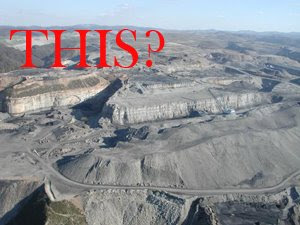 Appalachian community advocates and environmentalists across the nation are expressing outrage that mountaintop removal coal mining operations have begun on Coal River Mountain in West Virginia, a mountain that has become symbolic in the nationwide campaign to end mountaintop removal mining. The West Virginia Department of Environmental Protection told the Charleston Gazette on Monday that blasting had begun last week, confirming local reports of blasts and smoke that were witnessed on Friday near the Brushy Fork coal slurry impoundment, the largest slurry dam in Appalachia with the capacity to hold 8.2 billion gallons. Slurry is the by-product of coal washing and processing operations and contains high levels of toxic heavy metals like mercury, selenium and lead.
 For the last two years, local residents have campaigned for the opportunity to place a commercial-scale wind farm on Coal River Mountain instead of the mountaintop removal mining that has been permitted by the state. The Coal River Wind campaign has focused on asking West Virginia Governor Joe Manchin to rescind the mining permits for Coal River Mountain. So far, Governor Manchin has denied the group's request.
"The Coal River Wind Campaign has been a symbol of hope for the people of the Coal River Valley," said Lorelei Scarbro, organizer for Coal River Mountain Watch. "My neighbors are excited about the idea of jobs that allow them to produce energy in a way that is sustainable. Coal River Mountain, the last standing mountain in the valley, should remain intact as a symbol for a new day in the Appalachian coalfields."
With no response from Governor Manchin's office, residents and environmental groups are now looking to the Obama administration to intervene.
A wind resources assessment and economic study commissioned by Coal River Mountain Watch in 2008 revealed that Coal River Mountain-which has the highest peaks ever slated for mining in the state-has enough wind potential to provide electricity for over 85,000 homes and would create more jobs over the expected life of the turbines than the proposed mountaintop removal mine. The study also stated that the proposed wind farm would help diversify the local economy in an area historically dependent upon temporary coal mining jobs, and would pump $20 million per year in direct local spending during construction and $2 million per year thereafter.
Current plans for mountaintop removal operations would eventually impact 6,600 acres on Coal River Mountain and fill in 18 valleys with the resulting waste and debris. Over 10 square miles of what environmentalists call the most bio-diverse ecosystem in the United States would be affected. Bo Webb, a resident of town of Peach Tree-a community directly downhill from an existing mountaintop removal operation near Coal River Mountain-said, "My community is already being forced to endure silica blasting dust, boulders, mudslides and floods from a mountaintop removal operation on Cherry Pond Mountain. The annihilation of Coal River Mountain will leave us trapped in the middle beneath both mountains of destruction."
In addition to the economic and environmental concerns, residents are worried about the stability of blasting less than two hundred yards from a coal sludge impoundment. According to coalimpoundment.org-maintained by Wheeling Jesuit University-the Brushy Fork impoundment is a Class C dam, in which "failure would cause possible loss of human life." If the Brushy Fork impoundment were to fail, the first communities in danger would be the towns of Pettus and Whitesville, where residents would have 12-18 minutes to evacuate before they were overtaken by floodwaters and slurry. The emergency evacuation plan, should the dam be breached, calls for notifying residents "personally," or "by loudspeaker or bullhorn, or other means deemed necessary."
In 2000, a coal slurry impoundment owned by a Massey subsidiary failed and spilled over 300 million gallons of slurry into the Big Sandy River in Martin County, KY. The EPA called the dam failure the "worst environmental disaster east of the Mississippi." According to EPA testing, the spill-more than 30 times larger than the Exxon Valdez disaster-destroyed destroyed nearly all aquatic life for more than 50 miles downstream of the spill. And in 1972, a 132-million gallon impoundment in Logan County, W.Va., failed, killing 125 people and leaving over 4,000 more homeless.
The permits for mining on Coal River Mountains are owned by Massey Energy, one the largest coal mining companies in central Appalachia. In 2008, Massey paid $20 million to the U.S. Environmental Protection Agency in the largest settlement to date for violating the Clean Water Act more than 4,500 times in seven years.
According to a recent story by Associated Press reporter Vicki Smith, Google Earth has taken interest in the plight of Coal River Mountain and created a video about the Coal River Wind Project to present at the climate talks to be held in Copenhagen in December.
"What kind of message will it send to the international community if this priceless mountain with so much renewable energy potential is currently being destroyed for a decade's worth of coal?" asked Matt Wasson, Program Director for Appalachian Voices, a regional environmental organization. "It would look a lot more like a continuation of the last administration's policies, rather than a commitment to a new energy future."
For more information, please visit www.coalriverwind.org and www.iLoveMountains.org/coalriver.
- - - - - -
Contact:
Lorelei Scarbro, Coal River Mountain Watch, (304) 854-2182
Matt Wasson, Appalachian Voices, (828) 262-1500
- - - - - -
Monday, October 12, 2009
Comparing Climate Activists to Suicide Bombers
A group of 20 senior citizens, aged 50 to 88, concluded a 25 mile march to protest mountain top removal coal mining today. Read Coal Tattoo for the full story of this heroic journey.
What's outrageous is the accusations made by Steve Walker, president of Walker Machinery, against two young activists who hung a banner from his building in solidarity with the senior marchers.
Start at 5 minutes in if you don't want to watch it all.
This gets outrageous when Steve Walker starts talking to a reporter from the WV Metro News. He says, "it's very dangerous, what they did" and then goes on to compare them to suicide bombers.
I'm sorry Mr. Walker, but these kids hung a sheet off a roof. Mountain top removal is a dangerous practice of bombing our communities.
Business Owner: Coal Protests Nothing But a Big Game
Audio Included Steve Walker: Upset with coal protests
Walker Machinery President Steve Walker equates two teenagers charged with trespassing on his company's property in Kanawha County to suicide bombers in the Middle East.
"People fill their heads with this dogma and use them to do their dirty work," said Walker. "While the people that are perhaps older and wiser sit back and watch them."
The boys, ages 18 and 19, were arrested Saturday when they unfurled a banner on the front building of the Walker complex at Belle reading, "Yes Coal -- Is Killing West Virginia Communities."
"I talked to them at the police station, they had no idea about coal mining period," said Walker. "I asked them some questions and all they had was a few talking points."
Walker said the sad part for the teens is they may now face felony charges. Walker is looking into pressing additional charges of breaking and entering, citing evidence the boys broke into the building to get access to the roof.
"They're involved in that group down in Raleigh County with roots tied to eco-terrorists," said Walker. "We worry they may have been in here to sabotage some of our machinery."
Steve Walker ignores the large number of West Virginians involved in the fight against MTR, and he ignored how destructive mining practices and climate change effect everyone. He claims that companies like his care more about mine workers in West Virginia (an ever decreasing number, thanks to big machinery like his) than the people from out of state do. And he feels sorry for that these boys got duped, even as he tried to make up charges that they were trying to break machinery.
Walker is right on one thing: he doesn't know how this is all going to end. The growing movement to stop the most destructive extractive industry in the country is directly challenging the power of the corporations and the corrupt WV government. Its forcing this nation to answer the important question: does getting electricity justify poisoning, impoverishing and killing people in Appalachia?
I give a big thank you to Roland and the marchers, and my full support to Gabe and David for their stunt that apparently stung Steve Walker so much. Keep up the good work.
Read more!
Monday, September 14, 2009
EPA Puts Halt on 79 Pending Mountaintop Removal Coal Mining Permits
 As I reported last week, a moment of truth has arrived for the U.S. Environmental Protection Agency (EPA) and President Barack Obama, who has promised “unprecedented steps” to rein in the devastating practice of mountaintop removal coal mining that is wrecking havoc across wide swaths of Appalachian mountains, valleys and communities.
Last Friday, EPA announced the preliminary fate of 79 pending permits associated with mountaintop removal coal mining sites across Appalachia: No go! the Agency said, granting stays of execution to every single permit and ruling that none of the 79 permits be streamlined for approval.
It's a move that coalfield residents and community and environmental activists have cautiously hailed as a sign that EPA may finally be moving to protect Appalachian mountains, valleys and streams - and the communities and ecosystems that call them home - from the ravages of mountaintop removal mining.
"No amount of "regulation" will make it economically sustainable or environmentally beneficial to blast the top off some of the oldest mountains in the world and dump the waste into headwater streams," said JW Randolph of Appalachian Voices, a leading organization working to end mountaintop removal and protect Appalachian communities.
Instead of traditional subsurface mining, coal mines utilizing mountaintop removal (MTR) use huge amounts of explosives to decapitate mountains and access the coal beneath, dumping the remains of these once-verdant Appalachian peaks directly on top of neighboring valleys and streams.
Mountaintop removal mining has already buried more than 800 miles of Appalachian streams and destroyed hundreds of square miles of woodlands in one of America's biodiversity hotspots, all while both the U.S. EPA and state environmental agencies have done little to curtail the practice. That's left it to activists and litigation to slow these projects down and prevent their irreversible damages - until Friday at least.
This decision is not final, but is part of an ongoing coordination process between the Environmental Protection Agency, the Army Corps of Engineers, and the Department of Interior to deal with a backlog of permits held up by litigation over the past few years. The Army Corps has already green-lighted the permits under their review process but EPA, which must also examine permit applications and determine whether or not they pose a "significant" environmental risk, has promised a more stringent and transparent review of all mountaintop removal valley fill permit applications.
The initial stay of execution from EPA headquarters indicate that every single one of these pending projects do in fact pose an environmental risk and warrant further review. Regional EPA offices now have 14 days to review and comment on the EPA Headquarters’ recommendations, after which EPA Headquarters can finalize the list of environmentally risky projects.
As Appalachian Voices explains:
If the EPA Regional offices agree with the EPA Headquarters’ assessment that these permits have “substantial environmental concerns,” an “enhanced coordination” process will begin, where the EPA and the Army Corps will study each permit on a case-by-case basis. The beginning of each coordination process sets off a 60-day period during which the two agencies must resolve any permit applications. The EPA reserves the right to exercise their veto authority over any of the unresolved permits.
In the past, the EPA was primarily absent from the approval of mountaintop removal permits, allowing the Army Corps to essentially “rubber-stamp” them. “The whole permitting process had become a bit toothless,” EPA Administrator Lisa Jackson admitted in a recent interview with the Tampa Bay Press. “The Corps of Engineers understands [that] when the EPA has concerns, it’s going to raise them. We’re going to do our jobs.”
"Bottom line is that, based on their own science, EPA needs to veto every single permit," said Randolph. "How does any MTR/valleyfill operation not have a significant environmental impact? Its insanity. We've been talking about mountaintop removal so long that we can say "burying 10 miles of streams" and not bat an eye. Its just insanity, and its got to stop."
Wednesday, September 09, 2009
A Moment of Truth for Appalachia, Obama and EPA on Mountaintop Removal Coal Mining
 A moment of truth has arrived for the U.S. Environmental Protection Agency (EPA) and President Barack Obama, who has promised “unprecedented steps” to rein in the devastating practice of mountaintop removal coal mining that is wrecking havoc across wide swaths of Appalachian mountains, valleys and communities.
EPA is expected to announce decisions this week on over 100 pending permits for new or expanded coal mining projects utilizing mountaintop removal (MTR), which uses huge amounts of explosives to decapitate mountains and access the coal beneath, dumping the remains of these once-verdant Appalachian peaks directly on top of neighboring valleys and streams.
Mountaintop removal mining has already buried more than 800 miles of Appalachian streams and destroyed hundreds of square miles of woodlands in one of America's biodiversity hotspots, all while both the U.S. EPA and state environmental agencies have done little to curtail the practice. That's left it to activists to slow these projects down and prevent their irreversible damages.
But if recent news that the EPA is seeking to revoke the permit for the largest mountaintop removal mining project in West Virginia history is any indicator, the agency may finally be earning the "Protection" part of their name.
With a self-imposed, September 8th deadline now expired, the EPA is expected to issue an "initial list" this week identifying pending mountaintop removal projects that pose potential environmental concerns.
The projects under EPA review have already been approved by the U.S. Army Corps of Engineers (the Corps), which has primary responsibility for approving surface mining projects. Any projects that EPA decides will have no "significant" environmental impact will sail forward "without further coordination with EPA," according to agency procedures (kindly explained by Coal Tattoo's Ken Ward Jr. here).
Projects posing an environmental risk - and any sane person is hard pressed to explain how blowing up a mountain has no environmental impact - will instead show up on a list sent to the Corps, triggering a process of further review and ultimately - if EPA does it's job right - the rejection of some if not all of these proposed mountaintop removal projects under the Clean Water Act.
For better or worse, the forthcoming EPA list of environmentally risky projects will mark an important step closer to the establishment of clear, public standards for what level of environmental impact the agency will allow or prohibit at MTR sites proposed throughout Appalachia. The EPA has so far avoided establishing any such clear public standard.
With hundreds of mountaintop removal sites now in the balance, this is the moment of truth for the EPA, Administrator Lisa Jackson, and President Obama to make good on promises to reign in this clearly environmentally devastating practice.
As EPA Administrator Lisa Jackson explained on National Public Radio last week:
EPA has committed to reviewing [mountaintop removal mining] projects. It’s been a contentious issue from the start, certainly in Appalachia. We are in the process of reviewing about 84 permits right now that were put on hold by litigation. And in the next few weeks we’re going to have to make a determination under the Clean Water Act as to whether those permits can meet the Clean Water Act standards or whether they should be held up and potentially ultimately vetoed. EPA has the authority to veto the permits. The permits themselves are issued by the U.S. Army Corps of Engineers. So EPA plays sort of an oversight role there.As we wait for the EPA's decision on the dozens of pending MTR permits, the Agency moved forward on a seperate front to block the largest proposed mountaintop removal site in West Virginia history in letter sent to the U.S. Army Corp of Engineers late last week.
Giving Appalachian community activists and mountaintop defenders some hope for the fate of other pending permits, EPA cited "clear evidence" that the project posed risk of environmental damage to urge the Corps to revoke or suspend the Clean Water Act permit for Arch Coal Inc.'s Spruce No. 1 Mine in Logan County, West Virginia.
As Ken Ward Jr. reports:
In a five-page letter, [acting regional EPA administrator William E.] Early cited the Spruce Mine's "potential to degrade downstream water quality," the need for the company to give "serious consideration" to reducing valley fill size, and scientific studies that show mine operators cannot effectively replace the environmental functions of streams buried by mining waste."I'm pleased EPA is taking seriously the science and the devastation caused by mountaintop removal in a way that the Army Corps has refused until now to do," Joe Lovett, director of the Appalachian Center for the Economy and the Environment, told Mr. Ward.
Early also cited a series of West Virginia Department of Environmental Protection reports that "indicate that surface mining with valley fills in Central Appalachia is strongly related to downstream biological impairment."
According to Ward, Lovett and other environmentalists and Appalachian community activists have been fighting the Spruce Mine since 1998, when it was proposed as a 3,113-acre mine that would bury more than 10 miles of streams in the Pigeonroost Hollow area near Blair. Facing prolonged legal challenge, the project was approved in a slightly smaller size in 2007, when the Corps granted approval for a nearly 2,300-acre mine that would bury more than 8 miles of streams.
Since June, Arch Coal has been pressuring the Corps to grant approval of the giant Spruce mine, citing a February 4th Circuit Court ruling favorable to mountaintop removal, Ward report. This new EPA action will throw the project back into regulatory uncertainty - and may ultimately spell the end for this massive mountaintop removal project.
Stay tuned, at www.WattHead.org and at Ken Ward Jr.'s always elucidating Coal Tattoo as this ongoing battle over mountaintop removal unfolds... Read more!






