Today, the race for dominance in clean energy technology sectors pits the United States against the greatest international competition for a key emerging technology field than in any era since the Cold War race to lead in aerospace, computing, communications, and IT fields.
Remaining competitive in the fast-growing, 21st century clean energy sectors will demand the same world-class talent and highly-trained workforce that helped the United States lead the world in the high-tech sectors of the 20th century.
As we wrote in "Post-Partisan Power," a road map for a limited and direct national energy innovation strategy recently released by Breakthrough Institute and scholars at the Brookings Institution and American Enterprise Institute:
The United States cannot hope to rise to this global challenge or confront pressing energy innovation imperatives without a new national investment to train and inspire the next generation of intrepid American scientists, engineers, and entrepreneurs. Today, the United States ranks just 29th out of 109 countries in the percentage of 24-year-olds with a math or science degree.47 Only 15 percent of undergraduate degrees in the United States are earned in science, technology, engineering, or mathematics (STEM) fields compared with 64 percent in Japan and 52 percent in China. Even South Korea -- a nation with a population one-sixth the size of the United States -- graduates more engineers annually.
The situation is particularly dire in energy technology, with roughly half of the U.S. energy industry workforce expected to retire over the next decade. Meanwhile, demand for workers in the renewable electricity industry is expected to more than triple from 127,000 in 2006 to more than 400,000 in 2018. The anticipated, large-scale ramp-up of the U.S. nuclear power industry would similarly require the industry to hire tens of thousands of new nuclear engineers and related positions annually. Yet today, from elementary school through post-doctorate programs, students and educators lack the resources to develop new curricula and educational programs, receive key training, or expand research opportunities to meet this national challenge.
A recent blog post from nuclear engineer Rod Adams at theEnergyCollective.com points us to some new figures that can help fill in the details for the workforce needs of the nuclear power sector.
Over the next five years, 38 percent of the current nuclear industry work force employed at the nation's 104 operating plant will be eligible for retirement, leaving a shortfall of more than 25,000 skilled workers. In addition, each new nuclear plant will create up to 2,400 temporary and highly-paid positions over the five-year construction period and 400-to-800 new permanent careers.
The workforce training and competitiveness challenges are clear. But the United States has overcome such challenges in the past.
After the Soviet launch of Sputnik, the United States swiftly enacted the National Defense Education Act of 1958, leveling national investments totaling $7.2 billion over four years (in today's dollars), to support K-12 science, technology, engineering, and mathematics education, establish university programs in computer science, aerospace, and other new fields across the nation, and train the generation of innovators and entrepreneurs that led the IT Revolution.
In "Post-Partisan Power," we propose a comparatively modest, yet equally critical national commitment of roughly $500 million annually for energy education to support K-12 curriculum and teacher training, energy education scholarships, post- doctoral fellowships, and graduate research grants. This proposal builds on an earlier call from the Breakthrough Institute for a National Energy Education Act.
"Post-Partisan Power" - Report Overview - How a Limited and Direct Approach to Energy Innovation Can Deliver Clean Cheap Energy, Economic Productivity, and National Prosperity
When Apple transformed the music industry with the iPod and iTunes, and when Google revolutionized internet search capabilities, it was a win for everyone – consumers got better products and the companies providing them became rich.
There are billions of energy-poor consumers in desperate need of exactly this kind of industry transformation. The sheer size and growth potential of the market has the potential to create the next generation of huge energy companies – as large as BP, Shell and Exxon – which are focused on providing small scale energy solutions to the billions for whom this is the best solution.
The opportunity for the entrepreneurs who will build the next generation of energy mega-companies can be summed up with three simple points:
Those at the Bottom of the Pyramid (BOP), people earning $1-$6 dollars a day, already spend a lot on energy. More than $US433 billion each year according to the World Resources Institute (WRI). WRI estimates energy is the second largest market in the BOP markets –bigger than the transport, health, ICT and water sectors combined.
Studies show that the average BOP consumer would use more energy if they could afford to. This means that as the poor come out of poverty and as the price of each unit of energy drops, the market will continue to grow.
The energy resources currently meeting BOP consumer demand are overwhelmingly archaic and inefficient (e.g. kerosene, dung, firewood, and charcoal).
In summary, the BOP energy market is huge, will continue to grow quickly and has underserved customers. It’s the kind of market that screams for innovation, and the stuff of dreams for entrepreneurs. Some entrepreneurs are already well on their way to addressing this market failure by providing cheaper, greener, and safer options for BOP consumers. Some examples include Barefoot Power’s efforts with solar, Husk Power’s mini power-plants, and E+CO’s investments in green energy technology companies.
I hope they all become billionaires because the more entrepreneurs who see the pot of gold at the end of this rainbow, the better. More entrepreneurial attention will result in more innovation and competition, which leads to better service and products for paying consumers. For the billions relying on kerosene, firewood, and charcoal, I guarantee you, this cannot come too quickly.
Hugh Whalan is the CEO and co-founder of Energy in Common, a non-profit allowing individuals to make micro-loans to fund green energy entrepreneurs in developing countries. Read more!
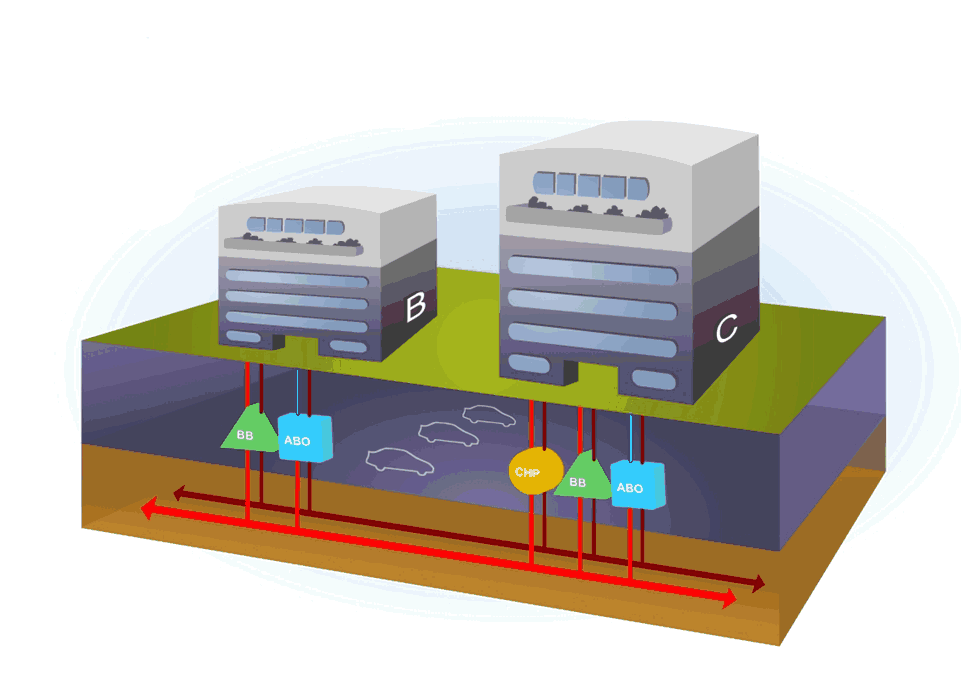
District energy systems have been around for over a century, quietly providing heating to city centers, universities, and hospitals across the US. Today this once sleepy energy technology, is enjoying a renaissance as rising energy costs and climate change highlight the need for efficient, low-carbon, energy systems. Already well established in Northern Europe, a newer generation of district heating (and cooling) systems are tapping into waste energy streams and using renewable resources to dramatically reduce carbon emissions and stabilize energy costs. American cities and towns are now looking to unlock the potential of district energy, but barriers remain.
Both webinars will be presented from Helsinki, Finland, where Hilsdon currently resides and is home to on of the world’s largest district energy system. Hilsdon will introduce the basic technology of district energy, give examples of district energy systems in the US and Europe, and touch on a broad range of system designs. The second part of the series will focus on the use of renewables in district energy, and discuss the use of forest biomass in particular.
District Energy: Solving Modern Energy Challenges (Part 1) Thursday, May 6, 2010 9-10 a.m. PT / 12-1 p.m. ET Click Here to Register
Renewables in District Energy: Sustainable Heating and Cooling for Communities (Part 2) Tuesday, May 11, 2010 9-10 a.m. PT / 12-1 p.m. ET Click Here to Register
If you are not able to attend the webinars they will be recorded and available for viewing at: www.fluidms.com/webinars
Accelerating U.S. clean technology innovation, manufacturing, and market creation has become not just an environmental necessity but an economic imperative. A recent Pew study showed that the global clean energy industry has experienced rapid investment growth over the last five years. New clean tech investments in 2009 reached $162 billion, which is expected to grow 25 percent to $200 billion in 2010. With the global clean energy economy emerging as one of the largest economic opportunities of the 21st century, government policy and public investment will be critical determinants of which countries come out on top in the race to attract private sector investment in clean energy technologies.
The United States is currently behind other nations in this race, and lacks an effective national strategy to compete. Climate legislation proposed in Congress to date, with its low price on carbon, ineffective renewable electricity standard, and collection of efficiency regulations, will not be enough for the United States to catch up to countries like China in building the clean energy industries of the future. To regain leadership in the global clean technology industry, the United States must enact a comprehensive clean energy competitiveness strategy that prioritizes major public investments in clean energy innovation, manufacturing, market development, education, and infrastructure.
This was the topic of a presentation we gave at the World Energy Technologies Summit in New York City last month. The theme of the conference, which was sponsored by TIME Magazine, was providing a "Reality Check" on the current state of energy technology and policy. The two of us therefore presented a wake-up call about America's lagging position in the global clean energy race, uncovered the realities behind several common myths about U.S. clean energy competitiveness, and outlined what the United States government must do to truly compete for the clean energy industries and markets of the future. After the video of our presentation below, this post summarizes each of these three key topics.
If you are having trouble viewing this video in your browser, you can head here to watch it (scroll down to the 4:40 pm time slot to find our presentation)
The State of the Clean Energy Race
As we concluded in Rising Tigers, Sleeping Giant, our comprehensive report on the competitive cleantech positions of the United States, China, Japan and South Korea, the United States lags its economic competitors in the production of virtually all clean energy technologies, from solar cells to wind turbines, nuclear reactors to high-speed rail, and advanced vehicles and the batteries that power them. China currently leads the world in the production of solar cells and wind turbines, and China, Japan, and South Korea collectively control over 90% of the advanced battery market. These Asian nations are also quickly commercializing and deploying clean energy technologies. China has doubled its installed wind capacity each year for the past five years, including in 2009, when it installed 13GW of new turbines, surpassing the United States as the largest wind market in the world. South Korea has recently become a major market for solar PV cells, increasing its new annual installed capacity six-fold to make it the fourth largest PV market in the world.
And while the U.S. has historically been a global leader in energy innovation, other nations are moving quickly to close the gap. The United States government now invests only slightly more than Japan in energy R&D, and as a percentage of GDP Japan and South Korea both invest far more. China is also rapidly developing it's capacity for "indigenous innovation," and recently announced the creation of 16 new energy R&D centers to develop wind, grid, nuclear and other technologies.
Each of these nations employing comprehensive government strategies to build domestic clean energy industries, which include major public investments in R&D, manufacturing, infrastructure, and market deployment. Indeed, the governments of these three nations will out-invest the U.S. government by three to one over the next five years, even if the United States enacts into law the House-passed Waxman-Markey climate bill.
One emerging features of the clean tech race is the development of clean energy clusters in countries around the world, and China in particular. Clusters act as regional "innovation ecosystems" that connect research and innovation activities with manufacturing scale-up, commercialization, and policymakers. Research has shown that such clusters can create enduring competitive advantages at both the regional and the national level. One example of an emerging clean energy cluster is the Chinese city of Baoding, which is composed of nearly 200 renewable energy companies and operates as a platform that links China' clean energy manufacturing industry with policy support research institutions, and other social systems.
Myths and Realities About the Clean Energy Race
Since the publication of our report last November and a number of later reports confirming the decline in U.S. competitiveness in the global clean tech industry, a few myths have proliferated about the reasons that the U.S. is behind and what it must do to compete in this critical economic sector.
The first myth is that China has a command and control economy, and their economic system is no match for the liquidity of U.S. private capital markets and the entrepreneurialism of the U.S. economy. The U.S. therefore shouldn't lose too much sleep over mounting cleantech competition from China.
In reality, however, the public policy environment created in China has allowed China to attract more private investment in clean energy than the United States. And while the U.S. still leads in VC funding for clean energy technology, Chinese companies dominated clean tech IPO proceeds in 2009, with 69% of capital raised, and attracted more overall private sector investment in clean energy sectors in both 2008 and 2009.
The second myth is that all the United States needs to do to compete with countries like China is to put a price on carbon. Public figures like New York Times columnist Tom Friedman and venture capitalist John Doerr routinely argues that putting a price, any price, on carbon, is the most important thing to building a clean energy economy.
But the reality is that China, Japan, and South Korea are all out-competing the United States without a price on carbon. Instead they are implementing comprehensive clean technology investment strategies. Even in European cleantech leaders like Germany and Denmark whose power plants and factories fall under the EU Emissions Trading Scheme, it is the much more targeted and substantial feed-in tariff policies and other direct public investments and incentives that are driving clean energy deployment and giving European solar and wind companies a competitive edge. Indeed, the carbon price established by the House-passed Waxman-Markey bill would provide an effective subsidy of just 1.5 cents per KWh, which doesn't even match the production tax credit driving wind power adoption in the U.S. and is a much smaller incentive than any targeted deployment incentives of our competitors, such as China's feed-in-tariff or wind, or Germany's feed-in-tariff for solar.
[Caption: Not All Carrots Are Created Equal: Waxman-Markey's carbon price does less to close the clean tech price gap between clean energy and fossil fuels than more targeted policies in other nations.]
The third myth is that as the United States continues to slip further behind its economic rivals in the production and deployment of clean energy technologies, American will still, as Tom Friedman has written, "specialize in research and innovation."
In reality, other governments are quickly closing the innovation gap with the United States and developing national innovation policies to boost their internal competitiveness. There is also little reason to believe that innovation leadership won't follow market and manufacturing leadership. Private companies are already starting to re-locate clean energy R&D activities near to areas with the most manufacturing and the strongest markets. Case in point is U.S. firm Applied Materials, which built the world's largest solar R&D facility in Xian, China.
A Clean Energy Competitiveness Agenda for the 21st century
In the face of aggressive foreign competition in the clean energy industry, the United States urgently needs a comprehensive competitiveness strategy of its own to accelerate the development of a domestic clean energy industry and take advantage of emerging export opportunities. Such a strategy should prioritize large and sustained public investments in clean energy R&D, advanced clean energy manufacturing, innovative deployment, and clean energy education.
Clean energy technologies today are still too expensive relative to fossil fuels to be widely deployed at scale around the world. In the long term, relying on either high carbon prices or permanent ongoing subsidies to make clean energy competitive will effectively close off export opportunities to developing nation markets that will be unable to impose either high carbon fees or sustain large ongoing subsidies for clean energy sources.
If the United States wants to tap the multi-trillion dollar export opportunity that lies in meeting the rapidly growing demand for energy in the developing world, we much therefore focus on making clean energy technologies cheaper in unsubsidized terms. The overarching goal that should permeate all aspects of a new clean energy competitiveness strategy should be to make clean energy cheap.
In light of this goal, there is strong expert consensus around the need to dramatically boost public investment in energy R&D by at least $15 billion per year in order to invent new breakthrough technologies, and improve existing clean energy technologies and reduce their costs.
The U.S. government must also invest in the creation of a robust clean energy manufacturing industry in the United States, and should adopt an explicit manufacturing agenda. They U.S. government has consistently lacked a set of policies to help U.S. clean energy manufacturers scale up, reduce costs, and stay at the cutting edge. The government must help provide the financing necessary for the creation of expansion of clean energy manufacturing facilities here in the United States.
The government must also rethink the way that it structures its clean energy deployment policies. Currently policies like the wind production tax credit (PTC) are designed simply to drive more wind turbines into the ground. Rather, we need a set of policies that treat deployment as part of the innovation process and rationalize deployment around reducing the real costs of clean energy technologies. One proposed institution, the Clean Energy Deployment Administration (CEDA), would help achieve this goal, and has explicit technology and cost improvement goals as part of its mission.
Lastly, and perhaps most importantly, the United States must inspire and train a new generation of scientists and engineers and equip them with the tools necessary to solve our long-term energy, climate, and economic challenges. U.S. students consistently trail their peers in leading science and math education indicators. Securing long-term economic competitiveness will require major new investments in our energy workforce as clean energy emerges as one of the most promising economic opportunities of our time.
America can still be the world leader in new global clean tech industry. We remain one of the most innovative and entrepreneurial countries in the world. But without a comprehensive clean energy competitiveness strategy that can compete with those implemented around the world, America will lose out on one of the greatest economic opportunities of the 21st century.
It’s official: “cap-and-trade is dead” in the United States. The frank declaration was made by Republican Senator Lindsey Graham during a private meeting with environmental leaders at the weekend. The Washington Post report that the Senators spearheading national climate legislation have rejected an economy-wide cap-and-trade scheme. Senators Lindsey Graham, John Kerry (Democrat), and Joe Lieberman (Independent) are “engaged in a radical behind-the-scenes overhaul of climate legislation” and are “preparing to jettison the broad ‘cap-and-trade’ approach that has defined the legislative debate for close to a decade.”
The collapse of cap-and-trade in the United States has implications for Australian climate policy, making the Rudd Government’s mission to pass a cap-and-trade scheme even more difficult. The Australian Senate has twice rejected Labor’s Carbon Pollution Reduction Scheme (CPRS) and is set to reject the bill for a third time in May. Unlike the previous rejections, the stakes are higher this time around. A third strike for the proposal just months out from a national election would be a demoralising blow for the Labor Party.
The Rudd Government faces a tough political environment. The Opposition will use the US Senate’s abandonment of economy-wide emissions trading to attack the Government. Tony Abbott has shown considerable political nous by betting correctly that the US Congress would not pass emissions trading legislation in the near term. This foresight allowed the Coalition to corner Labor by proposing a suite of “direct measures” to reduce Australia’s carbon emissions. By staking out the logical alternative to carbon pricing measures, the Coalition hopes to position Rudd as a policy copycat or worse—incompetent.
The Greens add another layer of political complexity for the Government. Labor can only win Greens support for the CPRS by agreeing to substantial amendments, but Labor are too risk averse and evidently uncommitted to climate change to make the deal. Similarly, Labor could throw their weight behind the Greens’ interim carbon-pricing measure, but the move gives the minor party a much needed boost heading into the election and inadvertently bolsters the Coalition’s claim that carbon pricing is taxation by another name. In any case, the Government would still need two additional votes for either measure to pass the Senate.
While the Labor Government has the trigger for a double dissolution election they won’t risk one. On one hand, Tony Abbott is polling better than expected and Labor hasn’t quite figured out how to deal with the new Opposition Leader. On the other, public support for the CPRS has declined and the Government fears a scare campaign based on the easy-to-understand “ETS = great big tax” message.
By far the worst option for Labor is to abandon the CPRS entirely. The Prime Minister simply can’t walk back his “greatest moral challenge of our time” statement he made as Opposition Leader and reiterated in his pre-Copenhagen speech to the Lowy Institute. This move would make the Prime Minister and his government look weak and unprincipled in the eyes of the public. Labor is stuck between a rock and a hard place.
While the death of cap-and-trade in the US presents an obvious challenge to Rudd and Labor, it is also an opportunity. The recent development provides the PM with an escape route for his troubled emissions trading scheme. With consistent messaging citing the changes in US climate policy as the rationale for a new approach, Labor can avoid Opposition attacks. The key to success rests on presenting a credible alternative policy with an equally powerful political narrative.
Adopting a nation-building framework for climate change policy is the Government’s best way forward. In addition to providing a potent political narrative to frame their agenda, the approach deals with the technological problem at the heart of climate change. Australian renewable energy advocate Beyond Zero Emissions (BZE) has recently released the executive summary of its Zero Carbon Australia 2020 plan—a detailed blueprint for Australia to transition to 100% renewable energy by the end of the decade. BZE rightly emphasise the need for public investment in critical renewable energy projects as integral for reducing the nation’s contribution to climate change.
Beyond Zero Emissions spokesperson Mark Ogge concedes the Zero Carbon plan is expensive. The plan would require investment in order of $35-40 billion per year for a decade—the equivalent of the 2009 economic stimulus package each year to 2020. Some commentators, politicians, and vested interests will no doubt argue that this level of investment is difficult. Nonetheless, BZE are on the right track. Their cost estimates are based on the ambitious goal to generate all of Australia’s energy from renewable sources by 2020. Implementing the measures over a longer timeframe would make the plan more economically viable, more politically palatable, and still deliver considerable carbon emissions reductions.
The death of cap-and-trade in the US can make Rudd’s job harder, or could be used as the rationale for a new nation-building approach to climate policy. Let’s hope for the latter.
WattHead.org delivers news, original analysis, and opinionated commentary on the critical transition to a clean and prosperous energy future, featuring writing from some of the web's smartest young thinkers.