As Green Car Congress (GCC) reports, Researchers at Purdue University have developed a new front-end processing technique for the production of ethanol from corn that is more environmentally friendly and less costly than conventional wet- or dry-milling processes.
Called the Chen-Xu method after the two developers - Li-fu Chen and Qin Xu - the process produces corn oil, corn fiber, gluten and zein as byproduct of ethanol productions. Zein is a protein that can be used in the manufacture of plastics.
With the dry milling process, distillers dried grains (DDG), an animal feed, are produced after fermentation and distillation of ethanol. A centrifuge is used to extract DDG from the residual after ethanol is distilled from the distiller. In contrast, the Chen-Xu method extracts the co-products before fermentation, eliminating the need for a centrifuge.
The Chen-Xu Method produces about 2.85 gallons of ethanol for every bushel of corn processed, GCC reports. That output is slightly higher than current methods (~2.7 gal/bu for dry-mill and ~2.6 gal/bu for wet-mill methods), and the same process that creates the ethanol also creates other marketable products. Furthermore, total processing time from corn to ethanol is expected to be less than 24 hours, GCC reports. The fermentation step in the Chen-Xu method takes only 4 hours, while it can take 48 hours in the dry-milling process.
According to GCC, throughput is lower than in conventional processes, however. [This doesn't make sense to me though: if processing time is considerably shorter, how can throughput be lower?]
Chen said the method also meets federal Clean Air Act standards, eliminating costs that other methods incur in meeting environmental regulations. Both wet- and dry-milling ethanol plants often have environmental problems in the form of pollutants and offensive odor. In 2002, twelve Minnesota ethanol plants were fined by US Department of Justice for violation of Clean Air Act and each agreed to spend more than $2 million for installation of control devices to reduce air pollutants, which were caused primarily by the manufacturing of Dry Distiller Grain animal feed.
In 2003, Archer Daniels Midland agreed to spend $340 million over 10 years for installation of control devices to reduce air pollutants from its processing plants, according to GCC. The EPA estimated about 90% of ADM’s pollution violations stemmed from the ag. giant's corn processing and ethanol operations.
According to Li-fu Chen: One of the common methods of manufacturing ethanol, called dry milling, is often the cause of air pollutants by drying and storage of DDG, a byproduct of the process. Another method - wet milling - produces an odor because it requires the input of sulfur dioxide. The Chen-Xu Method eliminates both issues, and the only odor comes from the smell of the corn and yeast fermentation.
Using a machine originally designed to make plastics, the Chen-Xu Method grinds corn kernels and liquefies starch with high temperatures. According to Chen, the new process reduces water use by 90% compared to wet milling. Wastewater output is also cut by 95%, and electricity use is reduced by 47%.
Chen: The total operating cost of a Chen-Xu Method ethanol plant should be much less than that of a wet-milling plant, and total equipment investment is less than half. And with proper planning and management, total equipment investment should be less than that of a dry-milling plant.
According to GCC, funding for the work came from industry donations and one year of support from the Value-Added Grant Program of the Indiana State Department of Agriculture. Chen said the next step for the fledgling company is to commercialize the technology worldwide. The technology was licensed to Bio Processing Technology Inc. through the Office of Technology Commercialization, a division of Purdue Research Foundation.
This seems to be an excellent incremental improvment to the ethanol production process. The reduced emissions, water use, wastewater discharge and electricity consumption will all reduce the environmental footprint of ethanol production from corn.
I wonder what the direct energy inputs for this new process are like compared to wet and dry milling processes. Coal or natural gas consumption for process energy at ethanol production plants is the main contributor to fossil energy inputs and greenhouse gas emissions in a well-to-wheels ethanol production pathway. Reducing these inputs is thus the greatest lever to increase ethanol's net energy ratio and reduce well-to-wheels greenhouse gas emissions [see my full well-to-wheels study more ... a lot more...].
I hope that this process is quickly commercialized. While I am not a huge fan of ethanol from corn, it does offer an incremental improvement over gasoline in terms of fossil energy use and greenhouse gas emissions and does help reduce petroleum consumption. More efficient processes with less environmental impact will make corn ethanol more beneficial.
As mentioned above, one of the best ways to greatly enhance the environmental and fossil energy reduction benefits of corn ethanol would be to eliminate the fossil energy inputs for process heat. This could be done by relying on biomass or biogas instead of coal or natural gas. An integrated biorefinery that utilized both the corn kernels and the rest of the plant - corn stover - to produce both corn-based and cellulose-based ethanol while using the lignin portion of the corn stover as process fuel would have a favorable environmental footprint and offer excellent reductions in fossil energy use, petroleum energy use and greenhouse gas emissions relative to gasoline. An even more integrated process could include an on-site animal feeding operation that used the distillers dried grains or other animal feed co-products from the corn ethanol production process. The resulting animal waste could then be fed to anaerobic digestors to produce biogas that could be used for process heat/steam for the ethanol production plants. Such a facility would likely be able to export a bit of electricity as well.
I hope that in the not-so-distant future, that the ethanol production industry moves in the direction of integrated biorefineries like the one described above. Such facilities could form a sort of industrial ecosystem with one process utilizing the 'waste' from one or more of the other processes. The result would be a much more efficient collection of processes with greatly reduced waste streams and environmental footprints.
[An obvious hat tip to Green Car Congress]

Tuesday, September 19, 2006
Purdue Researchers Develop New Corn Ethanol Production Method - Reduces Environmental Footprint and Costs


Monday, September 18, 2006
Study Concludes that Pro-active Business Strategy Based on Fuel Efficient Vehicles is Best Choice for Domestic Automakers
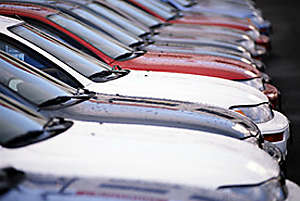 [From Green Car Congress:]
A study by the University of Michigan’s Transportation Research Institute (UMTRI) has concluded that the strategy with the best financial outcome for domestic automakers is to focus on improving fuel-economy across their lineups.
The study - Can Proactive Fuel Economy Strategies Help Automakers Mitigate Fuel-Price Risks? - refutes the industry’s assumption that customers value fuel economy only when fuel prices are high.
The paper incorporates data-driven estimates of the value of fuel economy into an automotive market simulation model that has three components: a consumer demand function that predicts consumers’ vehicle choices as functions of vehicle price, fuel price, and vehicle attributes (the new estimates of the value of fuel economy are used to set the parameters of the demand function); an engineering and economic evaluation of feasible fuel economy improvements by 2010; and a game theoretic analysis of manufacturers’ competitive interactions.
Walter McManus, head of UMTRI’s auto analysis division said:
Even the Big Three now acknowledge that high gas prices and their overdependence on fuel-inefficient SUVs and pickup trucks have accelerated their financial freefall. The findings of our report prove in sharp detail Detroit automakers’ long-term vulnerability to volatile gas prices and show that improved fuel economy fleetwide—above and beyond current regulation—is the key not just to their survival but their success, even if the price of gas goes down.
Looking ahead to the 2010 model year, the study uses three gas-price scenarios: $3.10, $2.30 and $2 per gallon. If all automakers take a proactive strategy to increasing fuel economy, the report concludes that:
McManus again:
What is surprising is that each automaker is financially safer if they follow a proactive fuel-economy strategy, regardless of what their competitors do. Sure, Ford might not capture sales if their competitors make a better car that has high fuel economy, but what is certain is that Ford cannot capture those sales without higher fuel economy.The study also estimated the impact of strategic choices by automakers on US employment. At $3.10 a gallon, a marketwide proactive fuel-economy strategy could save nearly 35,000 jobs at GM, Ford and DaimlerChrysler, while costing foreign automakers with plants in North America more than 19,000 jobs. By contrast, a business-as-usual approach could result in Big Three job losses of nearly 43,000, compared to less than 1,900 job cuts at the foreign transplants.
McManus had this counsel for the US automakers:
Automakers must decide their fuel-economy strategies for 2010 today, knowing neither the future fuel prices nor the decisions their competitors have made. With only cash on hand for one cycle of product development, as gas prices dip—for the moment—will these struggling automakers be tempted to remain dependent on their once-profitable gas guzzlers? Our report provides stark evidence that the riskiest thing domestic automakers could do is continue business as usual.
Deploying new technologies takes time and money to accomplish, and time and money are in short supply in Detroit. While management is currently focused on cutting capacity through massive layoffs, they need to undertake a deep transformation to much more fuel-efficient fleets to avoid going under. The dilemma the Detroit automakers face is that while they may believe that they cannot afford to make fuel economy a high priority, in actuality, it turns out that they cannot afford not to.
Resources:
This study concludes what has always seemed common sense to me: facing high (and increasing) gas prices over the next decades, GM, Ford and DaimlerChrysler (DCX) are simply foolish if they think they will continue to make a profit with their current business model and it's overreliance on sales of SUVs and light trucks. That strategy may have worked when gas was cheap during the 1990s, but if the Big Three arent agile or prudent enough to change strategies to adapt to a changing market, they will go under.
As a consumer, I haven't been much of a fan of the US domestic auto manufacturers, preferring instead the generally more innovative and fuel efficient vehicles produced by Japanese and European manufacturers.
However, as an American, I have no desire to see Ford, GM or DCX go under, as the blow to the US economy from any one of these three going bankrupt would be tremendous. For the sake of the US economy, I can only hope that the US Big Three wake up and pay attention to this study. As McManus pointed out, they have very little time in which to decide what products they plan to roll out a few model years from now, and the wrong decision at this point could cripple any one of the auto giants.
If any of you out there are stockholders in any of the US auto giants, I would strongly encourage you to write a letter to the company to demand that they act prudently with your investment and heed the advice of this study: fuel efficient vehicles are the best bet ... and time is running out to make the switch.
Read more!
News From My Backyard: Portland Metro Schools Could Spark Green Building Boom
Governments, public schools and universities often lead the way on issues of social and environmental responsibility. From puchases of locally produced and sustainable products and fuel efficient vehicles to a commitment to renewable energy and green building design, public institutions often put their sizable purchasing power to work to create demand for responsible, sustainable, and often cutting edge products and technologies.
Now, it looks like Portland metro area public schools could be the next to lend their support to sustainable practices. The Oregonian reports today that 11 Portland-area school districts are planning a new building boom that could result in up to 19 new 'green' school buildings - schools designed to meet national energy efficiency and environmental sustainability standards such as the U.S. Green Building Council's Leadership in Energy and Environmental Design (LEED) standards. [Image: Portland-area North Clackamas High School incorpates many green design features including ample daylighting incorporated into the building's lighting system through ambient light sensors that automatically adjust lighting to supplement natural light levels. Daylighting, along with other green building features, has been shown to reduce sick days and increase students' productivity.]
The following is from the Oregonian article, by Nikole Hannah-Jones:If voters support the November bond hopes of 11 Portland-area school systems, it will trigger a construction boom that could dot the landscape with an unprecedented number of shiny new green schools.
Metro school districts want to build 19 buildings in coming years. If they get the money, most of the districts are considering erecting buildings that meet national environmental and energy efficiency standards.
Six Oregon schools -- including North Clackamas High School and the cafeteria at Beaverton High -- currently hold Leadership in Energy and Environmental Design certifications. Portland's new Rosa Parks Elementary School and a school in Canby are awaiting the certification.
LEED certification comes from the U.S. Green Building Council, a nonprofit coalition working to promote the construction of buildings that are "environmentally responsible and sustainable."
"In the beginning, people were just building schools with four walls to house kids," said Gregory Churchill, an energy analyst with the Oregon Department of Energy. That is changing, he said, and "it is a really good sign for Oregon."
Churchill works with districts interested in making their schools more environmentally friendly and efficient.
LEED certification requires that projects meet a number of standards, such as avoiding wetlands, building near public transportation, conserving water, reducing energy use, recycling, letting in daylight and providing clean indoor air.
Schools can boost their rating status by including options like waterless urinals, solar panels, furniture crafted from renewable wood and systems that capture rainwater to be used for irrigation.
Sherwood school officials voted Wednesday to design the new elementary and middle schools the district hopes to build to meet LEED standards.
"It is important that the district be a good steward of resources," said Mark Christie, Sherwood's school board chair. "We want to show students good modeling so that they continue to make the good decisions that we made all along."
Courtney Wilton, the business manager for the David Douglas School District, said his district will build its newest elementary to LEED standards, pending bond approval.
Hillsboro, McMinnville, North Clackamas and others are also considering LEED certification or at least building schools close to those standards. A Forest Grove spokeswoman said her district is not far enough along in the design process yet, but "that is something we'd like to do."
Boon to wallets, health
While LEED schools can cost a little more upfront, going green can save green over time, said Katrina Shum-Miller, who works for a Portland environmental building consultant company.
LEED buildings use less water and energy than traditional ones, with power bills showing savings of as much as 40 percent.
And increasingly, green schools are being built for the same cost as traditional schools. When North Clackamas built its new high school to LEED standards, the price tag came in at less than a regular high school. "It makes sense economically in the long run, and I also think it is the right thing to do," David Douglas' Wilton said. "We're living in a world where energy is getting more expensive."
The Oregon Department of Energy offers grants and other incentives to help districts recoup additional costs for going green.
But cost savings and conversation are not the only benefits.
Green schools are simply healthier for students and staff. The low-toxin carpets and paints that are used produce cleaner air to breathe. Studies have shown that daylighting -- using large, well-placed windows to let in natural light -- improves student performance.
Districts also use green schools as learning tools for students.
Kids at Clackamas High School can go online and monitor temperatures around the building. A similar system is built into Rosa Parks, and students will also be able to study the school's bioswale area, which catches storm water and cleans it before allowing it to seep back into the ground.
With just 30 LEED-certified schools nationwide, this year's bonds provide an opportunity for the Portland-metro area to stand out.
"This would be a huge increase," Churchill said. "It would be really something, actually."
If you are a Portland metro-area voter, I would strongly encourage you to vote for your local school construction bond this November. The bonds are an important and responsible investment in our children, their educatio and health, and the environment that they will inherit.
I would ultimately hope that Oregon joins Washington in requiring that all new public buildings - be they schools, fire houses, libraries or city halls - meet LEED silver equivalent standards. Such a policy is part of Governor Kulongoski's Oregon Renewable Energy Action Plan, but has yet to make it into legislation, as far as I know.
And I would be remiss if I didn't mention that my alma matter, the University of Oregon recently committed to build all of its new buildings to conform with LEED silver equivalent standards. The UO is currently home to a LEED Silver-rated building, the new Lillis Business Complex and just finished construction on the new Living Learning Center dorm complex which conforms to LEED silver standards (the certification process itself costs quite a bit of time and money, so UO buildings are not required to actually pursue certification with the USGBC). [Image: the UO's LEED Silver-rated Lillis Business Complex]
Thursday, September 07, 2006
Lithium Ion Batteries for Hybrids Coming Soon
 It looks like volume-production lithium ion batteires for use in hybrid electric vehicles could be coming soon.
Green Car Congress reports that the Johnson Controls-Saft Advanced Power Solutions (JCS) joint venture has signed a letter of intent with a major vehicle manufacturer to supply lithium-ion hybrid vehicle batteries. The LOI is for the development phase, which is expected to lead to volume production for a late 2008 model year vehicle.
JCS will reportedly invest $15-$20 million for the production of the lithium batteries. This will be the first JCS European HEV lithium-ion battery manufacturing plant.
Last month, the United States Advanced Battery Consortium (USABC) - a consortium of the US Council for Automotive Research&mash;an umbrella organization for collaborative research among DaimlerChrysler Corp., Ford Motor Co. and General Motors Corp. - awarded the JCS joint venture a 24-month contract to continue its development work for advanced, Li-Ion batteries for HEVs.
The focus of that project is on accelerating Li-Ion technology development by improving battery power in low temperatures, and creating solutions that reduce battery system costs.
JCS says that it has made tremendous progress in both the chemistry and manufacturing of lithium-ion hybrid batteries for HEV applications since the launch of the joint venture in January 2006, due to the combined strengths of both parents.
Lithium ion batteries have had problems with safety, with cold starts and with charge times that have made them a second-choice to Nickel-Metal-Hydride (NiMH) batteries for hybrid applications, up to this point. However, Li Ion batteries offer:
These characteristics make Li Ion batteries the presumed long-term replacement for NiMH (although carbon-nanotube ultracapacitors could give Li Ion a run for its money eventually) and it looks like the time is nearing when Li Ion batteries begin to replace NiMH for use in automotive applications.
[It's also worth noting that it seems like the large majority of hybrid and electric concept cars unveiled in the past year have featured lithium ion battery packs (see for example: the Ford Reflex hybrid, Subaru's B5-TPH hybrid and R1e urban electric car, and Mitsubishi's Concept-CT hybrid all shown at the Detroit Auto Show plus Mitsu's Concept-EZ electric vehicle, Volvo's 3CC hybrid, and of course the smokin' Tesla Roadster to name a few (dozen)).]
EPA Proposes National Renewable Fuels Standard - 3.71% for 2007
[From Green Car Congress:]
EPA Administrator Stephen L. Johnson today proposed a Renewable Fuel Standard (RFS) Program designed to double the US use of renewable fuels such as ethanol and biodiesel. The program, authorized by the Energy Policy Act of 2005, will promote use of fuels largely produced by American crops. The new regulation proposes that 3.71% of all the gasoline sold or dispensed to US motorists in 2007 be renewable fuel. Last December, EPA issued a rule implementing the Energy Policy Act’s default standard of 2.78% for 2006, which will continue to apply through this calendar year.
The EPA must set the standard for each succeeding year representing the amount of renewable fuel that a refiner, blender, or importer must use, expressed as a percentage of gasoline sold or introduced into commerce.
This yearly percentage standard is to be set at a level that will ensure that the total renewable fuel volumes will be used based on gasoline volume projections provided by the Energy Information Administration (EIA). The standard for each year must be published in the Federal Register by November 30 of the previous year.
Various renewable fuels can be used to meet the requirements of RFS program, including ethanol and biodiesel. While the RFS program provides the certainty that a minimum amount of renewable fuel will be used in the United States; more can be used if fuel producers and blenders choose to do so.
In 2006, there will be about 4.5 billion gallons of renewable fuel consumed as motor vehicle fuel in the United States. The RFS program requires that this volume increase to at least 7.5 billion gallons by 2012. The RFS program is designed to cut petroleum use by approximately 3.9 billion gallons a year in 2012—roughly 1.0 to 1.6% of the petroleum that would otherwise be used by the transportation sector—and reduce greenhouse gas emissions by up to 14 million tons annually.
This proposal also provides a preliminary analysis of the expected emissions, air quality and economic impacts of the expanded use of renewable fuels:
Resources:
It's worth noting, that (as the article mentions) 4.5 billion gallons of biofuels are expected to be consumed in 2006, meaning that the 4.7 billion gallons target for 2007 isn't much of a stretch. This standard doesn't appear to be driving renewables quite as much as the ban on MTBE as an oxygenate (and its subsequent replacement with ethanol), at least so far. In later years, the standard may outpace other market drivers.
It's also worth noting that while the billions of gallons of gasoline mentioned above sound like big numbers, this standard amounts to a whole lot of nothing when you consider the scale: the renewable fuels standard will reduce total petroleum consumption in the transportation sector by just 1-1.6% by 2012. To be fair, a 1% reduction isn't nothing, but it does dwarf in comparison to the kinds of petroleum reductions that we must - and certianly can - achieve in order to reduce our reliance on mostly imported and increasingly expensive oil and to mitigate and stabalize our impact on global climate change.
From next-generation biofuels (BTL synthetics, cellulosic ethanol, biobutenal, etc.) to plug-in and grid-indepent hybrids and from vehicle downsizing to increased fuel efficiency, we could easily slash both petroleum imports and greenhouse gas emissions if the will was there. Perhaps President Bush ought to be looking West towards the Governator for ideas about what a concerted effort to reign in petroleum use and greenhouse gas emissions really looks like. Maybe this is why the Oregonian editorial board recently dubbed Gov. Schwarzenegger the real 'leader of the free world' on these kinds of issues...
Tuesday, September 05, 2006
Report Shows Over 100,000 Customers Voluntarily Purchasing Renewable Energy in the Pacific Northwest
 The number of utility customers voluntarily purchasing "green power" in the Northwest topped 100,000 for the first time ever in 2005, according to a new report released today by the Renewable Northwest Project (RNP). Entitled “Powerful Choices VI,” the report summarizes the retail green power programs that are allowing customers to voluntarily invest directly in a clean energy future.
Throughout the Northwest, in markets both urban and rural, thirty-nine Northwest utilities are offering customers a choice of an environmentally preferred power source – wind power, solar power, landfill gas power, or low-impact hydro power. Participation in these programs continued to increase in 2005, with overall participation in Northwest green power programs growing by more than 18% between 2004 and 2005.
“The continued increase in the number of green power program customers in the Northwest demonstrates a strong and consistently growing demand for environmentally-friendly power sources, and a greater awareness of the benefits of renewable energy,” said Rachel Shimshak, director of RNP, a regional renewable energy advocacy organization. “Along with utility investments in renewable energy, customers are using their ‘Powerful Choices’ to help drive a clean energy future,” she added.
Voluntary retail green power purchases help to push the market for the construction of new renewable energy projects forward. During the past year, Northwest green power customers purchased over 733.5 million kilowatt-hours of green power – the equivalent of the annual output from a large 250 megawatt wind farm, or enough energy to power over 63,400 homes for a year. This is over 29 times the retail green power sold in voluntary programs reported in the first Powerful Choices report in 2000.
Since the last report, the number of customers buying green power has grown significantly. An additional 15,507 customers signed up for green power in 2005, bringing the Northwest total to over 101,000 residential and non-residential customers. Increased general awareness of the benefits and importance of buying green power and more sophisticated marketing techniques have contributed to higher sales and customer participation.
In response to the new developments in retail green power, Ms. Shimshak went on to say: “Increased development of the Northwest’s home-grown renewable power resource will help to insulate Northwest customers from future electricity price volatility. In addition, rising concern over the impacts of conventional power generation on our climate, our environment, and our health is prompting a surge of interest in clean, climate-neutral, renewable power.”
The Powerful Choices report from this year and previous years can be found on the RNP web site at www.RNP.org.
If you are a Northwest ratepayer and would like to sign up for a voluntary green power program, check the list of NW utilities offering green power programs in the Powerful Choices Report, or head to RNP's 'Go Green' page to find out if your utility offers a green power program.
Friday, September 01, 2006
California Assembly Passes Foreign Oil Independence Legislation - Bill Heads to Governor
 Assemblyman Joe Nation’s (D-Marin/Sonoma) Assembly Bill 1012, the Foreign Oil Independence Legislation (FOIL) Act of 2006, passed the state Assembly on a 41-35 vote and now heads to the Governor for signature or veto.
“By signing AB 1012, Governor Schwarzenegger has a historic opportunity to curb our addiction to foreign oil,” said Assemblymember Joe Nation. “Our reliance on foreign oil is a threat to our national security, environmental health, and long term economic stability. With the volatility of fuel prices, the shrinking supply and increased demand for oil across the world, California again must lead the nation in taking a stand on environmental policy. Governor Schwarzenegger now must decide whether to truly lead this environmental fight or shrink to the will of big oil and automaker special interests.”
The bill would provide the California Air Resources Board (CARB) with the authority to require that by 2020, 50% of new passenger cars and light duty trucks be clean, alternative fuel vehicles such as hydrogen, plug-in hybrids, and flex fuel vehicles. In order to qualify as an alternative fuel, AB 1012 requires that a blended fuel must be constituted of less than 50% petroleum. In addition, the legislation will strengthen CARB’s authority to ensure for the sufficient availability of alternative fuel stations in the state.
“The challenge for California and the world in the 21st century is to reduce our dependence on petroleum,” stated Michael Eaves, President, California Gas Vehicle Coalition. “California has been a world leader in reducing air pollution from vehicles, and now we need to lead on diversifying our transportation fuels and using cleaner alternative fuels.”
CARB and the California Energy Commission have recommended that the state adopt a goal of 20% non-petroleum use by 2020 and 30% by 2030.
“This bill will reduce California’s dependence on imported oil by breaking the stalemate on alternative fuels,” said V. John White, Legislative Director of the Clean Power Campaign. “Requiring the auto industry to phase in alternative fuel cars and then requiring the oil companies to make alternative fuels available to the consumer, will help curb our oil appetite and create new jobs and economic development.”
This landmark legislation will help shape national energy policy.
The full text of the legislation can be found here.
Well, California has been busy lately. There's been a flurry of activity coming out of Sacramento in the past week or so, including:
As usual, California has set itself up as the vanguard of the United States on progressive and proactive strategies to reduce the impact of climate change and the end of cheap oil.
I've been quite busy lately and haven't had a chance to delve into the specifics of either this piece of legislation, or the carbon cap scheme announced yesterday, so if anyone has details they want to discuss, I'd love to hear it. I'll take a closer look soon.
Obviously this piece of legislation dovetails nicely with the carbon cap on the industrial sector and the gradually increasing standards on CO2 emissions from vehicles. When you throw in California's pioneering Renewable Portfolio Standard and the state's strong solar incentives, and it looks like California is piecing together a pretty comprehensive package of strategies to reduce greenhouse gas emissions and petroleum consumption. And in the absence of this kind of action at the federal level, it's heartening to at least see an influential state like California taking proactive action like this.
California to Enact Cap on Greenhouse Gas Emissions - 25% Reduction by 2020
[From Green Car Congress:]
California legislative leaders and Governor Arnold Schwarzenegger reached agreement on a compromise version of an assembly bill (AB 32—the California Global Warming Solutions Act of 2006) that is intended to bring statewide emissions of greenhouse gases back down to 1990 levels by 2020—an estimated cut of 25%.
The California Senate approved the measure on Wednesday; it now is in the Assembly, where final approval is expected. [Terminating Global Warming? The Governator takes the lead on climate change solutions]
The bill, which would make California the first state in the country to legislate a cap on greenhouse gas emissions, requires the California Air Resources Board (ARB) to:
The greenhouse gases covered by AB 32 are: carbon dioxide, methane, nitrous oxide, hydrofluorocarbons, perfluorocarbons, and sulfur hexaflouride. The bill does not address vehicles as a source. California had already passed a bill limiting the emissions of greenhouse gases from new vehicles - a bill currently under challenge by the auto industry in Federal court [see previous post].
The basic implementation timeline is as follows:
Governor Schwarzeneggar had this to say: "The state is the 12th largest carbon emitter in the world despite leading the nation in energy efficiency standards and its lead role in protecting its environment. Reducing greenhouse gas emissions is an issue we must show leadership on.
Last month, Governor Schwarzenegger signed a climate change pact with UK Prime Minister Tony Blair.
Resources:
Once again, California and the Northeast are pushing things forward on climate change solutions in the absence of any meaningful action at the federal level.
With the Regional Greenhouse Gas Initiative on the right coast and the California carbon cap on the left coast, greenhouse gas emissions caps will fall on a good chunk of the United States' economic activity. These state/regional initiatives will also go a long way towards driving action at a national level by building political momentum for federal action. Additionally, industries doing business in states with carbon caps will likely push for a nationwide cap in order to level the playing field, and ease the regulatory mess of dealing with multiple state or regional caps. Industrial leaders are already expecting a cap in the near future, and the sooner they know what they are dealing with, the sooner the uncertainty and risk posed by an impending but unknown carbon cap can be mitigated.
Bravo to California for moving forward. Let's hope this galvanizes action throughout the nation.