Gov. Kulongoski hopes to present a bill backing renewables with mandates and tax breaks
[I somehow missed this article in Saturday's Oregonian (I was out of the country, so I have some excuse!). Continueing the post-election coverage here at Watthead, here's "Vote buoys green energy plan" from the Oregonian, 11/11/06:]
When a grinning Gov. Ted Kulongoski delivered his victory speech on election night, he stood before a banner that read "Energy Independence."
Although education, jobs and health care had dominated his campaign, he had insisted on preserving a spot for his energy agenda, which promoted home-turf renewables such as wind, solar and biofuel.
Some considered his green intentions a bit ephemeral. But, with this week's election, the climate changed. Not only did Kulongoski win a second term, but he also gained a Legislature dominated by fellow Democrats.
"It's a new day," said David Van't Hof, the governor's renewable-energy policy adviser. "We're excited about our prospects."
Kulongoski has said he wants to make Oregon a leader in the development of alternative energy. He considers his green agenda key to strengthening the state's economy, especially in struggling rural areas.
Clearly, he is emboldened by the election results, which sustained a Democratic majority in the Senate and, for the first time in 16 years, handed the party an advantage in the House. Despite the power shift, Kulongoski is determined to gather broad bipartisan support, his advisers stress.
Whatever the partisan interplay, substantial opposition could come from utilities and business groups leery of greater regulation and fearful of higher power costs.
Kulongoski has developed a three-pronged energy plan, which includes combinations of mandates and tax breaks. Already bill writers are drafting proposals for early introduction to the Legislature, which convenes in January.
Here are the nuts and berries of his agenda:
A bill, known as a renewable energy standard, would require utilities, including Portland General Electric Co. and PacifiCorp, to obtain specified amounts of their power supplies from new renewables in the years ahead, with 5 percent by 2011 and 25 percent by 2025. At this point, Oregon consumers get about 4 percent of their power from renewables.
At least 19 states have renewable energy standards [the count is actually 21 states now plus the District of Columbia - two more states have non-binding renewable energy goals as well]. Neighboring California has one. In unofficial election returns, Washington voters passed one Tuesday [see previous post].
The proposal would establish fuel blending standards for biodiesel and ethanol. It would require raw materials used in the fuels to be grown or produced in the Northwest.
The package would include property tax breaks for the plants that make the biofuel blends, and it would offer income tax credits for producers and collectors of biofuel raw materials and for consumers who use biofuel.
One piece of the proposed package of incentives would increase the business energy tax credit for companies that install renewable energy systems such as wind turbines and solar photovoltaic arrays. The credit percentage would rise to 50 percent from the current 35 percent. Limits on a project's cost would increase to $20 million from $10 million.
Another piece would increase residential tax credits for wind generation and fuel cells to $6,000 from $1,500, matching the maximum available for solar electric systems. The proposal also would allow the residential credit to be used for more than one qualifying system -- a solar water heater and a solar electric system, for example.
"If these pass, Oregon can stand up to any state in the country" in terms of its efforts to develop renewable energy and address global warming, Van't Hof said.
Renewable portfolio standards in California and Washington increase pressures to move quickly, Van't Hof said.
"The point for us is, do we want to be on the tail end and have other states capture the benefits, or do we want to be on the front end?"
Last session, Kulongoski nudged along pieces of his energy agenda. A biofuel bill passed both chambers, only to die in conference committee, the victim of end-of-session maneuvering.
Kulongoski found many rural lawmakers, regardless of party, eager to consider incentives that might aid jobs and businesses in their districts, but he knew he'd get nowhere with a renewable portfolio standard, given Republicans' aversion to mandates.
More predictability
In the House, the post-election reality of a slight 31 to 29 Democratic majority hardly creates a majority party juggernaut, the election winners note. But it does give Kulongoski and his crew assurances that key energy bills will hit committee agendas, receive hearings and, more likely than not, proceed to the floor for votes.
"Before we had no idea what the House leadership would do," said Jeremiah Baumann, environmental advocate for the Oregon State Public Interest Research Group, or OSPIRG. "They could sit on wildly popular bills if they wanted to."
The renewable portfolio standard promises to draw the most political intrigue. It is expected to be a complex bill, which means that special interests will have room to maneuver for provisions more to their liking.
Utilities want details
PGE and PacifiCorp, the state's largest utilities, say they need more details before they take a position on a renewable requirement. But, PacifiCorp opposed the Washington state initiative, and its parent company, Berkshire Hathaway's MidAmerican Energy Holding Co., said it prefers market incentives to mandates.
Neither has Associated Oregon Industries, Oregon's largest business lobby, weighed in on any portfolio requirement, but it would fiercely fight anything thought to increase energy costs, often a critical operating expense.
"My members will watch closely anything that might have an effect on energy rates," said Julie Brandis, an AOI lobbyist.
OSPIRG's Baumann said he's eager to debate business interests. He said he's thrilled by his organization's sudden political clout, but careful to curb any tendency toward reckless enthusiasm.
"We're not expecting the whole political world to reverse itself," he said. "Things are looking better for the environment, for global warming and energy. But we still have a lot of work to do."
The Renewable Northwest Project and our allies continue to champion Kulongoski's renewable energy agenda in Oregon, particularly the renewable portfolio standard. We are currently participating in the Governor's Renewable Energy Working Group, which has been meeting for a year now and has been working to reach a consensus of stakeholders (or as close to a consensus as possible) on a package of renewable energy legislation to be proposed in the 2007 legislative session beginning in January.
We are committed to the passage of a strong renewable portfolio standard in Oregon (25% by 2025) that will drive the development of clean, homegrown renewable energy in the state and the region and will accrue the many public benefits - public health, energy indepenence and economic development benefits - to the citizens of Oregon and the Northwest. And, like Governor Kulongoski, and our friends at OSPIRG, we are also quite optimistic after the outcome of last week's election.

Tuesday, November 14, 2006
Election 2006: Election Buoys Oregon Governor's Green Energy Agenda Plan


Monday, November 13, 2006
Election 2006: Renewable Energy-friendly Platforms Perform Well
[From the American Wind Energy Association's Wind Energy Weekly (11/10/06 edition):]
As most of the attention stayed focused throughout the week on national-level elections and the Democratic takeovers of the House and Senate, state candidates with a history of embracing wind power and renewables generally fared well at the polls on Tuesday.
As for the new incoming governors, Colorado governor-elect Bill Ritter (D) stands out as one of the most ardent endorsers of renewables, which he has called a top priority. “Renewable energy is one of Governor-elect Ritter’s primary issues,” InterWest Energy Alliance Director Craig Cox told Wind Energy Weekly. “He sees it as a way of helping rural areas as well as diversifying our energy portfolio.”
In Massachusetts, Deval Patrick (D), who has endorsed the Cape Wind project in his state, became the first African American governor in Massachusetts. Several incumbents, meanwhile, capitalized on their renewables track records and future agendas to help propel them to victory. Some of those include California’s Arnold Schwarzenegger (R), New Mexico’s Bill Richardson (D), Texas’ Rick Perry (R), Pennsylvania’s Edward Rendell (D), Arizona’s Janet Napolitano (D), and Kansas’ Kathleen Sebelius (D). “Energy will be a very key area,” said Sebelius, alluding to wind power and ethanol in particular. “That will be front and center.”
Wind proponent Perry recently joined industry executives in announcing $10 billion in potential wind farm development in Texas provided the necessary transmission is built (See Wind Energy Weekly #1211). Schwarzenegger recently signed legislation that will make California the first state to place a cap on all greenhouse gas emissions (see Wind Energy Weekly #1206). Richardson, one of several candidates featuring wind power in campaign commercials, is working to create a Renewable Energy Transmission Authority in his state, among other renewables initiatives.
Renewables ballot initiatives also took center stage in some states, achieving mixed results. One big winner: Washington State’s ballot Initiative 937 requiring that 15% of the electricity from the state's largest utilities come from renewable resources by 2020. However, in North Dakota, Fargo voters rejected an initiative to require that 20% of electricity supplied to the city be generated from renewable energy sources by 2020.
On the national level, the wind industry has one of its own headed to Washington. Jerry McNerney (D), a wind power engineer and long-time member of the industry, defeated seven-term Rep. Richard Pombo (R) in a race for Pombo’s seat in the U.S. House of Representatives. “Jerry has been a long-time and very well-respected member of the wind energy community,” said AWEA Executive Director Randy Swisher. “We look forward to having him with us in Washington.”
Other pro-wind candidates proved victorious on the national level, among them Ed Perlmutter (D), who was elected to represent Colorado’s Seventh Congressional District. Perlmutter replaced Bob Beauprez (R), who lost the gubernatorial race in the state.
Election 2006: AWEA Says New Congress Opens New Possibilities for Wind Energy Policies
 [From the American Wind Energy Association's Wind Energy Weekly (11/10/06 edition):]
While renewable energy remains a bipartisan issue, the shift to a Democratic-controlled House and Senate opens up many new possibilities for broader policies aimed at positioning the wind industry as a major player in U.S. electricity production and environmental improvement, according to AWEA Legislative Director Jaime Steve.
“Those who control the Congress set the Congressional agenda, thus setting the markers on the playing field,” said Steve. “The old markers effectively limited that field to the Production Tax Credit (PTC) and improvements in transmission access. The new markers create additional avenues with respect to the PTC and transmission while also broadening the field on climate change, a national renewable energy requirement, small turbine incentives and investments in renewable energy research and development.” Added Steve: “Our time is now, and it is what we make of it.”
An extension of the PTC, AWEA’s No. 1 priority, enjoys broad bipartisan support. However, Democrats may seek opportunities to extend the credit faster and for a longer duration than in the past. On transmission access, change opens up the possibility that targeted transmission infrastructure development provisions could be inserted into smaller energy bills aimed at specific issues (as opposed to a broad, wide-ranging energy policy legislation).
AWEA also is in a better position to advance the establishment of a renewable portfolio standard (RPS). This provision has gained Senate approval in the past but always been blocked by the previous House leadership. The industry also should be in a better position in the areas of climate change and creation of a new small turbine tax credit.
Whether run by Republicans or Democrats, the House operates on a strong “majority rule” basis with the party out of power having little impact on the direction of legislation. Importantly, it is the Chairman who sets the agenda. In the area of ever-important tax policy, Rep. Charles Rangel (D-N.Y.) is set to become Chairman of the House Ways & Means Committee, replacing the retiring Republican Rep. Bill Thomas (R-Calif.). In the energy policy arena, Rep. John Dingell (D-Mich.) is set to become Chair of the House Energy & Commerce Committee, which has jurisdiction over not only energy but clean air and climate change issues. Dingell is a moderate Democrat who has expressed support for an RPS.
In the Senate Finance Committee, which has oversight over tax policy, Senator Chuck Grassley (R-Iowa), will continue to be an important player as the senior Republican on the panel and an unparalleled leader on the PTC. Senator Max Baucus (D-Mont.), the likely Chairman, is also a strong supporter of the PTC.
Senator Jeff Bingaman (D-N.M.)—a long-time leader on issues including the PTC, RPS, climate change, and transmission for wind—is likely to become Chairman of the Senate Energy Committee, replacing Senator Pete Domenici (R-N.M.).
News From My Backyard: Oregon College Plans State's First Geothermal Power Plant
If all goes according to plan, the Oregon Institute of Technology in Klamath Falls will soon meet its electricity needs with a new $5 million, one-megawatt geothermal power plant, according to an article in this week's Clearing Up newsletter [sorry, only available by subscription]. The proposed geothermal plant, which would be Oregon's first, would use hot water from a well drilled about a mile deep into a fault system beneath the OIT campus.
According to John Lund, director of OITs Geo-Heat Center, the college's plans also call for an additional 250-kilowatt low-temperature power plant that would use water from existing wells currently utilized to provide district heating for the OIT campus. The college plans to sell excess hot water to neighboring buildings for heating. [Graphic: part of OIT's existing geothermal district heating system which provides space heating and domestic hot water for the campus, melts snow on sidewalks in the winter and runs chillers in the summer]
Together, the two new geothermal power plants would etablish a geothermal direct-use business incubation center. In addition to providing educational opportunities for OIT students, the business incubation center - which would include a geothermally heated greenhouse and aquiculture ponds - could be used to attract potential businesses in cooperation with a regional economic development association, Clearing Up reports.
Lund said hot water rises up from the fault system beneath the OIT campus and the town of Klamath Falls, and then flows horizontally in a geological layer that the college and city currently tap for residential and commercial district heating. "We have geochemistry indications that the water could be as hot as 300 degrees F," he said. "We're just not sure how deep we would have to go to reach it."
The school has been developing the plans for the last two years, Lund told Clearing Up. The school is reportedly searching for funding sources, both state and federal, and has enslisted the help of the state's congressional delegation. Lund told Clearing Up that OIT is working up a request for bids on the various parts of the project, and hopes to issues a request for proposals (RFP) by next spring or summer. About half of the $5 million project costs - $2.2 million - is estimated for the cost of the deep well, Clearing Up reports.
A power plant for the lower temperature water from existing wells could cost $600,000-$800,000, Lund said. Additionally, if water from the planned deep well proves hot enough, it could be run through a 'bottoming' low-temperature power plant to generate extra electricity after first spinning a steam turbine (i.e., a binary plant configuration). That could boost the output of the proposed plant above one-megawatt. In either case, the water exiting the power plant would still be hot enough to use for space heating, both on and off campus.
The greenhouse and ponds would cost an estimated $300,000 each, Clearing Up reports.
OIT is home to the nation's first modern geothermal district heating system, installed in 1964. The geothermal system uses hot water from three wells drilled during construction of the campus and heats approximately 95% of the campus's 600,000 square feet of buildings, according to an OIT website. The geothermal system also melts snow on 2,300 square feet of sidewalk in the winter, provides domestic hot water, and even cools five buildings during the summer. The college estimates that the system saves them about 70% of the cost of alternative heating fuels (i.e., natural gas).
Thursday, November 09, 2006
Election 2006: An Open Letter to Congress
 Federal Energy Policies for a Sustainable Energy Future
With Senator George Allen (R) of Virginia conceding his closely contested race to Democrat Jim Webb, Democrats have now secured control of both branches of Congress in this Tuesday's mid-term elections.
This should be good news for clean energy advocates, as it will create a more favorable atmosphere on Capitol Hill for federal energy legislation aimed at reducing America's dependence on foreign oil and other fossil fuels, reducing our greenhouse gas emissions, and developing our own homegrown renewable resources. Democrats in both the House and the Senate have introduced several smart clean energy policies over the past several years of a Republican-controlled Congress, but none of them ever made it out of committee.
As with many other issues, Democrats must now show that they can indeed lead this country forward on energy policy to create a more secure, healthy and sustainable energy future for the United States (and leading is a lot harder than complaining).
To help them along (as if anyone is really listening to me!), the following open letter suggests several federal-level energy policies that I firmly believe should be implemented in order to help America on the path to a secure and sustainable energy future. Think of this as my 'wish list' for the coming Congressional session.
I know that not all (maybe not any) of these policies will pass, but I am optimistic that we will at least finally see public debate on the floor of the House and Senate focusing on how this country should address concerns about dependence on foreign oil, resource depletion concerns, and greenhouse gas emissions. And perhaps, we will see one or two of these sensible and forward-looking policies enacted as we take a few steps down the path to a sustainable energy future.
An Open Letter to Congress
Dear newly elected and re-elected Democrats in Congress and other Senators and Representatives interested in a secure and sustainable energy future,
On Tuesday, November 7th, the people of this great nation voiced their discontent with the current direction our nation is heading by voting in a new set of leaders and representatives and granting control of both houses of Congress to the Democrats. This is a clear vote of confidence in the platform of the Democratic Party and indicates that Americans are looking for new leadership and new strategies in the war in Iraq, a stronger economy (that actually benefits real working Americans), a higher minimum wage, expanded health care coverage and many other issues.
It should also be considered a clear indication that Americans want to see new leadership, new solutions, and new action to address a strong and growing concern for people across the United States: our energy future.
We want leaders who will craft smart policies to ensure a secure, affordable, healthy and sustainable energy future for all Americans. We want to see Congress pass energy legislation that will address our depenence on foreign oil, rising gas prices, resource depletion concerns, and global warming. We want our energy spending to support people and jobs right here in the United States, not line the pockets of Saudi princes, Russian oil barons, or even our oil-exporting neighbors in Canada and Mexico. We're tired of fighting wars and supporting dictators and getting into international entanglements to secure our oil interests overseas. And we want to know that we can feel proud leaving a clean, secure and healthy energy future for our children and grandchildren.
And we're tired of waiting, tired of rhetoric, and tired of empty words. We want action, and we want it soon. And it's up to you.
I would like to bring to your attention the following policy suggestions that would each help address the concerns many Americans have about our dependence on foreign oil, our depleting fossil resources and our growing greenhouse gas emissions. I would strongly encourage that some or all of these policies are implemented in the near future to help set America on a course for a secure, affordable and sustainable energy future:
21 states and the District of Columbia have already enacted Renewable Energy Standards at a state level, and these policies have been proven to be effective and efficient ways to gaurantee the development of our abundant homegrown renewable energy resources and ensure that we accrue the public health, economic development and energy security benefits of tapping our domestic renewable resources.
High performance buildings, energy efficient appliances and lighting and other cost-effective efficiency measures should be harnessed across the country so that by 2025, we consume at least 10% less energy in our homes and businesses than we do now.
This would raise the fuel economy of the average car or light truck by about 50% in 2015-2020 and by almost 100% by 2025-2030 compared to the Energy Information Administration's business-as-usual forecasts, resulting in huge savings in imported oil use and large reductions in greenhouse gas emissions from the light vehicle fleet.
Both of these loopholes in current policies result in increased fuel consumption and greater dependence on foreign oil. According to a NY Times piece written by Thomas Friedman, the E85/CAFE loophole "increased U.S. oil consumption by 80,000 barrels per day in 2005 alone." [see this for more]
Currently, since CAFE is an average fuel economy standard only, progress in fuel economy on the leading edge of an auto manufacturers weight classes explicitly condones the sale of more gas guzzlers on the trailing edge of that weight class. For each fuel efficient Escape Hybrid Ford Motor Company sells, they can sell one more gas guzzling Ford Explorer or F250, eroding the progress made by the expanding adoption of hybrid vehicles. Enacting a sensible minimum fuel economy standard for different weight classes of vehicles would ensure that when energy conscious consumers buy hybrids or other fuel efficient vehicles, they aren't simply allowing carmakers to sell another Hummer or Escalade. The minimums should progressively increase as the average fuel economy standard increases over time.
Current spending, now at just $3 billion per year, is sorely lacking. The New York times recently reported that annual United States federal spending on all energy technologies, not just climate friendly ones, has fallen from an inflation-adjusted peak of $7.7 billion in 1979 to just $3 billion in the current budget. In contrast, federal spending on medical research has nearly quadrupled since 1979 and military spending has gone up 260% since then to $75 billion a year - over 20 times what is spent on energy research. If we are serious about energy independence, fighting global warming, and creating a new energy future, we've got to start spending some serious money to tackle these problems.
Part of the money raised could offset income taxes for low-income taxpayers who will be hit disproportionately hard by this tax, while the remainder could fund the increased energy research budget suggested above.
Plug-in hybrids are an excellent near-to-medium-term solution to our oil dependence, reduce our transportation energy consumption and can harness a diverse range of electricity-producing resources to fuel transportation, including our abundant domestic renewable energy supplies. Plug-ins are nearly ready for mass commercialization and an extra push from a public-private parternship could greatly accelerate their deployment.
This is the linchpin policy in the fight against global warming and is long overdue. The other policies described above will be key in achieving the emissions reductions targets, while the cap and trade system will provide the proper market incentives to ensure that they are met. Cap and trade systems have already been implemented to effectively and efficiently reduce several kinds of pollutant emissions from power plants (i.e., SO2, NOx and Mercury) and would be an effective policy mechanism to reduce greenhouse gas emissions.
Additionally, several states are already implementing statewide or regional carbon cap and trade systems in the absence of federal action. This could eventually lead to a hodge-podge of state and regional policies that could create unfair competitive environments for our country's businesses. A national cap and trade system would create a level playing field, which is why more and more big business and industry leaders are asking for a federal carbon cap and trade system.
Enacting this policy sooner, rather than later, even if caps don't go into effect until later years is also desirably as it would provide industry and business with regulatory certainty and allow smart investment and planning decisions. The current 'wait-and-see' stance in industry is creating large uncertainty and hampering investments in clean energy resources.
Congress should also immediately pass a resolution or issue a public statement that any pulverized coal plants built after this point in time will not be 'grandfathered' into upcoming carbon regulations.
Many utilities and power plant developers are planning to construct traditional, dirty, pulverized coal-fired power plants across the United States - over 150 such plants have been proposed in the West - under the assumption that if these plants are constructed before the enactment of carbon legislation, they will be 'grandfathered in' and will avoid regulation. This cannot be the case. The construction of dozens of new pulverized coal-fired power plants - the worst contributors to greenhouse gas emissions - will set the United States back decades in our efforts to control our growing emissions of greenhouse gases and avoid the worst effects of global warming.
Issuing a clear and public statement to utilities and power plant developers that they should not expect their proposed plants to avoid regulation will provide a clear signal to utilities and developers that building these new plants carries high risks due to upcoming carbon regulations. This should dissuade and prevent the proposed coal building boom now planned across the United States. Utilities and power plant developers should be building power plants that can exist in a carbon-constrained world and should plan accordingly. If we still want to utilize our large domestic coal reserves, we should turn to coal gasification combined cycle power plants - the so-called 'clean coal' technologies - that can capture and sequester carbon emissions safely in geological formations.
Members of Congress, it's time for you to lead this great nation into a new energy future: a future where we break our addiction to foreign oil, where we become world leaders in advanced energy technologies, where we create tens of thousands of new jobs and strengthen our economy by developing our abundant homegrown renewable energy resources, where we need not fear the potentially devastating effects of global warming, and where we have created a clean, healthy, secure and sustainable energy future that we can feel proud to leave to our children and grandchildren.
This is the future that Americans demand! It's up to you to lead us there. A sustainable energy future is possible, and with smart policies and committed leadership, we can make it happen.
Sincerely,
Jesse Jenkins
____________________
Concerned citizen and resident of Portland, Oregon
Election 2006: California's Oil Tax/Alternative Energy Fund Proposition Fails

Worries about pump prices and bureaucracy doomed Prop. 87, according to observers.
[From the LA Times:]
After months of being hammered with threats of higher gas prices at the pump, voters yielded to concerns about Proposition 87 and turned down the proposed tax on crude oil, supporters and opponents agreed Wednesday.
The "no" side swept most parts of the state with 54.7% of the vote. The "yes" side received 45.3%, carrying only Los Angeles County, the Bay Area and a handful of Northern California counties. "Voters were interested in the specifics of the proposal, and the more they looked for details, they found flaws," said Al Lundeen, spokesman for Californians Against Higher Taxes, the "no" campaign.
Proposition 87 spokeswoman Beth Willon conceded that the opposition — mainly oil companies — was "able to plant seeds of doubt on the issues of cost and accountability."
The initiative sought to levy a tax of 1.5% to 6% on the price of every barrel of oil pumped from a California well. The estimated $4 billion that would have been raised over 10 years was to be given as grants to scientists and universities or as subsidies to industries for developing nonpolluting alternatives to petroleum.
The argument over whether a tax on oil company production would be passed along to motorists dominated television commercials since early spring.
The oil industry spent about $95 million to back Californians Against Higher Taxes. Meanwhile, supporters at Californians for Clean Energy raised $57 million. The battle was the most expensive in California initiative history.
Proponents of Proposition 87 knew from the start that the potential impact of the tax on retail gas prices could be an issue. With that in mind, they included a provision in the initiative that made it illegal to pass the tax along to motorists, and they highlighted the provision in their ads.
But that assurance never seemed to persuade voters. Analysts said that despite extensive television exposure, proponents never could overcome people's concerns that Proposition 87 would affect "what he or she pays at the pump" just as gasoline prices are coming down, said Larry N. Gerston, a political science professor at San Jose State.
Many voters also were apparently swayed by the oil companies' contention that the initiative would create an unaccountable bureaucracy to pass out grants and subsidies from the proceeds of the extraction tax.
"Bureaucracy is a bad word anywhere," Gerston said.
The barrage of televised criticism made it hard for the "yes" campaign to get its message across "to make the value of our initiative clear to the voters," said Anthony Rubenstein, a Los Angeles community organizer who had the idea for Proposition 87.
Election day exit polls conducted by the Los Angeles Times Poll indicated that a majority of votes cast "were all about the money" that motorists feared they might have to pay because of a new tax, said poll Director Susan Pinkus.
In the poll, 79% of Republican voters opposed Proposition 87, and only 65% of Democrats supported it. Independent voters were split, while majorities of men and women voted no. White voters opposed the measure, while Latinos were split and Asians and blacks voted yes, the poll said.
Propelled primarily by the personal wealth of Hollywood producer Stephen L. Bing, and combined with campaigning by former President Clinton and a bevy of movie stars, the campaign couldn't allay voters' skepticism and the fear of higher gas prices sowed by oil company advertisements.
Environmentalists placed much of the blame for their defeat on being outspent two to one by the oil industry.
"The take-home lesson here is that with $100 million and scaremongering tactics, it's hard to fight," said Roland Hwang, a San Francisco-based official with the Natural Resources Defense Council.
But political observers countered that the loss couldn't be written off solely due to a lack of money.
The campaign should have been able to take advantage of the many Californians who worry about pollution and global warming, and harbor deep suspicions of international petroleum corporations, said Julie Buckner, a Los Angeles media consultant involved in the early stages of the Proposition 87 campaign.
"The campaign had enough resources to win. But it didn't do a good enough job of raising doubts about who was the opposition," Buckner said.
Indeed, some of the pro-Proposition 87 ads that ran earlier in the campaign featured "windmills and clean air" and were not aggressive enough in criticizing oil companies for allegedly keeping America dependent on petroleum, said Terry Tamminen, who recently resigned as a top environmental advisor to Gov. Arnold Schwarzenegger. "Those arguments needed to be made sooner," he said.
Meanwhile, the oil companies that bankrolled the opposition campaign — mainly Chevron Corp. and Aera Energy LLC, a joint venture of Exxon Mobil Corp. and Royal-Dutch Shell — were careful to stay out of the campaign limelight, referring all campaign queries to their political consultants and allies in the California Chamber of Commerce.
Environmentalists, though disappointed with Proposition 87's defeat, said they remained hopeful that the fight over the initiative may have stoked people's interest in combating the nation's dependence on polluting oil from overseas and California's oilfields.
Hwang of the Natural Resources Defense Council said: "Everyone agrees that we've got to figure out a way to solve this problem."
Election 2006: Clean Energy Candidates Win Across West
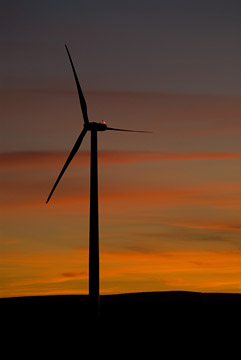 Voters in several Western states chose to elect candidates from both parties that support clean energy in this Tuesday's mid-term elections.
These results highlight the many opportunities to enact clean energy legislation throughout the West in the coming years as supportive governors and state legislators take (or return to) office throughout the region. Advocates of a clean energy future can expect to see a number of new public policies that promote rural economic development, stable-cost energy resources and environmentally friendly renewable energy project development throughout the region.
Below is a brief summary of winning candidates and issues from yesterday's election results in the West:
Oregon
Ted Kulongoski (D) reelected governor 51% to 42% over Republican challanger, Ron Saxton.
In his words:
"[W]e ... need a strategy to make Oregon a national leader in alternative and renewable energy. I'm working on several fronts to achieve this goal. My proposal calls for 25 percent of Oregon's total electricity to come from renewable sources by 2025. A renewable energy portfolio has proved to spur renewable energy production, help the environment, and create family-wage jobs.
Biofuels: My plan capitalizes on emerging "bio-energy" markets, particularly biodiesel and ethanol, to make Oregon a global leader in biofuel production.
Conservation: Conservation is highly effective in reducing energy consumption. That's why I've more than tripled the state's flex, biofuel and alternative fuel vehicles and will continue to promote innovative technologies that provide savings and economic opportunities.
Tax credits to support new investment in renewable energy: I am pursuing a variety of tax incentives to encourage investments in renewable energy technologies, including an increase in the Oregon Business Energy Tax credit from 35 percent to 50 percent and in the eligible cost from $10 million to $20 million per project." [From OregonLive.com 2006 Voters Guide interview with Governor Kulongoski]
Washington
Senator Maria Cantwell (D) was solidly reelected 57% to 39% over challanger Mike McGavick.
In her words:
"Washington State can be a leader in renewable energy industries and create thousands of new jobs right here at home. ... We need to develop more alternative sources of energy, including wind, to create a better, safer, more prosperous future for all our families." [From a Cantwell campaign ad]
Arizona
Janet Napolitano (D) re-elected governor, 63% to 35%, over challenger Len Munsil (R)
In her own words:
"Arizona could be the next Persian Gulf of solar energy...We average well over 320 days of sunshine per year, and that's one of our greatest resources, and we ought to use it." [Comments at North American Energy Summit, Albuquerque, N.M., 16 April 2004]
Arizona Corporation Commissioner Kris Mayes (R) re-elected with 26% of vote (highest of five candidates; top two voter-getters take office).
In her own words:
"This [Arizona's new 15% renewable energy standard] is a vote for more jobs in rural Arizona, a healthier water supply, and a more secure electrical grid. Move over California: with these rules we are making Arizona the solar energy capital of the world once again!" [Comments delivered while voting for Arizona's new Renewable Energy Standard and Tariff at the Arizona Corporation Commission, 31 October 2006]
Arizona Corporation Commissioner candidate Gary Pierce (R) elected with 25% of vote (second-highest of five candidates; top two vote-getters take office)
In his own words:
"I don't have a problem with 2025 [target date for Arizona's new Renewable Energy Standard and Tariff], but 15 percent is an arbitrary number. We need a goal, but should recognize it's variable. Let's see how the new rules impact the utility industry, and if they cause significant cost increases (for the consumer). Let's watch it year to year and do whatever is reasonable and responsible." [From 12 October 2006 interview with the Tucson Weekly ]
Colorado
Bill Ritter (D) elected governor, 56% to 41%, over challenger Bob Beauprez (R)
In his own words:
"We believe that the 'Colorado Promise' is about the new energy economy where this state, Colorado, is a leader in renewable energy, in wind, solar and biofuels." [From acceptance speech, 7 November 2006]
Local Ballot Issues:
Boulder voters back carbon tax, 58% to 42%.
Funds will go toward new Climate Action Plan (CAP) programs, such as helping businesses obtain Xcel rebates for purchases of energy-efficient hardware, performing energy audits to help people understand how they can save energy, and assisting low-income citizens by distributing energy efficiency kits. [See article in today's Colorado Daily.]
Carbondale (Colo.) voters approve, 81% to 19%, a measure allowing the town to issue up to $1.8 million in Clean Renewable Energy Bonds to build and operate two large-scale solar systems.
Nevada
Jim Gibbons (R) elected governor, 50% to 46%, over challenger Dina Titus (D)
In his own words:
"I believe we can turn Nevada into an energy independent state. In Congress, I re-wrote the Geothermal Steam Act, essentially making it economically feasible to harvest one of our state's most abundant forms of energy. As governor, I would continue to make geothermal power, as well as solar and wind power, economically attractive. These clean energy sources would give Nevadans independence from other states and other countries that currently supply us. They would also stabilize our utility bills while those around us fluctuate with world events."
[From statement by Jim Gibbons in 6 November 2006 Rebel Yell]
New Mexico
Bill Richardson (D) re-elected governor, 68% to 32% over challenger John Dendahl (R)
In his own words:
"[Wind energy] is a good example of how New Mexico is becoming a national leader in clean energy. Since I became Governor, we've started requiring utility companies to produce ten percent of their energy through renewable sources. We've eliminated the state sales tax on hybrid cars and offered a solar tax credit. Clean energy is the key to holding down gas prices, ensuring our national security and creating the jobs of the future." [From Richardson campaign commercial]
Utah
Utah did not have a gubernatorial election yesterday. However, the two legislators who plan to carry a state renewable energy tax credit in the 2007 legislature were both re-elected:
Senator Howard Stephenson (R-Draper) defeated Adam Ford, 65% to 35%
Rep. Sheryl Allen (R-Bountiful) defeated Richard Watson (D), 68% to 27%
Wyoming
Dave Freudenthal (D) re-elected governor, 70% to 30%, over challenger Ray Hunkins (R)
In his campaign's words:
"Gov Dave's priorities for a second term are to continue to promote the culture of bipartisan and statewide cooperation --- and to make permanent the smart investments made toward a stable future for Wyoming: Development on Wyoming's Terms...
· Protect Wyoming's natural treasures
· Get full value for our minerals by encouraging development of powerlines, powerplants, pipelines, clean coal technologies and alternative energy within Wyoming
· Additional funding for wildlife habitat and migration corridor protection
· Diversify Wyoming's economy"
Voters Make Their Voice Clear: We Want a Clean Energy Future!
I'm sure that there are many more clean energy champions out there that I missed. I encourage any of you readers to mention them in comments here if you know of any other newly elected or reelected public servants that have pledged to work hard to promote a clean energy future at the local, state or national level.
By supporting these candidates, voters across the West, and indeed across the United States, have made their voices clear in this election: we want representatives that will fight for clean, homegrown renewable energy that creates jobs here our communities, provides us with safer, more stable and more secure energy, and helps create a clean and healthy future for ourselves and our children!
We'll need the hard work and support of all of these clean energy champions in the years ahead to craft smarty public policies that will help bring about the much-needed transition to a sustainable energy future!
I'd encourage you to write letters to your own representatives to make sure they know you expect them to fight for a sustainble energy future. If they are one of these clean energy champions, they'll be glad to hear you reaffirm their stance, and if they aren't on this list, perhaps if they hear a call for clean energy from enough of their constituents, they'll be on this list next year!
[A hat tip to Craig Cox, Executive Director of the Interwest Energy Alliance for providing the results for all the states excepting Oregon and Washington. Photo credit: Leon Werdinger, October 2006]
Read more!
Wednesday, November 08, 2006
Election 2006: Clean Energy Initiative Leading in Washington State
 Initiative 937 currently leading by 5 points with 60% of votes tallied
Washington State's Clean Energy Initiative, I-937, appears to be passing, as votes are tallied in the Evergreen State. With about 60% of votes tallied (as of 4:00 pm Pacific Time), I-937 leads 52.5% to 47.5% and is tracking to pass as the final votes are tallied this evening.
If enacted, as it appears it will be, I-937 would require the 17 largest utilities in Washington state to meet 15% of their electricity demand with new renewable energy resources by the year 2020, with gradually increasing targets in the interim years (3% in 2012 and 9% in 2016). The Initiative would also require affected utilities to harness all cost-effective energy efficiency and conservation opportunities within their service territories.
About one third of the outstanding votes are from King County (the Seattle/Tacoma area) which has been tracking 60-40 in support of the bill, while the remaining uncounted votes are largely from counties that have been tracking at 50% or more of voters approving the Clean Energy Initiative.
The Seattle Post-Intelligencer had this to report:Initiative 937, an energy efficiency initiative setting new conservation goals for utility companies, held a comfortable lead across the state Tuesday. With many more ballots still to be counted in King County, the measure seemed sure to pass.
Initiative 937 was a hard fought race with key opposition coming from the pulp and paper industry (including Weyerhauser, Boise Cascade and others), the Association of Washington Businesses, a few utilities (including Avista Corp. and PacifiCorp/Pacific Power), and a few large industrial utility customers (specifically Boeing).
Rep. Jay Inslee, D-Wash., a supporter of the initiative, said its success will grease the wheels for national legislation.
"Now we're going to move in Washington (D.C.)," he said.
The initiative would require utilities with 25,000 or more customers -- currently 17 of the state's 63 utilities, including Seattle City Light and Puget Sound Energy -- to meet specific renewable energy goals.
The measure calls for the larger utilities by 2020 to get 15 percent of their energy from renewable sources -- primarily wind -- or from other sources including solar, wave or tidal power and methane captured from landfills and dairy cow manure.
But many utilities objected, saying they want to determine what is best for their utility.
Proponents of the Initiative included a broad coalition of ratepayer advocacy, environmental, public health and other public interest groups, as well as the Washington Public Utility Association, several elected officials, and many more. U.S. Representative Jay Inslee of Washington, who easily won reelection on Tuesday, deserves special mention as the Initiatives most vocal and public supporter.
I-937's fight was made all the more difficult by a long and confusing ballot title which left voters unsure about what the initiative would do if enacted. Polls repeatedly showed that when voters knew that a vote for I-937 supported the development of clean, renewable energy and energy efficiency, support for the Initiative was very strong.
Still, despite the confusing ballot title and the well-funded opposition, Washington voters appear to have approved the Clean Energy Initiative, clearly articulating their preference for a clean energy future for the state.
Washington will join 20 other states and the District of Columbia that already have renewable energy standards on the books. Two other states have soft renewable energy goals.
The passage of Initiative 937 in Washington, as well as the solid reelection of Oregon's Governor Ted Kulongoski yesterday, will lend momentum to a proposal to enact a Renewable Energy Standard in neighboring Oregon. The Standard, proposed and backed by Governor Kulongoski, as well as a broad coalition of public interest and environmental groups, would enact a 25% by 2025 renewable energy target. Stakeholder discussions are currently underway to draft legislation which will be submitted to the Oregon legislature before the 2007 session begins in January.
The favorable national election results for the Democratic Party may also mean that we will see energy legislation addressing renewable energy and energy independence at the federal level in the coming months. Several Democratic leaders have proposed energy legislation in the past while the House and Senate were under Republican control, only to have their 'energy independence' bills stall in committee [see this previous post for one of many examples]. With Democrats now controlling the agenda in the House, and - pending the outcome of the closely contested race in Virginia - in the Senate as well, 'energy independence' legislation will likely make its way to the House and Senate floor.
All in all, the results of yesterday's mid-term elections are quite favorable for renewable energy advocates across the country. Stay tuned ... this should be an interesting next couple of years!
Resources:
[Full disclosure: my employer, the Renewable Northwest Project is a principle sponsor of I-937 and key supporter of the proposed Oregon Renewable Portfolio Standard.
I am personally more excited to write this post than any other I have written since starting this blog!
This is truly an important victory for a clean energy future in the Pacific Northwest!
Thank you to all of you out there who supported Initiative 937 in one way or another. This was a truly close race, and all of your efforts were key to securing this clean energy victory!]